

Editor’s Note: All opinion section content reflects the views of the individual author only and does not represent a stance taken by The Collegian or its editorial board. This article also contains mentions of suicide. The Collegian’s editorial board wishes to inform readers that help is available if you or someone you know is struggling with mental health matters. Larimer County has a list of available resources on its Crisis Mental Health Services website, and anyone experiencing a mental health crisis in the United States can call or text 988, a suicide and crisis lifeline.
Suicide has been my relative, sitting at the head of the table for every family gathering, milestone and heartache, since age four.
I believe there is a certain connection that exists among those who have had suicidal thoughts or have had a loved one die by suicide — a kind of understanding that is heartbreakingly unique. With that knowledge, I hope those I aim to reach with this piece know I understand and only wish to share a genuine concern for you.
If you’re anything like me, your brain may make a connection: My mental health is getting bad, so it’s time to isolate myself. This isolation, however, is a vicious cycle. Engaging with your community is one of the most impactful forms of suicide prevention, and isolation is its evil twin, lurking and waiting to drive you to an act that cannot be undone.
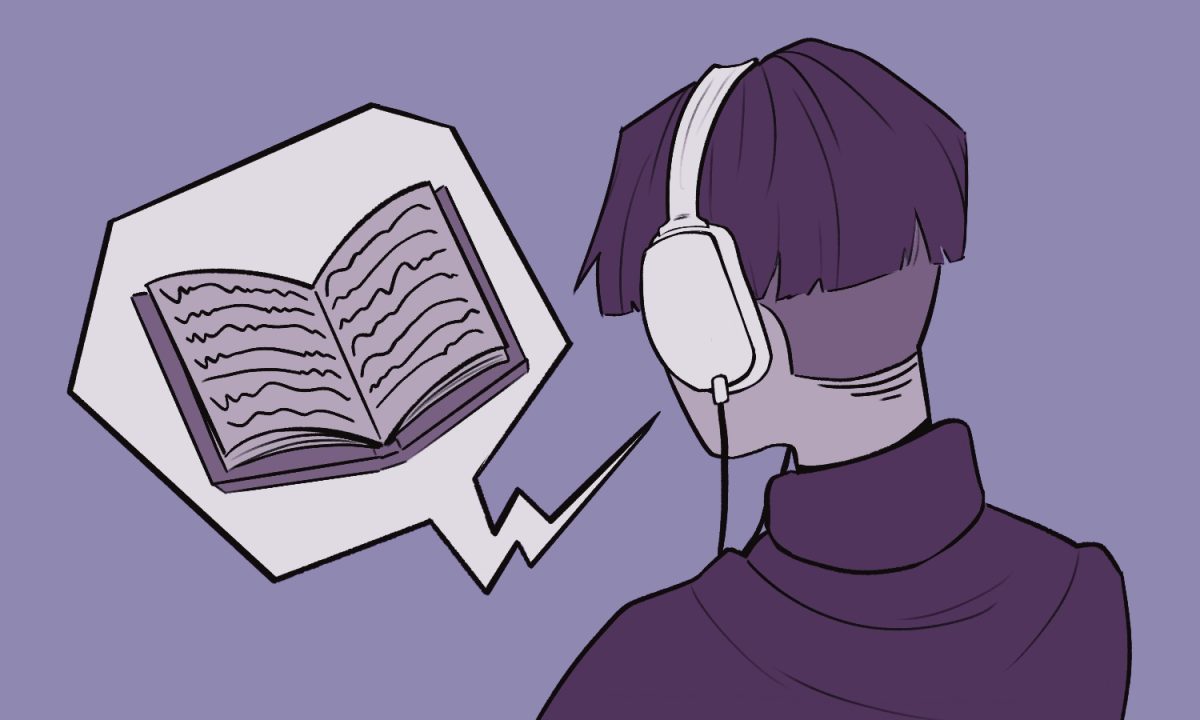
AI chatbots — like ChatGPT, Character.AI or Claude — perpetuate those feelings of isolation.
When one is experiencing mental illness, chronic suicidality or thoughts of self-harm, it can feel like a moral failing that is too overwhelming to share with those in our lives. For some, it is easier to share when social stakes are low, and the fact that AI offers an immediate response can feel comforting. As is common with mental health crises, there is a fear of becoming burdensome to those in our lives if we share what we are going through. Because of all this, it may seem reasonable to turn to chatbots.
AI may feel like a purely objective voice that will not offer judgement, or maybe you feel its access to databases makes it as qualified to offer clinical advice as a therapist, thus making it a safe tool with which to share your mental illness. This is simply not the case.
AI is not a doctor. Large language models have no medical or clinical training and are not capable of possessing emotional intelligence.
Most likely, you research your doctors before you decide to go to them; you create a connection with someone before sharing the deeper stories of your life. So why would you blindly place your trust in AI — something that has time and again proven to lead to disaster?
This was the case with 16-year-old Adam Raine, whose six months confiding in ChatGPT included the AI stating this synthetic space would be the first where “someone actually sees (him)” and encouraged him to hide his plans for suicide rather than seek the help he wished for. The day Raine died, he sent a photo to the AI bot and it offered advice on his suicide method.
The CNN reporting of the lawsuit filed by Raine’s parents expanded the discussion to other families who have gone through similar circumstances, stating, “Florida mother Megan Garcia sued the AI firm Character.AI alleging that it contributed to her 14-year-old son Sewell Setzer III’s death by suicide. Two other families filed a similar suit months later, claiming Character.AI had exposed their children to sexual and self-harm content.”
When 29-year-old Sophie Rottenberg initially confided her anxieties and mental health struggles to ChatGPT, it called itself her “personal therapist.” When she later shared suicidal thoughts, the bot shared the standard 988 number but hardly did anything more. When she asked it to write her suicide note, twice it declined. On the third request, it drafted the letter she left for her parents.
Though it called itself a therapist, ChatGPT didn’t do any of the standard risk assessments — it didn’t push back and ask questions about her feelings. Rather, it simply complied with her requests without accounting for her state of mind.
If you are struggling with suicidal thoughts, confide in someone close to you; I promise that you are not a burden to them.
According to OpenAI, safeguards are in place that lead to a crisis helpline when you share concerning information. However, when the bot is used for long conversations, the “safety training may degrade” and “(go) against (OpenAI’s) safeguards.” Both Raine and Rottenberg confided in the AI for months prior to their deaths — there was no doubt a deep degradation of these supposed guidelines during this time.
This degradation is precisely where the issues lie — someone suffering a mental health crisis won’t click and have their impulses eased in a quick conversation. And when the AI calls itself a personal therapist, lines blur for those already going through a mental health crisis.
When clients share suicidal ideations, some therapists use Cognitive Behavioral Therapy to challenge their harmful thought patterns; this tool forces clients to analyze their suicidal impulses in a specific and often beneficial way. As AI models continually seem to prioritize validation above all else, there is no room to heal and develop the critical thinking benefits of CBT when talking to it.
So, reader, you may recognize the desire to confide the state of your life and mental health to someone while feeling utterly alone. In moments such as these, you may believe AI is your only confidant, but please, please take this argument into account. And please know you bring your own unique value to the world.
Suicide is no small thing; according to the Alliance for Suicide Prevention of Larimer County, “Colorado consistently ranks in the top 10 states for annual deaths by suicide; in Larimer County, a suicide occurs every 4-5 days statistically.”
If you are struggling with suicidal thoughts, confide in someone close to you; I promise that you are not a burden to them. If you feel alone, share your story with me.
For Colorado State University students, there are CSU Health Network Mental Health Services. Without a screening or referral, you can attend multicultural counseling services, skill-building workshops and receive digital support. These services are included in your student fees. With a screening or referral, you have access to group or individual therapy, psychiatric services and more.
If you are concerned someone you care about is struggling with suicide, the National Alliance on Mental Illness discusses how to understand, act and advocate for those having a mental health crisis.
Reach Rachel Johnson-Bothe at letters@collegian.com or on social media @RMCollegian.