
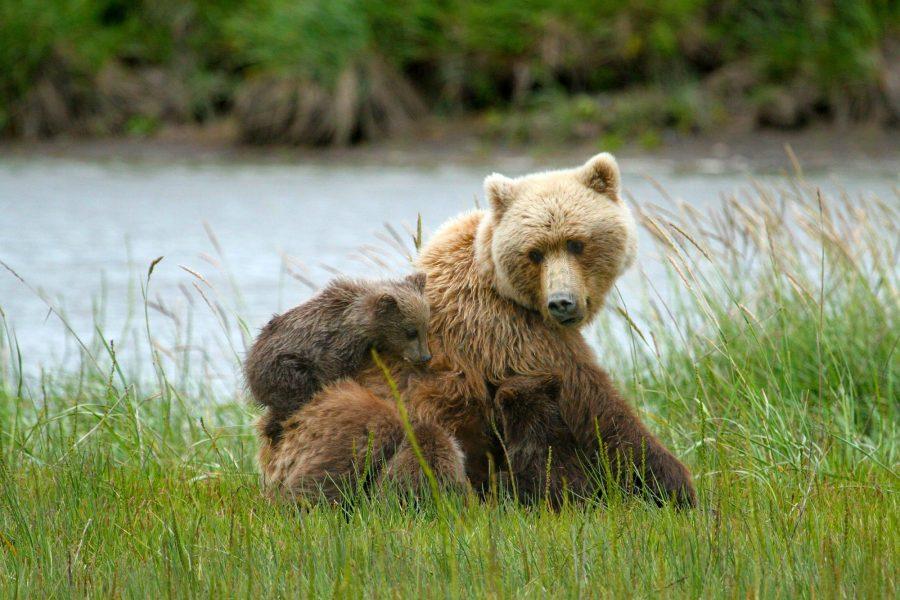
Intense drought, wildfires and heat have plagued Colorado in 2026. Not only do these harsh conditions impact local communities, but they change the natural habitats bears and other wildlife rely on. Recently, Colorado residents in urban areas have reported bear sightings in higher than average numbers as natural food sources become unavailable.
“We are seeing an increased number in these reports and (bear) activity in general this year, which we are mainly attributing to drought,” said Kara Van Hoose, a public information officer for Colorado Parks and Wildlife. “With the lack of snowpack and winter that we experienced last year, combined with a late freeze, the natural food sources for bears have been really depleted and scarce.”
While spikes in bear activity in urban settings have been observed in past drought years, this year is unlike any recorded before, according to reporting by CSU SOURCE. Sightings have been reported across multiple cities, including Fort Collins.
According to Van Hoose, bears are now frequenting areas they previously would not enter, leading to recurrent contact with humans in an unfamiliar environment. These conditions can lead to unfriendly encounters with city residents.
“One proactive thing people can do to decrease their chances of a bear conflict is to practice something we call hazing,” Van Hoose said. “Making a bear uncomfortable around humans with lights and sounds reinforces that good, healthy fear that bears should have of humans.”
Van Hoose suggested simple things such as setting off your car alarm, banging on pots and pans and playing loud music. These actions replicate dangers a bear may encounter in the wild, steering them away from further investigation of the area.
Aside from an increased risk to humans, the rise in human-bear conflict poses severe risk to the bears, as repeated contact leads to changes in natural behavior.
“The main concern is habituation,” said Cassandre Venumière-Lefebvre, a postdoctoral researcher for the department of fish, wildlife and conservation biology at Colorado State University, whose research focuses on minimizing conflict between bears and humans. “There is an initial natural response to people, and so the fear is that if drought and rarity of natural foods continues to push them into urban areas, they’ll be more and more exposed to people and the risks that people represent, and they will progressively lose this fear.”
Venumière-Lefebvre additionally pointed out that easily accessible food sources such as garbage, pet food, gardens and bird feeders act as an incentive for bears to continue coming into these urban areas. These incentives then lead to closer human-bear contact, creating dangerous situations that often end in vehicle collisions or euthanasia.
“The risk is really while they’re here in our environment,” Venumière-Lefebvre said. “There is a lot of hope that bears just know how to be bears, and they will return to the wild and their natural food sources if we remove that huge reward.”
More frequent wildlife contact in these urban areas full of people who have rarely interacted closely with wildlife creates further cause for potential unnecessary conflict.
“We’re seeing that an increase in urbanization, education and income at the societal level has resulted in this intergenerational shift,” said Tara Teel, a professor in the department of human dimensions of natural resources at CSU, whose research focuses on applying social psychology to conservation efforts. “People are no longer being brought up in rural environments where they have more direct experiences with wildlife and nature. Instead, people are brought up in urban environments where the relationships are a little more distant.”
As bear activity continues to increase, the question of coexistence arises. Teel emphasized that with proper education and awareness, cohabitation between bears and humans is feasible.
“Coexistence is definitely possible, and historically, coexistence was always a thing,” Teel said. “It takes management of wildlife as well as management of people. Agencies and organizations can do things to manage wildlife, but they can also work with people and communities to build capacity for dealing with these problems.”
Community residents can contribute to safer interactions with wildlife by staying informed and being diligent about leaving food sources in accessible areas.
This increased contact between humans and wildlife is not entirely dangerous. Conservation efforts are reliant on an engaged public, and firsthand experience with changing wildlife habits is one way to gain public attention.
“We often focus on how human behavior is a detriment, like human behavior is the problem,” Teel said. “Human behavior is having these negative impacts, but it can also have really positive impacts. By engaging people and communities, we can have benefits for both people and wildlife.”
Reach Sam Whitted at science@collegian.com or on social media @RMCollegian.