

In the midst of budget season chaos, new student access initiatives, campus challenges and shifting federal directives, Colorado State University’s 16th president, Amy Parsons, sat down with The Collegian to reflect on her third year as president and discuss what lies ahead.
An alumna, Parsons said improving access to education at CSU has been at the forefront of her mind throughout her tenure as president. She pointed to new initiatives launched this academic year like CSU Spur Start, a Denver-based academic program, and Ram Transfer Academy, a program for prospective CSU students at Front Range Community College, as reflections of the university’s land-grant identity.
“We want every student, especially in Colorado, whether they’re urban or rural, no matter where they come from, to know that CSU is here for them,” Parsons said. “So it’s making that climate here for them. It’s investing in financial aid. It’s finding these new, innovative ways for them to come in. And this is an area where we want to be the best at, and I think that it’s our duty as leaders of CSU to make sure that we’re here for all students.”
Part of CSU’s appeal, Parsons said, is its commitment to fostering student success both inside and outside of the classroom. Opening the university’s doors to students across the nation has created a unique environment of diverse backgrounds and viewpoints that Parsons said students should take advantage of.
“I tell (students), don’t just come to college and go hear the speakers who you think you’re going to agree with or stick with the same people who have the same beliefs or come from the same place,” Parsons said. “Intentionally stretch. Make friends with people who are super, super different from you are. And really, that’s the value of being here. That’s the cauldron of democracy.”
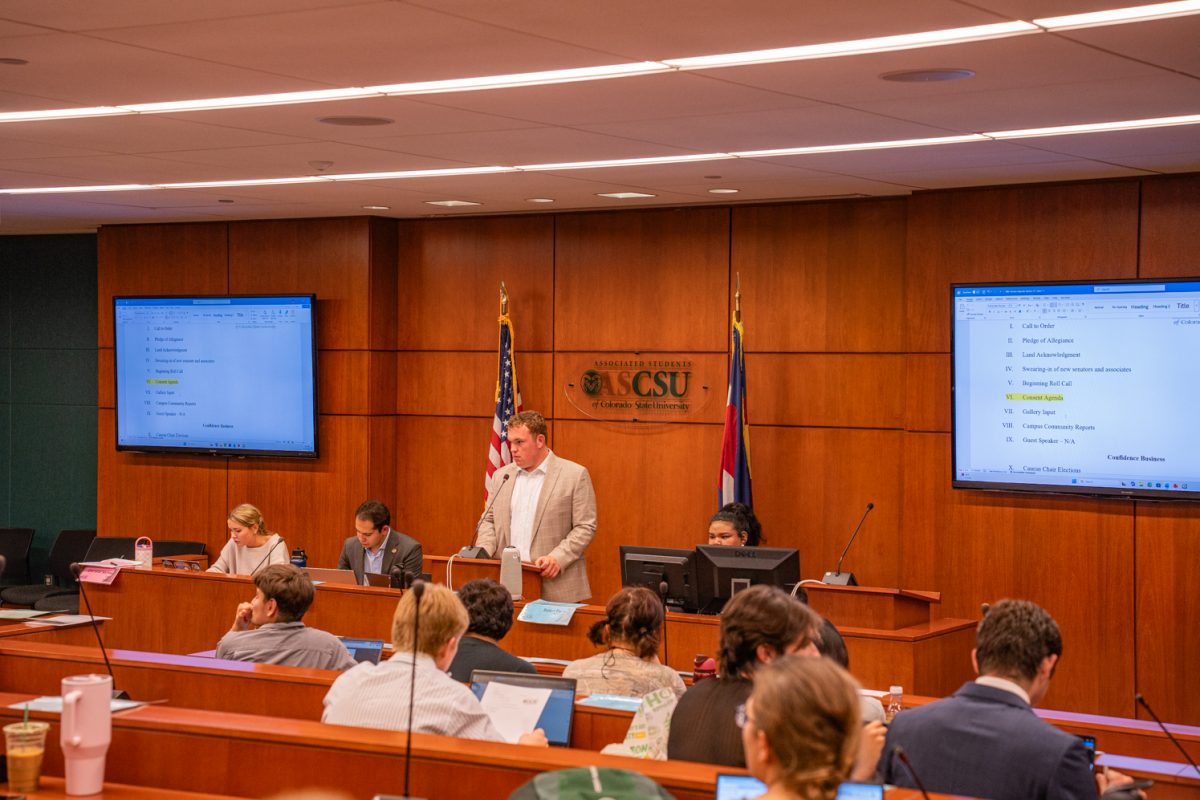
The Associated Students of CSU is one method of democratic deliberation that Parsons is no stranger to. A former student senator herself, Parsons meets regularly with the various student-led committees and executive members to get a better idea of what students want from their administration.
“We’re around students, listening to them all the time, and that’s really important to hear the student voice, and ASCSU is a great conduit for the student voice,” Parsons said.
Parsons said her and the outgoing ASCSU President Jakye Nunley and Vice President Joseph Godshall have spent the past year discussing matters of affordability, traditions and university commencement, among other things. She said she has an upcoming appointment with the incoming ASCSU president and vice president, Victoria Quesada-Stoner and Ben Gregg, to discuss upcoming plans and initiatives as well.

“The outgoing administration has been really great to work with,” Parsons said. “They were really, really involved in traditions this year, and I admired that. I appreciated that about them on game days, how they can get more students involved in different ways, and they’re a really hard-working administration. I would imagine that the new administration coming in is also interested in student engagement and those traditions and how to get more students involved on campus, but I have a meeting coming up with them before the end of the year, so I look forward to hearing what their priorities are going to be.”

The year has not been without disagreement between the student body and CSU administration, however. CSU’s new partnership with Street Media Group to place billboards across campus resulted in significant backlash from students and the surrounding community.
After legislation to regulate the billboards was rejected, Parsons reiterated that the billboards serve to improve campus safety and said they have so far served that purpose. She said the revenue generated from additional advertising goes back to student safety initiatives and stood by CSU’s investment in such matters.
“I’ve heard some of those concerns, and I think, you know, one reason that we wanted to have those signs (is) as a way to easily push out safety information to students,” Parsons said. “When we’re not doing that university advertising or safety advertising, to the extent there’s advertising, that revenue goes to safety investments on campus. So that was the impetus behind it.”
University policies on chalking became another pressing issue early in the academic year. The new policy, which has since been suspended, stated that chalking is only permitted on the Lory Student Center Plaza for “publicizing official programming or events sponsored by a CSU college, division or office or any of CSU’s recognized student organizations or groups.”
Parsons said the decision to change the policy was made after targeted hateful messages made some students feel unsafe.
“Big public institutions (are) one of the only places in the country that really gets to grapple with First Amendment, freedom of speech, assembly, religion,” Parsons said. “It’s really interesting. I think CSU, historically, has been really good at this and really cultivated it as part of our role in democracy. So I personally love working on these issues. I think it’s really, really interesting. And I think it’s great that students are so passionate about it.”
After weeks of mounting dissent from students, the administration reinstated the old chalking policy and assembled a shared governance group to revise the code. Parsons said she is still awaiting their recommendation and is prepared to accept whatever they suggest but understands that the initial level of transparency and collaboration may not have been adequate.

“At the time, and looking back, we probably should have taken more of a pause and said, ‘We understand that, and we’re going to get more perspectives,’” Parsons said. “So we pulled it back, said we’re not going to institute it. We’re going to go through this thoughtful process with everybody’s opinions.”
Beyond campus-specific challenges, Parsons’ presidency has unfolded during a period of national uncertainty for higher education as President Donald Trump’s administration has repeatedly shifted federal education policies and threatened university funding.
“I think back a year from now, when the (Trump) administration was still pretty new and they were issuing a lot of things out of the White House, and every university in the country was grappling with, ‘Were they legal? What do they mean? What do we do about them?’ And that was a really challenging time,” Parsons said.
Last spring, 16 CSU students’ visas were revoked by the Trump administration, sparking widespread concern on campus about the safety of undocumented and international students. The government also promised to take action against all public institutions that have diversity, equity and inclusion policies, stirring up anxieties that vital resources for marginalized students could be at risk. Several research grants and contracts were subject to new restrictive guidelines, and several areas of CSU research were scrutinized.
“They were threatening everybody to pull back our research dollars,” Parsons said. “That’s real people’s jobs, all of these different things. It was tough. It’s no less tough now, but we’ve weathered a lot in the last year, and hopefully you’ll see that.”
CSU received criticism for not directly addressing a lot of the anxieties students had, instead referring inquiring parties to the Federal Updates website for information. Although this limited response led to a number of student demonstrations asking Parsons to take a stand, she said the university was strategically navigating the situation behind the scenes.
“I met with hundreds of students as we were going through that publicly, privately, just hearing their concerns and trying to explain why CSU was taking certain actions or not taking certain actions, and that’s all we can do going forward,” Parsons said. “We understand there’s anxiety with this administration. There are challenges to higher education.”
Parsons said she is proud of the work she did to protect students. Resources and research funding are largely intact, she said, and the university is still able to carry out its mission. She pointed to the numerous lawsuits that CSU has taken part in and said many of the CSU administration’s worst fears did not manifest.
“Our Cultural Resource Centers are open and functioning, and a lot of the things that we were worried about that we would have to take action on, we haven’t,” Parsons said. “I feel like we’ve weathered it pretty well. It’s a difficult area to communicate because you don’t want to draw more attention to what you’re doing or not doing while you’re trying to make the right decisions for our students and our faculty — and that’s really how we show up every day, is making sure that we’re true to our mission. We’re true to our students. We’re protecting our students. That’s always our No. 1 priority, is student success and having a lot of conversations about it.”
Parsons ended the interview with a similar prevailing sentiment of pride in CSU, pointing to CSU’s women’s basketball championship victory in March. She said the widespread excitement around the victory is indicative of a broader community that supports one another and cheers each other on.
“Here at CSU, I’m really proud of the culture that we have of supporting our women athletes, supporting our women leaders,” Parsons said. “That was just really meaningful and fun for me. Makes me proud of our whole community to support the women like that.”
Reach Laila Shekarchian and Chloe Waskey at news@collegian.com or on social media @RMCollegian.