
What started as a process to digitize and catalog Fort Collins’ Global Village Museum of Arts and Cultures’ permanent collection turned into the museum’s most recent gallery: “Work and Wonder: Behind the Scenes at the Museum,” which will run until Sept. 18.
“The entire exhibition is sort of my big love letter to museums,” Curator of Collections and Exhibitions Sam Hensley said in an email-based interview.
Work and Wonder began to come into form when the GVM team came across a sparsely documented item: A yellow cloth tiger named Zhen, whose name means “stitch” in Chinese. According to Hensley, limited documentation on items like Zhen are common for the museum that focuses on global folk art. For that reason, Zhen became the narrator and central figure of the Work and Wonder exhibit, which takes visitors behind the scenes of the GVM amid its 20-year anniversary.
“Everybody kind of likes to get the insider scoop,” said Emily Zaynard, executive director of GVM. “Everyone kind of likes to see things that not everyone has access to. We thought … that would be a great premise for an exhibition. It would give us an opportunity to show people things that we normally have in our collections and give them an opportunity to see the processes that museum people will go through in order to take care of those items, to share those items, and you know, to find and conserve those items as well.”
Typically, the museum takes a community-centered approach, allowing community members to curate an exhibit. The Work and Wonder exhibit is different, as all the pieces come from the museum’s permanent collection, which is composed of pieces donated from the community or purchased from the original artists via a third party, according to Zaynard.
“When I was first developing the exhibition, I was intending it to be a celebration of our collection and the stories it tells,” Hensley said. “I was thinking a lot about other ‘selections from the collection’ exhibitions at other museums, and we’d never really had anything like that at GVM as far as I know. As time went on and the show started to take on the more meta ‘museum exhibition about museums’ angle, I wanted to choose objects that illustrated parts of that story as well as highlighted the strengths of our museum.”
Among many folk artpieces, visitors of Work and Wonder may see carved wooden sculptures and miniature figurines. Zhen, the common thread through it all, also exists through different mediums: a miniature silkworm cocoon, a gouache painting and the larger cloth tiger.
Although some of the pieces exhibited still remain a mystery — the museum asks visitors to contribute their knowledge on the gallery’s works that are missing information — Zaynard said each individual artwork relates to one another.
“There’s a story that goes from one piece to another piece to another piece, and I think that’s kind of fascinating to see that happen with a room full of pieces from across the world,” Zaynard said. “You can look at that as a coincidence, or you can look at that as a kind of a lesson of the connection of art and creation that we share with artists all over the world.”
Work and Wonder focuses on global folk art, which is a big part of how those at the museum intend to pursue their mission of fostering global understanding, Hensley said.
Folk art has historically been misrepresented in museums, according to Hensley, so for him, curation is about amplifying the story an object already tell rather than “trying to shoehorn them into the story you want to tell.”
Stylistically, Hensley said he curated the exhibit to be visually sparse to spotlight each piece of artwork.
“Many of the kinds of artworks in our collection historically have not been afforded this, and we’re guilty of improper display, much like many museums are,” Hensley said. “On that same note, we’ve been working quite hard behind the scenes on tightening up our approach to our mission and our role in the community. So given all this, and as one of the exhibitions in our 20th anniversary series, I intended it almost as a kind of reintroduction.”
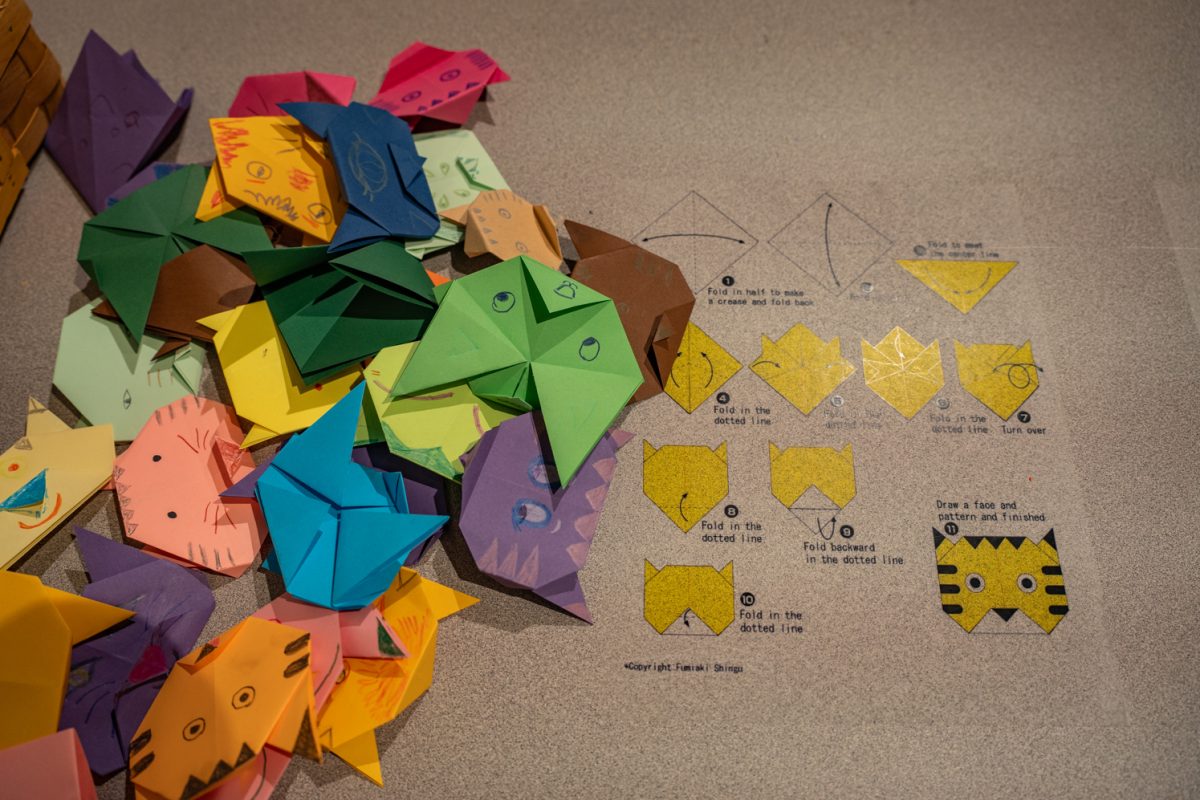
Signs around the exhibit not only tell Zhen’s story but also touch on modern day challenges many museums face such as providing accessibility, creating engaging exhibits and finding ways to reconcile objects with their original cultures and peoples. To address these, visitors are invited to take in the exhibit from the comfort of a chair, scroll through the museum’s digital catalog and watch videos that tell the stories of some of the pieces from one of the museum’s founders. Inspired by Zhen, visitors are also encouraged to create an origami tiger and leave it behind at the end of the exhibition.
As the museum celebrates its 20th anniversary, Zaynard said GVM has become a treasured part of the Fort Collins community.
“We are an established part of this community that has something to contribute,” Zaynard said. “You can describe (the museum) as kind of a funky (and) offbeat, but I like to think of it as being very human and accessible, putting that storytelling piece first. … That’s a legacy that was started by our founders and I think that’s a legacy that we hope to see survive and thrive in the future.”
Reach Chloe Rios at entertainment@collegian.com or on social media @RMCollegian.