

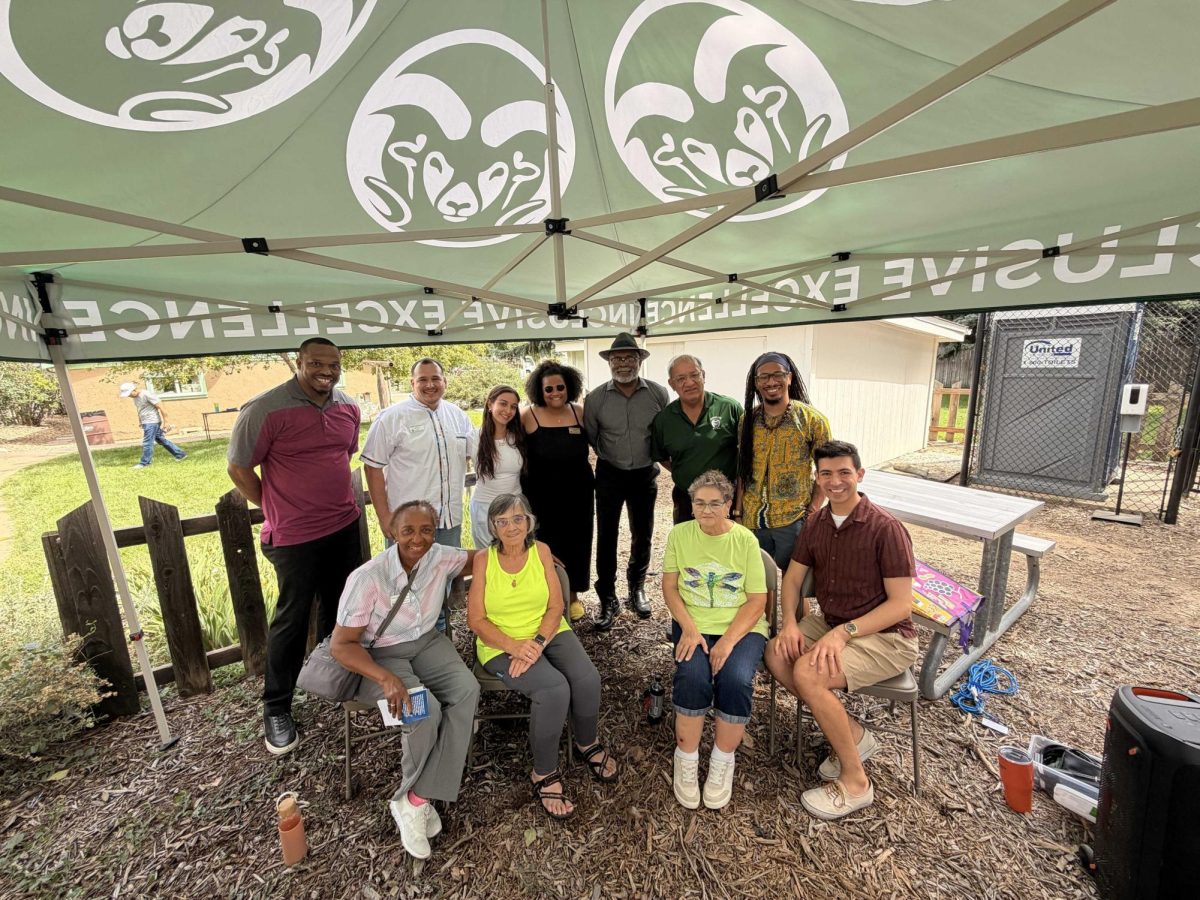
On Aug. 31, El Centro and the Black/African American Cultural Center came together to celebrate their 50th anniversaries by highlighting how their stories are intertwined. The “Echoes of Home” event was a tour of the Museo de las Tres Colonias that provided a way to recognize the historical advocacy against segregation, housing discrimination and inequalities that ultimately led to the development of Project GO and the cultural centers themselves.
When visitors entered the museum, they found themselves transported into a traditional, authentically preserved adobe home that echoed the richness and history of the intersectionality between Latine and African American communities.
“The focus of today is about the history of housing segregation because it’s deeply rooted in the Hispanic Latino community within the city of Fort Collins,” said Aaron Escobedo Garmon, the interim director of El Centro. “But it’s also a really big part of the story and the legacy of the Black (and) African American community in the city as well.”
Escobedo Garmon said he found there are multiple historical aspects and memorable details people can continually observe. The museum provided authentic insights into the various aspects and experiences of Latine culture in the 20th-century, including the ways people cooked, children’s toys and clothes, stories of working in the sugar beet industry and the impact of the altar in showcasing the family’s religious values.
The event also held a panel with community members, including Juliet Chavez and Debra Bueno, as well as mediators Ray Black and John Miller IV. Bueno and Chavez shared stories of growing up in Fort Collins and their own personal experiences with educational inequalities, segregation, family life and humorous connections. The audience engaged alongside them, asking questions and listening attentively.
“Especially for students, you who can experience some of those things just by leaving campus, … the more informed you are, the better off you’re going to be,” Bueno said.
Escobedo Garmon said he hoped the event gave the panel leaders an opportunity to share their stories. He said people can still learn from them on a deeper level and recognize how present they are in the community.
“Longtime residents, who have lived here for generations, can speak about what it was like, being in a part of the city where discrimination and segregation were a little bit more prevalent,” Escobedo Garmon said. “We’re going to be able to talk back and forth and be in conversation with people who’ve lived through it.”
Miller mentioned the value of hearing these stories and recognizing how CSU is connected to spaces outside of the campus.
“We have to continue to tell the story so that people see that these stories exist,” Miller said. “And there’s not this automatic assumption that other folks of color haven’t existed in the area.”
Miller said the event and the museum help bridge the gap between African American and Latine communities around their complex histories in Colorado.
“There is blending of culture that naturally happens in the ways communities of color, particularly in Fort Collins, have always come together to be able to create spaces of protection, safety and spaces of the excellence that they are,” Miller said.
Escobedo Garmon said he appreciates how families and descendants of these communities have been continually choosing to preserve and care for this land. He and Miller both said they hope individuals can recognize history is still alive and that it is a joy to be able to celebrate all they have accomplished together.
“We tell these stories so that we then reremember who we are, how we’ve been in such close community with each other and how we can continue to change the world because this is the way that we live,” Miller said.
Reach Sananda Chandy at life@collegian.com or on social media @RMCollegian.

Jerry Gavaldon • Oct 11, 2026 at 4:11 pm
It was an honor to host the event at Museo de las Tres Colonias!! I am Jerry Gavaldon, Board President. I am also a native of Fort Collins, Alumi of CSU for BA and MBA. I also worked for Athletics for 25 years in concessions and Concessions Director.