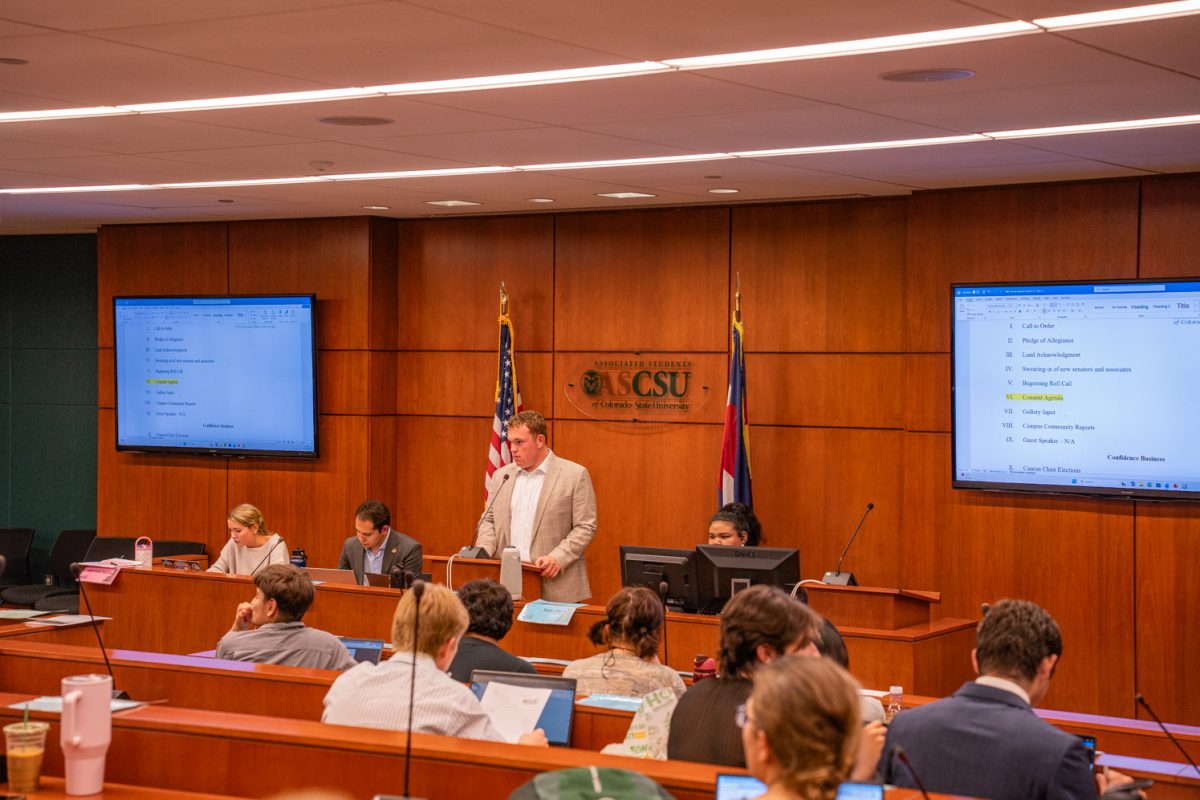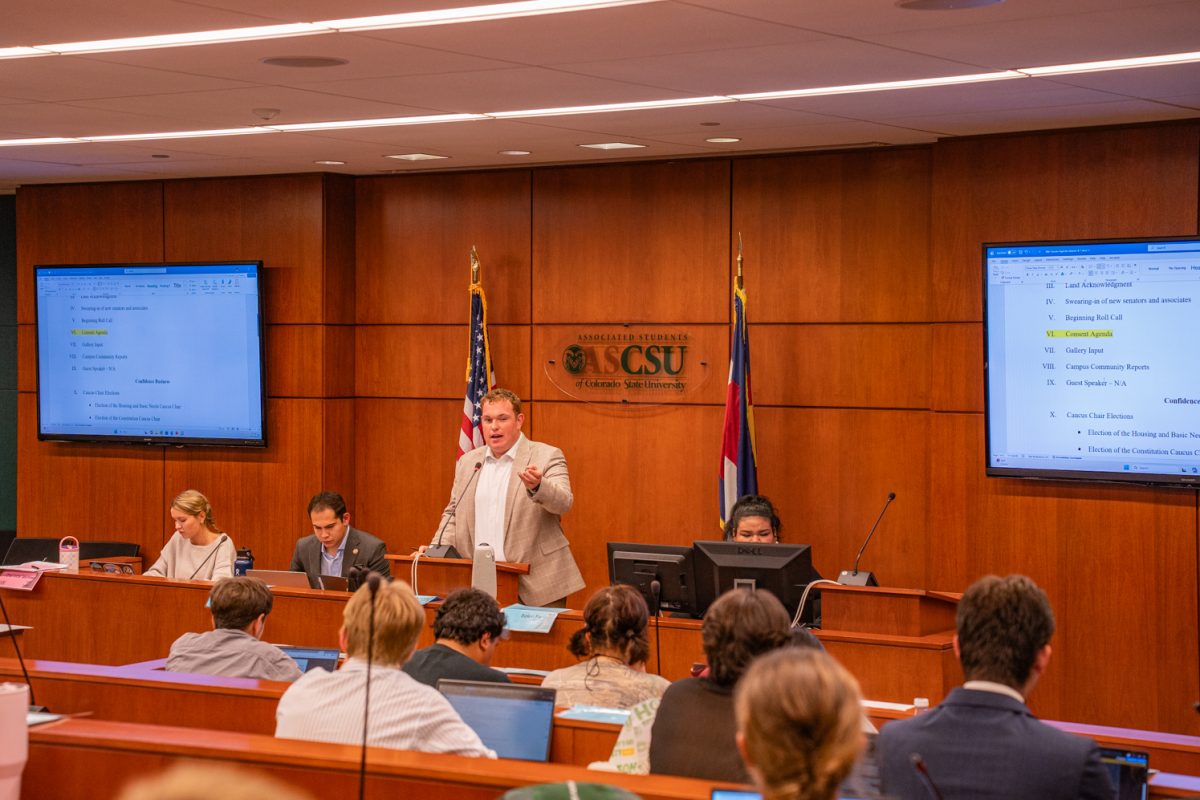

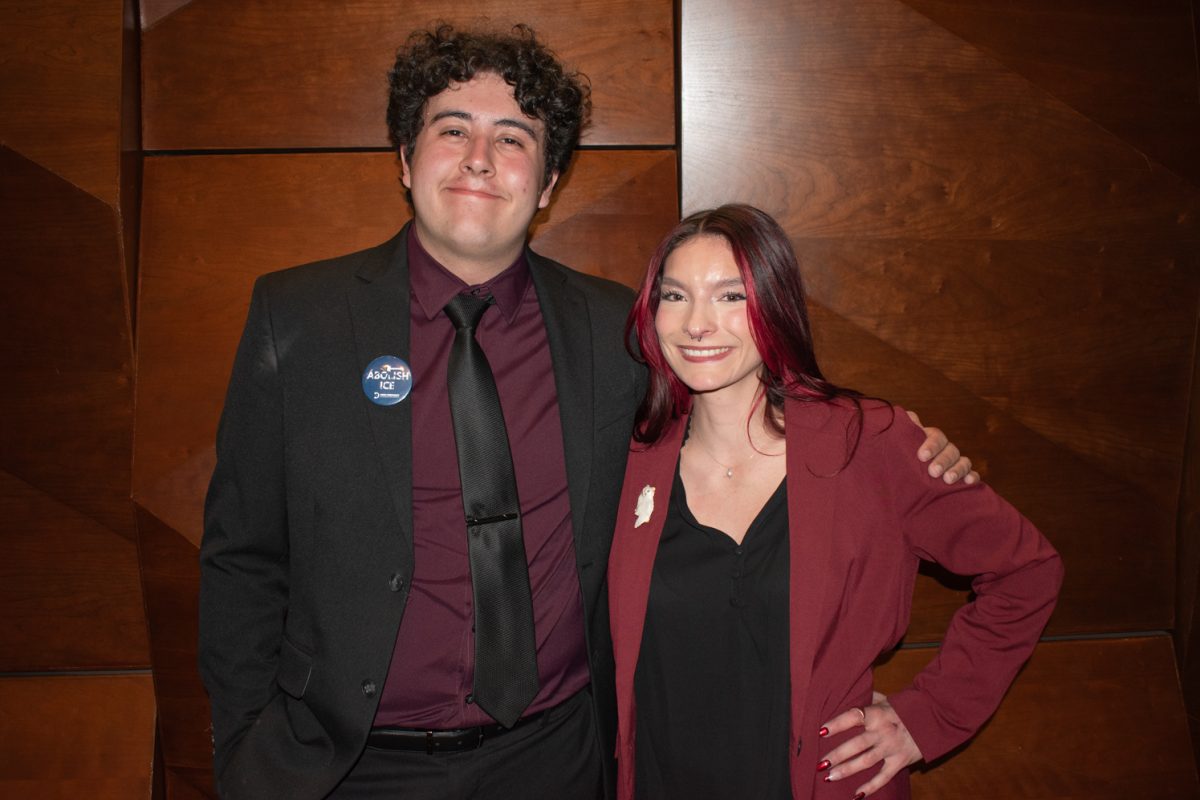
This year’s fall semester has proven to be a busy one for the Associated Students of Colorado State University’s President Victoria Quesada-Stoner and Vice President Ben Gregg.
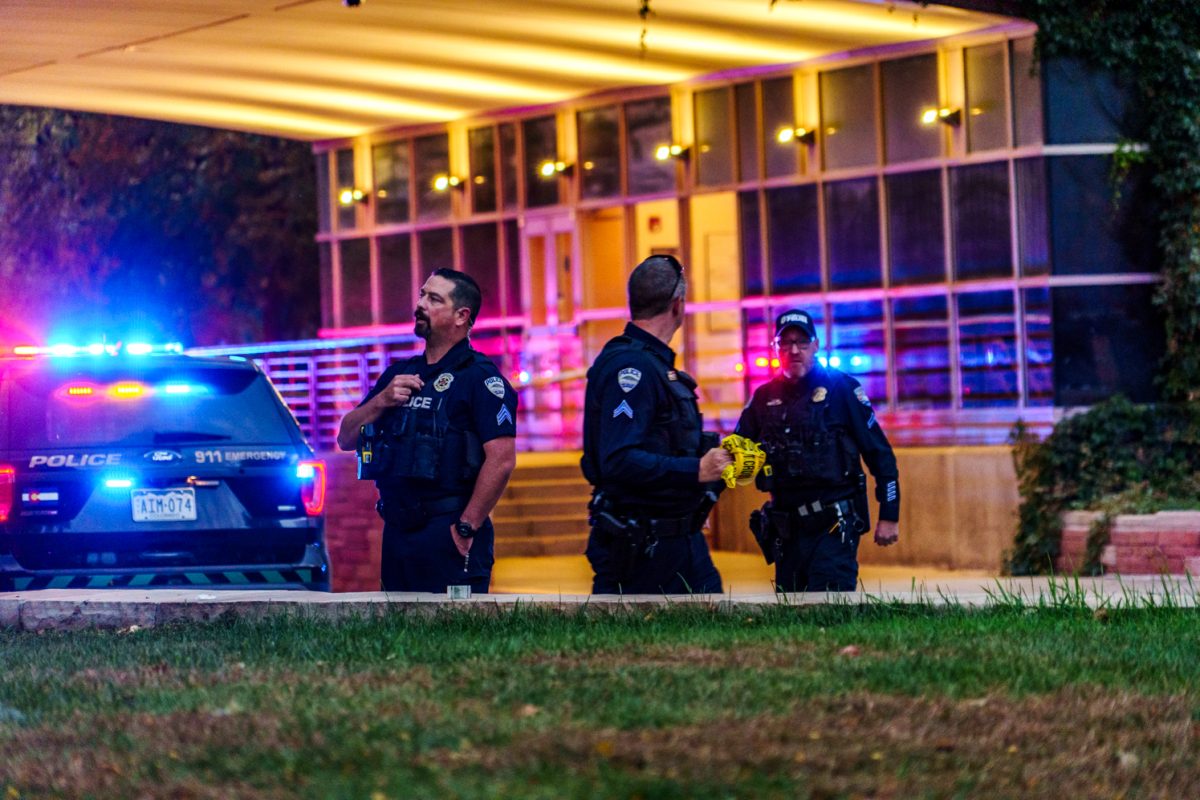
Both ASCSU leaders shared they were not impressed with how the university communicated in relation to the Oct. 12 officer-involved shooting.
“Nothing was heard from admin for hours outside of ‘avoid the area,'” Gregg said.
Many students have expressed concern with the lack of information provided to students via the safety alerts during the emergency involving multiple fired handguns.
“The Monday incident was something that a lot of students can agree on,” Quesada-Stoner said. “They want to know when any type of firearm has been shot in any type of capacity.”
Following a conversation with Marc Barker, senior associate vice president for university operations, Quesada-Stoner and Gregg said they have planned an Oct. 19 meeting with ASCSU leaders and members of CSU’s administration, which aims to discuss ways to improve future emergency communication.
“We both agreed that a meeting between ASCSU’s head leadership, the branch leaders, as well as Stacey Clement, (CSU) chief of police, and Matt Tillman, Amy Parson’s chief of staff, would be necessary to discuss how we can move forward and how we can better alert our students that a gunfire is happening,” Gregg said.
Quesada-Stoner said any students who would like to voice their opinions regarding safety on campus can do so at the Ram Police Advisory Board. The board meets the second Thursday of every month, Quesada-Stoner said.
Gregg said the gap in communication he has observed between CSU’s administration and the student community stretches far beyond last week’s incidents.
“If I were to give (the administration) a singular note on how to improve, it’s that they simply need to get to know their students better,” Gregg said. “I think that a lot of trust this year has fallen out between our administration and our student body, and I think the line of communication is completely dark.”
Gregg said one major example of CSU’s failure to listen to student voices has been through its disregard of passed student government legislation, such as ASCSU bills and resolutions.
ASCSU’s Senate has the ability to enact legislation on behalf of CSU’s student body during open legislative sessions, which are hosted at 6:30 p.m. every Wednesday.
“We have the power through our senate to submit resolutions, you know, by taking a public stance on what our body believes, and a lot of the time, it is by calling on admin to do a certain task and to speak to certain stakeholders,” Gregg said. “Frankly, I can’t recall a single one of those that has been fully listened to, and I think many students and student leaders are frustrated that many of our concerns for our administration fall on deaf ears.”
Last March, senate passed Resolution #5551, “Upholding The Principles of Community in Career Fairs.” The resolution was passed with the intent of calling CSU to cut ties with “Woodward Inc., Caterpillar Inc., Hewlett Packard Enterprise and any company in violation of our Principles of Community.” Various student organizations have said companies like these have been tied to the Israel’s military actions in Gaza, which have been declared genocidal by a United Nations independent commission.
Although the resolution was passed, CSU hosted these companies at the recent Walter Scott, Jr. College of Engineering Fall 2026 Career Fair in the Lory Student Center Ballrooms. During the fair, a student was arrested and later released on bond from Larimer County Jail.
“I understand that there are a lot of different admin that is happening, like answering emails, going to meetings, and there’s just a lot happening,” Quesada-Stoner said. “But if resolutions are really getting up to the higher administration, is that something the (ASCSU) president takes on? I’m not sure.”
Quesada-Stoner highlighted how some resolutions ASCSU has passed have legal constraints, such as Resolution #5532, “Call for Policy Update to Allow Reusable Plastic Bottles in Canvas Stadium,” passed in December 2025.
In order to work through these constraints, however, Quesada-Stoner highlighted the first step is to be heard by the CSU administration.
Amid recent events this semester, the leaders of ASCSU’s executive branch said they continue to work on an array of initiatives within CSU.
“One of the things that I have been working on and working with students on is a potential new sustainability student fee that would become a new fee-funded area on campus,” Gregg said. “I was approached by students and some other staff members under the Division of Student Affairs’ Sustainability Office who are interested in creating a student fee for sustainable projects.”
Gregg said the fee would resemble other student fees and advisory boards by allocating fee dollars to different grants, projects and organizations that would follow through on sustainability efforts. The Division of Student Affairs’ Sustainability Committee has sent Gregg its first draft of the proposal and looks to gather student support around campus.
Another upcoming project the student leaders are working on is the new Student Concert Series in collaboration with RamEvents.
The series is projected to start in November and is designed to bring more live music to the community on CSU’s campus.
Another major initiative Quesada-Stoner said the leaders are working on is getting a discrimination-bias-reporting system back up and running at CSU.
“We’ve had a lot of different events happening that should have the proper avenue to report it and tell someone,” Quesada-Stoner said. “We have the Tell Someone system … but I think having a streamline just helps students feel safe.”
Quesada-Stoner said ASCSU is still in the process of deliberating what that reporting system would look like, especially within the current federal climate.
Reach Katya Arzubi at news@collegian.com or on social media @RMCollegian.