
In a time of digital communication and large online shopping platforms, many find themselves seeking third places to engage with their communities on the local level.
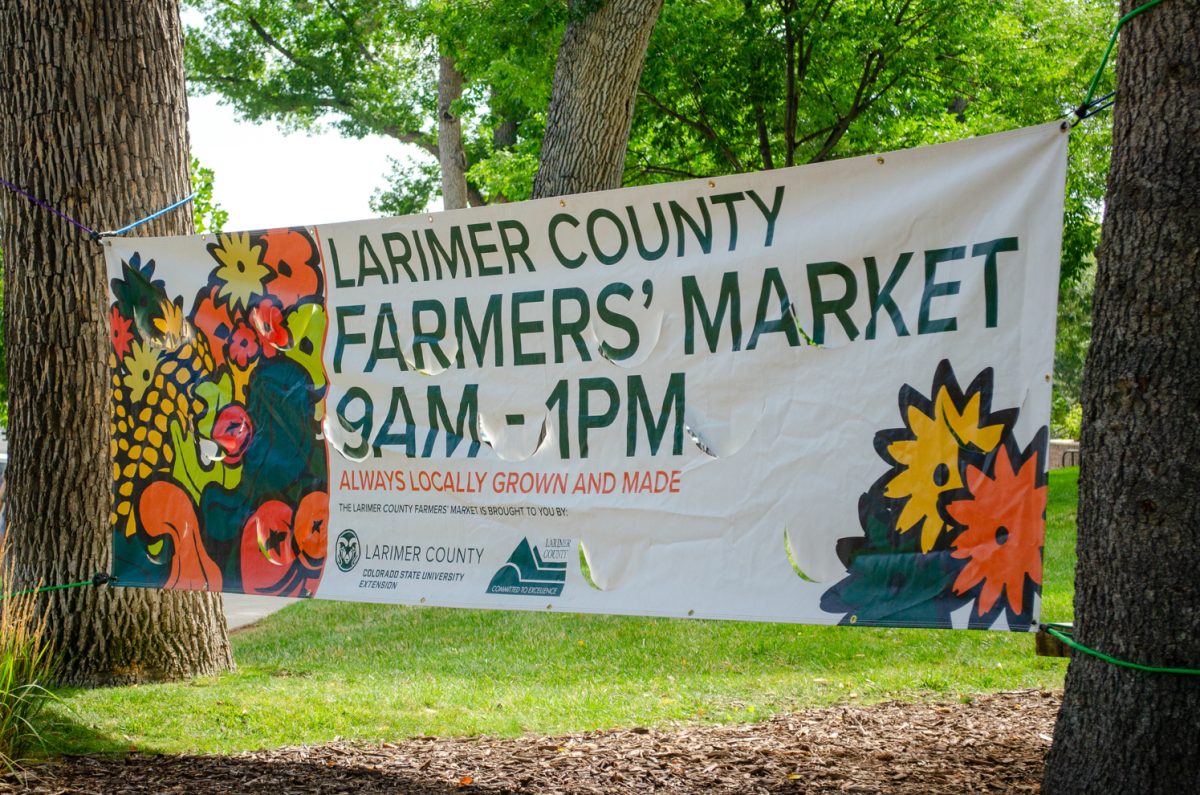
One such place, the Larimer County Farmers’ Market, is currently celebrating its 50th anniversary of bringing neighbors together in the sharing of goods and social gathering. One group of people in particular that thrives within the market is the artisan community.
As part of Colorado State University’s land-grant mission, the market is run by CSU Extension staff alongside the Colorado Master Gardeners in Larimer County.
Maggie Switzer, the farmers market and food systems coordinator for CSU’s Larimer County Extension, said CSU and the master gardeners are “bringing education from the university into the community.”
While the market ensures prioritization of the food and agriculture vendors whose livelihoods consist of farming, Switzer said she believes the artisan vendors and the agricultural vendors complement each other nicely and welcomes artisan vendors to apply.
Switzer discussed how Fort Collins is rich in its artistic community, emphasizing how including artisans in the market is essential to the culture of farmers markets in general.
“We would be missing an opportunity not to have (the artisan vendors) at the market,” noted Switzer.
Switzer, along with many of the artisan vendors themselves, said she agrees one of the most special aspects of the market is the human connection found there.
“My favorite thing about the market is the community,” Switzer said in reference to how the market fosters engagement for local consumers in addition to the “microcosm of community” that exists among the vendors of the market itself.
Switzer described a time when all of the farmers market vendors came together in a show of fellowship after the passing of long-time CSU professor, volunteer and master gardener at the market, Tony Koski.
After Koski passed away from cancer in 2025, vendors made and wore buttons with a picture of Koski in his memory, with many continuing to wear them today.
“They are truly the kindest people,” said Switzer about the vendors within the market.
Several vendors described how many of their customers are recurring, eventually blossoming into a tightly-knit community of people looking to buy local goods.
“We have a certain following,” said Mary Small, a jeweler at the market. “It’s good to say hello to everybody and exchange ideas.”
Small discussed the importance of gathering spaces for artists in terms of self-expression and genuine human connection.
“I love when I make people smile from a piece, so I guess I feel like I’m helping to bring happiness into people’s lives,” Small said.
In a world where technological advancements are at the forefront, third places are sometimes sparse or distant-feeling.
Cassidy Osgood of Little Laz Artisan Goods spoke to this dearth of community, saying, “The world is really tough right now and I think it’s easy to feel alone. … Even if you’re not buying things at the farmers market, it’s a place where you can just come and exist and be around other people and your community.”
The market also offers a space for collaboration among artists. Instead of each vendor sitting isolated in the bubble of their designated space, vendors frequently interact with each other, gaining inspiration and admiring others’ work and sometimes even collaborating to create new pieces.
Osgood said she worked side-by-side with artist Phillip Liu of PXL Woodwork to create wooden candle holders for the candles she makes and sells. Artist and jeweler Robyn Goodman of Lua + Lane explained how she even collaborates with agricultural vendors, sometimes acquiring dried flowers and plants from Dandelion Farms and surrounding stands.
The market also provides artists with a space for growth of both their business and craft. For Liu, his work at the market has taken his woodworking from a part-time passion to his full-time business.
Another vendor who has experienced major growth in her craft is Goodman, who initially began making earrings in an effort to teach her daughter practical math through the process of running art stands together. As her daughter grew older, Goodman expanded her craft in jewelry, apparel and even preserved terrarium arrangements called “oddity cloches.”
Osgood spoke to this sentiment, saying the market has “given me a space to grow and learn from other vendors how you want to present yourself in your business.”
From the most experienced vendors to the ones just beginning their journeys, the market is welcoming and inclusive to all. Silversmith Marguerite Feyen of MF Metals shared her story of wanting to pursue her artistic passion in spite of the pressure of being a biomedical sciences student. Feyen noted the kindness the other vendors at the market showed her as she first opened her stand and described how the farmers market “shows that amidst all the pressures of life you can just pursue your passions.”
Feyen also discussed how the market’s role as a community-gathering space brings in publicity for upcoming artists, allowing vendors to make their art visible in the public eye.
“(The farmers market) does a great job at bringing people in to actually showcase our work,” Feyen said when describing the difficulties of gaining publicity as a small artisan business. “It’s hard to find a lot of outlets, especially if you’re not on social media.”
The Larimer County Farmers’ Market — the oldest farmers market in northern Colorado and one of the oldest in the state — is unique in its strict adherence to absolutely no resale.
Everything in the market was grown or made by those vending their goods, and, as put by Switzer, the market’s authenticity is “something that we’re very proud of.”
Additionally, many of the art vendors focus on sustainability and the reuse of old materials, from Small’s repurposing of old silverware to create pieces of jewelry to Osgood’s vegan, zero-waste artisan soaps and candles, whose emptied tins can be returned and refilled.
Goodman said she finds many of her materials in nature to construct her oddity cloches with assortments of dried flowers, mushrooms and ethically sourced remains of butterflies and animals found deceased in nature.
Switzer discussed the importance of buying locally grown and made products as opposed to larger corporations in terms of community and sustainability. Not only is buying local, handmade goods better for the environment, but it helps spur growth in places for people to connect, as community members see the people who made their products and know they’re supporting individuals whose work makes the world a better place.
“Farmers markets have always been an analog movement,” Switzer said.
Switzer then described how a commitment to sustainability is “a commitment to the community.”
Outside of the environmental efforts of individual vendors, the farmers market works to reuse materials when possible and even utilizes a marketwide compost system.
A sustainable place to find local agriculture, food, community and artisan goods, the Larimer County Farmers’ Market has something for everybody.
As Switzer pointed out, the market’s crafted creations are perfect as gifts for friends and family members and “(buying) local is always doing the most good.”
Reach Addie Mitchell at entertainment@collegian.com or on social media @RMCollegian.