

Editor’s Note: All opinion content reflects the views of the individual author only and does not represent a stance taken by The Collegian or its editorial board.
With Colorado State exiting the Mountain West for the newly aligned Pac-12, conference members arise in addition to some familiar schools. This resurrection of the Pac-12 comes just two years after 10 of the 12 teams departed from the conference, leaving only Washington State and Oregon State.
The new football conference builds around those two teams and includes Boise State, CSU, Fresno State, San Diego State, Texas State and Utah State.
But how do the football stadiums rank?
1. Valley Children’s Stadium, Fresno State
Opened: 1980
Capacity: 40,727
To some, FSU’s stadium may come off as similar in style to the Rose Bowl Stadium. The comparison is solid, as the Rose Bowl Stadium is known for its iconic history, and the Bulldogs are known for its home-game record of 187-61-2. This is all thanks to the red wave of fans, as they consistently pack their house.
FSU has played 34 games with over 40,000 fans in the stands.
2. Albertsons Stadium, Boise State
Opened: 1970
Capacity: 36,363
Known for its iconic blue turf field, BSU’s stadium has always been in the spotlight.
Albertsons Stadium has gone through major upgrades, such as the addition of the Stueckle Sky Center, which brings luxury seating, loge boxes and an upgraded press box — ideal for a school that has national recognition in athletics and football.
The stadium has gone through seating capacity upgrades several times, dating back to 1974, 1997 and 2008.
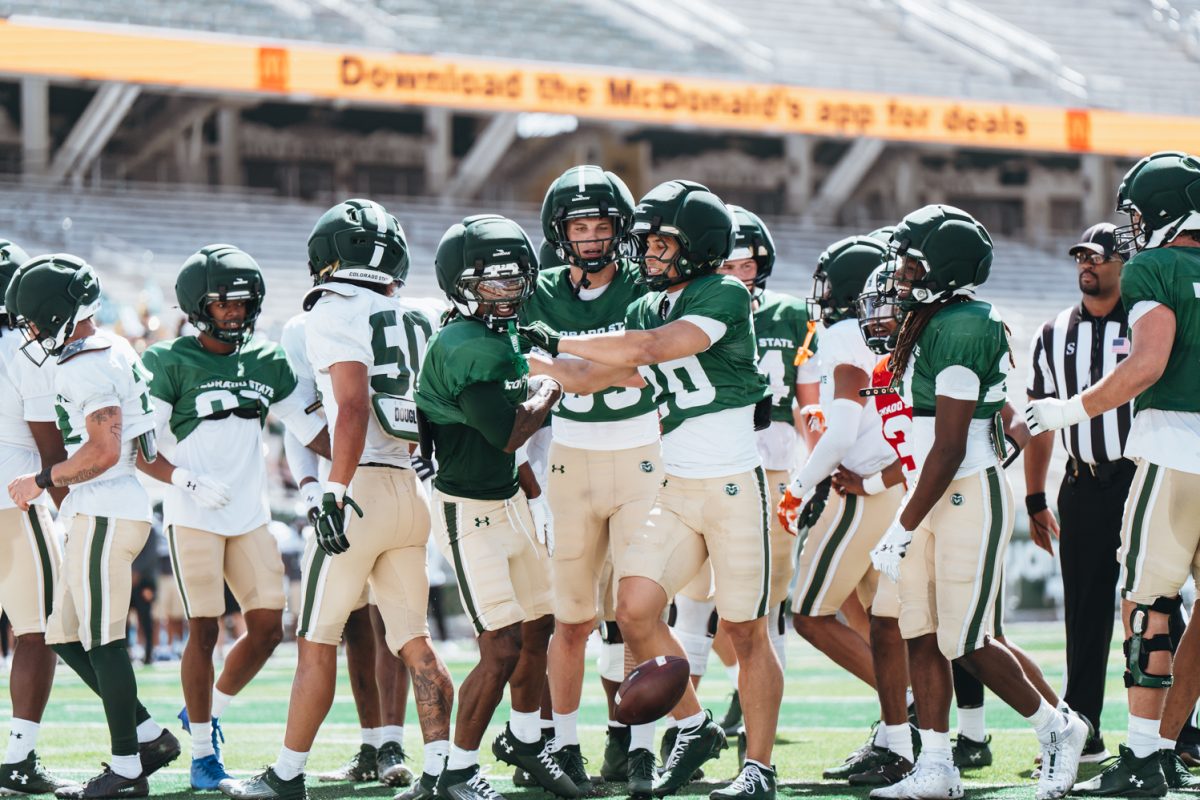
3. Canvas Stadium, Colorado State
Opened: 2017
Capacity: 41,000
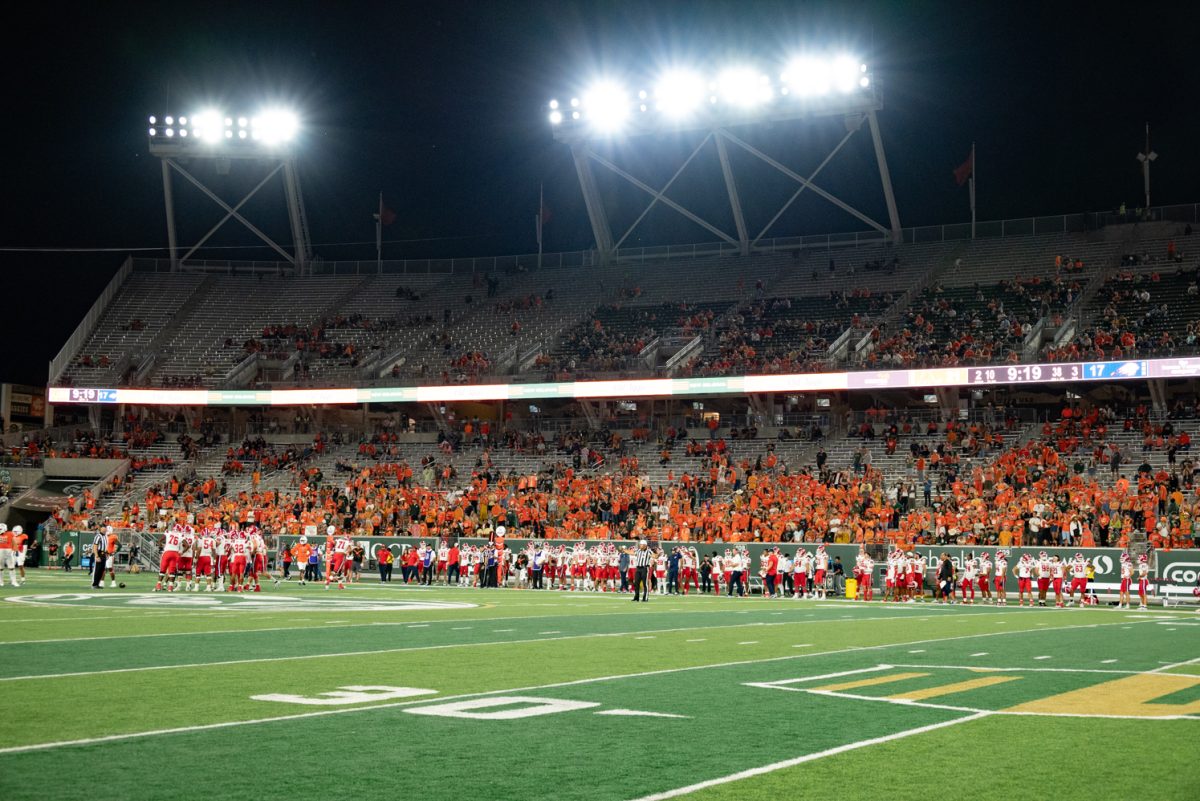
The construction of CSU’s stadium brought games back to campus, helping cultivate student presence after moving from the former Hughes Stadium. The $220 million project brought a 4,242 square foot main video board, classrooms and in-stadium football facilities.
In theme with the local aspect of Fort Collins, the stadium also has an open north porch dedicated to New Belgium Brewery.
4. Reser Stadium, Oregon State
Opened: 1953
Capacity: 35,548
OSU’s stadium has gone through several renovations and improvements since 2005.
Some of these include their video board, installed before the 2022 season, which the school said is one of the largest on the West Coast. The Beavers’ home field is known for its sleek turf field with bold end zones.
Reser Stadium has hosted big-time Pac-12 games, like its matchup against Oregon in 2012, which reached an attendance record of 47,249, surpassing the current seating capacity.
5. Snapdragon Stadium, San Diego State
Opened: 2022
Capacity: 35,000
The stadium widely took inspiration from Canvas Stadium, as it carries the same open stature. However, it had a higher budget of $310 million for creation.
The stadium is loud and energetic thanks to the student section’s organized efforts. The students also frequently join in on the band’s performance of the “SDSU Fight Song.”
6. UFCU Stadium, Texas State
Opened: 1981
Capacity: 28,388
TSU’s stadium is known for having some of the best digital displays in the Sun Belt, its current conference. The stadium is architecturally unique from the outside, giving off more of a building look rather than a stadium.
7. Martin Stadium, Washington State
Opened: 1892
Capacity: 32,952
This stadium is unique, as a 1970 fire destroyed over 6,000 seats. It was also the first college stadium to increase seating capacity by digging the field deeper and extending the seats down rather than building more seating from the top.
The stadium is known for having a closed-off atmosphere, as seating wraps around the majority of the field.
8. Maverik Stadium, Utah State
Opened: 1968
Capacity: 25,513
Maverik Stadium is on the lower end of stadium capacity, as the only two-deck seating is on one side and the rest of the seating only has one deck. In 2012, the playing surface was switched to Astroturf Gameday Grass 3D60 Extreme.
The seating is surrounded by natural trees and grass on three of the four corners of the stadium, giving an organic and natural feel to the game day atmosphere.
Reach Aron Medrano at sports@collegian.com or on social media @AronMedrano27.
Interested in more sports content? Sign up for Ram Report here for weekly CSU sports updates!




Thomas Lowry • Apr 7, 2026 at 5:38 pm
University of Colorado lowered their field in about 1966. There was a track in the stadium that they took out. They lowered the stadium floor several feet. They added several rows of seats. The curved portion of the stadium at the south end where Colorado is painted is where the track used to be. It was level with that end zone wall.