

For many home cooks, chicken is a weekly staple, simple, versatile, and loved by the whole family. But cooking it just right can feel like walking a tightrope. Undercooked chicken raises safety concerns, while overcooked chicken turns dry and disappointing. If you’ve ever stood over the stove wondering, “Is this done yet?”, you’re not alone.
The good news is that you don’t need to slice your chicken open and lose all those flavorful juices just to check if it’s cooked. There are smarter, more reliable ways to get perfectly cooked chicken every time without the guesswork.
Why Cutting Chicken Open Isn’t Ideal?
Many people rely on cutting into chicken to check doneness. If the inside looks white and the juices run clear, it’s assumed to be ready. But this method comes with a few downsides.
First, cutting into chicken releases its natural juices, which are essential for keeping the meat moist and flavorful. Once those juices escape, the chicken can quickly become dry, especially if it goes back into the pan or oven.
Second, appearance can be misleading. Sometimes chicken can look done on the outside but still be undercooked inside, especially with thicker cuts like chicken breasts. On the flip side, slight pinkness near the bone doesn’t always mean it’s unsafe.
For home cooks who care about both safety and taste, relying on visual cues alone simply isn’t enough.
The Most Reliable Way: Check the Internal Temperature
The safest and most accurate way to know if chicken is fully cooked is by measuring its internal temperature. According to food safety guidelines, chicken should reach an internal temperature of 165°F (74°C).
This method removes all guesswork. Instead of relying on color or cooking time, you’re using a precise measurement to ensure the chicken is safe to eat while avoiding overcooking.
For example, imagine you’re preparing a weeknight dinner: roasted chicken breasts with vegetables. You’ve followed the recipe timing, but your oven runs slightly hotter than average. Without checking the internal temperature, you might leave the chicken in too long, resulting in dry meat. With a thermometer, you can pull it out at exactly the right moment.
Why an Instant-Read Meat Thermometer Makes All the Difference
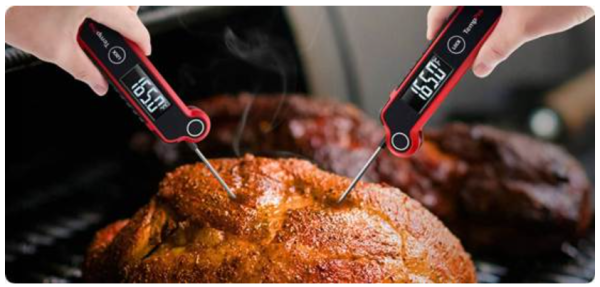
An digital instant-read meat thermometer is one of the most useful tools you can have in your kitchen. It allows you to check the temperature of your food in seconds, without cutting into it.
Instead of guessing or poking repeatedly, you simply insert the probe into the thickest part of the chicken and get an immediate reading. This keeps the juices locked in and ensures consistent results.
For busy home cooks juggling multiple dishes or cooking while helping kids with homework, this kind of efficiency is invaluable. It reduces stress and gives you confidence that your meal will turn out right.
A Smart Choice: TempPro TP620 Digital Instant-Read Meat Thermometer
If you’re looking for a reliable food thermometer, the TempPro (former: ThermoPro) TP620 Digital Instant-Read Meat Thermometer is a great option for everyday home cooking. This thermometer is designed with convenience and accuracy in mind, making it especially helpful for families who cook regularly and want dependable results.
Key features include:
l Fast and accurate readings: The TempPro TP620 provides temperature readings within seconds, so you don’t have to wait and risk overcooking your chicken.
l High precision: It delivers accurate measurements, helping you confidently hit the safe internal temperature without overshooting.
l Easy-to-read display: The clear digital screen makes it simple to read temperatures at a glance, even when you’re multitasking in the kitchen.
l Wide temperature range: Suitable for chicken, beef, fish, and even baked goods, making it a versatile tool for all your cooking needs.
l User-friendly design: The probe is easy to insert, and the device is simple enough for anyone in the family to use.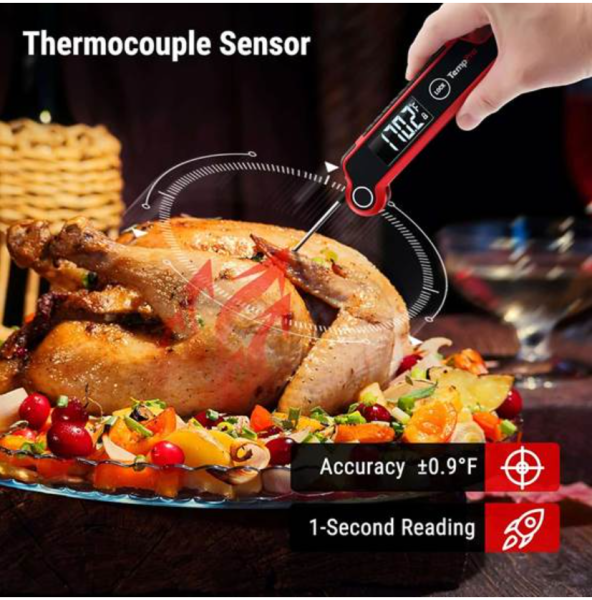
How to Use the TempPro TP620 to Check Chicken Doneness
Using the TempPro TP620 is straightforward, even if you’ve never used a meat thermometer before.
l Turn on the instant-read thermometer and make sure it’s set to your preferred unit (°F or °C).
l Insert the probe into the thickest part of the chicken. For chicken breasts, this is usually the center; for thighs or whole chicken, avoid touching the bone, as it can give a false reading.
l Wait for the temperature to stabilize and click the Lock to lock the temperature.
l Check the reading. Once it reaches 165°F (74°C), your chicken is fully cooked and safe to eat.
l Remove the chicken from heat promptly to prevent overcooking.
For best results, you can also remove the chicken from heat when it’s around 160-162°F and let it rest. During resting, the temperature will continue to rise slightly, reaching the safe zone without drying out the meat.
Additional Tips to Avoid Overcooking Chicken
While an instant-read cooking thermometer is your best tool, a few extra tips can help you get even better results:
l Let chicken rest after cooking: Resting for 3-5 minutes allows juices to redistribute, keeping the meat tender.
l Use even thickness: Pound chicken breasts to an even thickness so they cook uniformly.
l Monitor cooking time but don’t rely on it: Use time as a guideline, but always confirm with temperature.
l Cook on medium heat: High heat can overcook the outside before the inside is done.
Final Thoughts
Cooking chicken perfectly doesn’t have to be complicated. By moving away from unreliable visual checks and using a precise tool like an instant-read thermometer, you can ensure your meals are both safe and delicious.
The TempPro TP620 Digital Instant-Read Meat Thermometer makes this process simple and efficient. It helps you protect your family’s health while also preserving the flavor and texture of your dishes.
In the end, it’s not just about cooking chicken, but it’s about creating meals your family looks forward to, with confidence and ease in your kitchen.