


The U.S. Department of Agriculture’s Forest Service announced March 31 it would be undergoing a large consolidation. Nearly 60 research organizations will be closed in order to move leadership closer to the areas it serves — mainly the West — under President Donald Trump’s wish to return “common sense” to the way governments are run, as per Secretary of Agriculture Brooke Rollins.
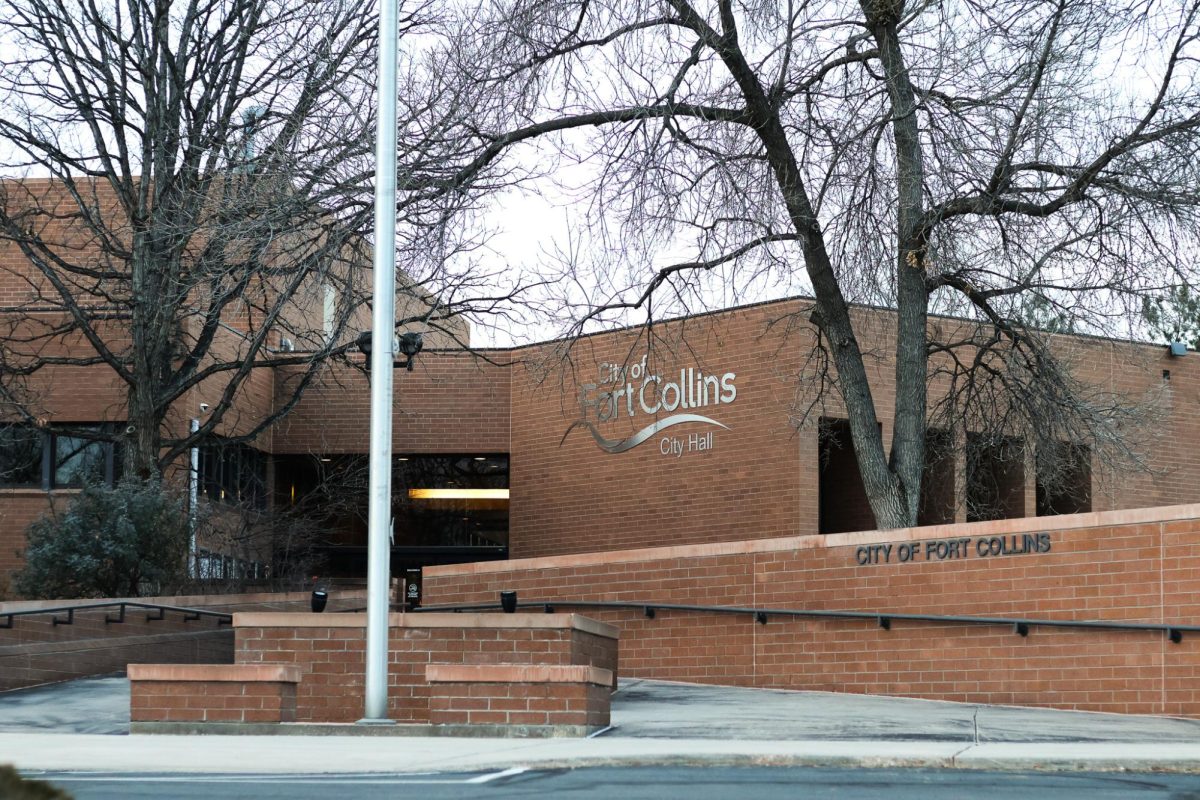
Under this reorganization, headquarters will be moved from Washington D.C. to Salt Lake City, and a Forest Service service center will be opening in Fort Collins.
Five hundred employees will be expected to move, as all regional offices are being shut down due to the USFS moving toward a state-based model. Because of this, there are rising concerns about the future of forest management and the research lost as stations close.
“Land management and research on our forests are inherently tied to a place,” Colorado State University Associate Professor of Forest and Rangeland Stewardship Camille Stevens-Rumann said. “As we lose those more localized offices, I think there’s potentially the effect of having less research done.”
Before her time as an associate professor at CSU, Stevens-Rumann worked for the USFS as a seasonal wildland firefighter and volunteered for the Rocky Mountain Research Station.
To her and many others, there is potential for some Western areas to thrive under the consolidation, but it can come at the cost of losing regional resources. States like California, Mississippi and Michigan stand to lose the highest number of research stations, with six, five and four closures in each state respectively.
“If everybody gets centrally located, you suddenly lose a lot of that on-the-ground connection,” Stevens-Rumann said. “If everybody’s here in Fort Collins, (that) would be great for me personally, but not necessarily for everybody. You lose all of that place-based knowledge in Montana or Idaho or Arizona.”
Concerns about the consolidation are now overlapping with broader environmental pressures, as several states face their worst drought conditions since U.S. Drought Monitor data collection began in 2000. And with worsening protection in some areas, wildfires can get out of hand and damage the entire forest.
“We’re going into a busy fire season, a busy recreation time, and all of those put a lot of strain on our public lands,” Stevens-Rumann said. “These are the people who should be focused on helping protect and preserve those areas. And instead, they’re dealing with a lot of turmoil.”
In 2025, the Department of Government Efficiency laid off around 3,400 USFS employees. With this recent consolidation order, that number is expected to grow, as employees can also choose to leave the workforce.
“I really hope that the Forest Service and the Park Service make it out of all of these reorganizations with people who are still motivated and excited to have those positions,” Stevens-Rumann said. “We’re talking about a uniquely American thing: this concept of having public land, and you can’t have public land without the people that manage it.”
Evelyn Phillips, who recently graduated from CSU with a degree in forestry and a concentration in fire science, is currently working for the city of Littleton, Colorado, in the forestry department.
Phillips said she has witnessed her coworkers being let go of their high-ranking “dream” jobs in the Forest Service, having to return to urban work or find a new job altogether.
“I don’t really know how well we’re going to come back from (the consolidation),” Phillips said. “Even if there’s a different administration in the future, I think this is a really imperative time right now to be doing what we can for the Earth and the environment, and it’s just not getting done. … It’s a hard thing to watch happen and feel powerless.”
Many individuals feel their voices alone aren’t enough, but now, major companies are speaking out regarding the consolidation.
Patagonia said this transition will “gut the agency and sabotage its ability to manage the 193 million acres of forests and grasslands it oversees.” Columbia Sportswear also released a statement and signed with The Conservation Alliance — a business organization for conservation. Over 70 other companies have signed the alliance.
Companies emphasized the importance of natural areas, such as trees in the forests.
“(Trees) provide us oxygen; they provide us a lot of different things — shade, everything,” Phillips said. “They provide habitat. They help keep our water clean. It’s a big thing. And I think it’s really disheartening to see this going on and the lack of care for our environment. … I’ve wanted to do this since I was a kid, so it just feels a little soul crushing.”
Phillips said she hopes to work as a park ranger one day for a state or national park, but for her and many others, it may be challenging — especially for those located outside of Utah and Colorado — as the forestry industry is consolidating.
CSU student Rumeli Espinosa is preparing to start her internship this summer with the Colorado State Forest Service but said she is stepping into a field where the future remains uncertain.
“It was a very, very sad moment for all of us learning more about (the consolidation) and (for) Fort Collins, especially, addressing that we are more safe,” Espinosa said. “Just thinking about all of the foresters and all of their families that are affected by the offices closed down, it’s a very sad thing that we don’t have the funding to support them.”
Espinosa said that because Colorado is assuming more responsibility and control at the state level, it could be a positive, as it gives the state both the authority and motivation to effectively lead reforestation efforts.
When the consolidation was first announced, Colorado Gov. Jared Polis issued a statement with the USDA’s press release, stating that because of Colorado’s outdoor spaces and research, “It only makes sense that the U.S. Forest Service would include a location in our great state. … Having a closer relationship with our federal partners is important to maintaining those lands and the communities around them.”
Amid changes to forestry research, federal jobs and region-based knowledge, uncertainty continues to surround the future of the Forest Service. Still, many in the field are fighting for the forests and the 121-year-old USFS.
“Science is a collaborative art,” Espinosa said. “We need so many individuals and so much support, and everybody putting in their ideas and their research and their management techniques in order to form this mosaic of reforestation and management in the National Forest.”
Reach Sophie Webb at science@collegian.com or on social media @sophgwebb.





Edward D Buenger • Apr 29, 2026 at 4:34 pm
The forest service building is next door to the west of this building. This is building D, and houses USDA- Agriculture Research Service.