
Sustainability has long been a core value at Colorado State University, having been recognized for its dedication to environmental and social stewardship on both state and national levels.
This effort to engage in sustainable practices will once again be reflected during Ram Welcome Week, a campuswide coordinated effort to welcome new students at the start of each semester. Alongside move-in to the student dormitories, first-years have the opportunity to attend a variety of events and activities to become part of the larger CSU community.
However, large-scale events such as these tend to produce significant amounts of waste quickly, leading to mountains of single-use bottle, cans and food containers, as well as promotional materials. To address this and further their mission, CSU has created Campus Sustainability Guides to provide resources, tips and practices to help students, faculty and CSU staff be more sustainable.
The guides outline a number of sustainable strategies for zero-waste events, tailgating, printing and more. Tonie Miyamoto, executive director of division communications and sustainability within CSU’s Vice President for Student Affairs Office, said that guides offer practical recommendations for organizers to make events more sustainable but are ultimately not mandatory.
“The intent is to give folks a whole bunch of considerations and meet as many that you reasonably can for your event, recognizing that any reduction in electricity use, any reduction in waste generated (and) any reduction in landfill material is a step in the right direction,” Miyamoto said.
Ram Welcome leaders and organizers utilize a number of strategies from the guides to make the week more sustainable and introduce first-years to CSU’s culture of sustainability. Miyamoto highlighted the Forever Green shirt that first-years receive during Ram Welcome as an example, as the shirts are produced with organic cotton and recycled polyester, a combo that reduces the shirt’s environmental impact.
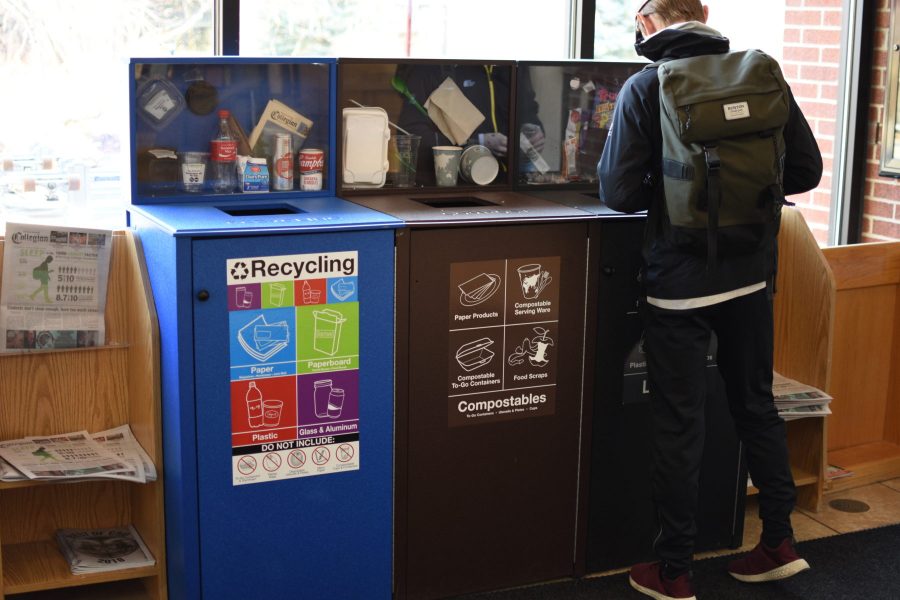
To make their events as sustainable as possible, Ram Welcome also partners with the Zero Waste Team, a student-led group that aims to reduce waste on campus and in students’ personal lives as well as further outreach and education about how to be more sustainable. Co-president Liri Sananes said that the Zero Waste Team supports a select number of events based on its capacity, including the move-in, the to-go breakfast Friday morning prior to convocation and the street fair that follows.
“We really just are the people doing the dirty work on the ground,” Sananes said. “We’ll have recycling bins and the big dumpsters, (and) if anyone has any questions, we can answer those questions.”
Rebecca Gilmore, the assistant director of transition programs, said throughout the sorting of waste, they also make an effort to donate unopened and uneaten food to the Rams Against Hunger food pantry.
“We have Zero Waste Team members that come out on the intramural fields with us and it’s basically 30 minutes of students coming through throwing away stuff and we’re able to collect unopened and uneaten food and salvage a bunch of that to take over to Rams Against Hunger,” Gilmore said.
While significant strides have occurred to make Ram Welcome more sustainable, Sananes and Gilmore both acknowledged the challenges that come with that. They both gave the example of the pep rally where incoming freshmen come together at Canvas Stadium, as an event that they hope can be more sustainable in the future.
“One thing that we explored last year with our partners in the Residential Leadership Programs is getting sustainable beads (and) not just plastic beads,” Gilmore said. “But those are really hard to find for the vibe of what we’re going for and that aren’t just so much more exorbitantly expensive. We have students who leave those behind either in the parking lot or the stadium and we’re able to save what we can and give those out for different things.”
Sananes said that he’s also found many of the CSU-themed towels provided to students during the event laying on the ground outside or in the trash later.
A significant challenge facing organizers is also the cost of sustainable materials, given that they are often significantly more expensive than conventional materials. Miyamoto said budget restrictions often bar many students from choosing the more sustainable option.
“We’ve definitely had student organizations reach out and say we only have a budget of $500,” Miyamoto said. “It’s going to mean ordering fewer of an item, so if you were hoping to get 500 swag items for $500, the budget can be a big driver of things like that.”
Gilmore said she recognizes that sustainability often comes down to individual choices, and she hopes that as students spend more time at CSU, they increasingly choose more sustainable practices throughout their daily lives.
“At Ram Welcome, students are here for the very first time, so there hasn’t been that opportunity yet to create culture around sustainability,” Gilmore said. “If we have our leaders talking with students and sharing that we do care about sustainability and sharing the importance to our university of doing the extra thing to make better choices, I think we can baby step it.”
Reach Claire VanDeventer at science@collegian.com or on social media @RMCollegian.