
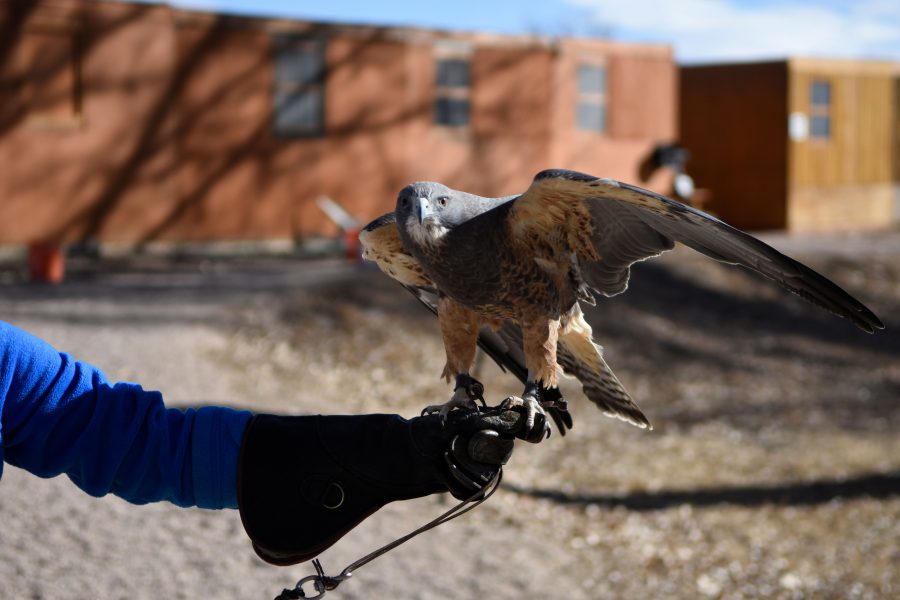
On a rehabilitation site near Old Town Fort Collins, more than 50 raptors are in active care at once. Hawks, owls and falcons are recovering from car strikes, window collisions and other injuries and illnesses, each housed in enclosures designed to get them back into the wild.
“Being able to move them through in a timely fashion to get them back out to the wild really does take a lot of the idea of air traffic control,” said Carin Avila, executive director of the Rocky Mountain Raptor Program. “That does take time because we’re limited on space for the birds to do their rehabilitative process.”
RMRP is a Fort Collins nonprofit approaching its 40th anniversary of raptor rescue, rehabilitation and conservation education. The organization began in 1979 as a veterinary club at Colorado State University, became a formal organization in 1987 and left campus for its current site near Old Town in 2007.
RMRP admits roughly 300 injured or sick raptors each year from northern Colorado and parts of southern and northeastern Wyoming, according to the organization. About 75% of treatable cases are eventually released back into the wild, a rate that, according to Avila, the group has maintained for 40 years. She said a bird typically stays in care for about 53 days.
Space, Avila said, is the organization’s biggest constraint, followed closely by funding. RMRP receives no federal money and only a small share of state funding tied to its rehabilitation work. Less than 10% of its operating budget comes from foundations and grants, Avila said. The rest comes from community donations, a benefit gala hosted each spring at CSU, merchandise sales, in-kind gifts and speaking fees to its education programs.
That education arm has grown substantially in the years since RMRP left campus. Last year alone, the organization hosted 147 formal presentations, the total attendees being about 9,000; led 98 tours which brought in roughly 500 more people; and staffed 64 informal outreach events, such as their booths at community festivals like Elk Fest and Boulder Creek Festival, that reached an estimated 40,000 people, according to Heather Schneider, RMRP’s director of education and outreach. Across the organization, RMRP logged more than 225 days of conservation education annually and reached a total of 47,785 people.
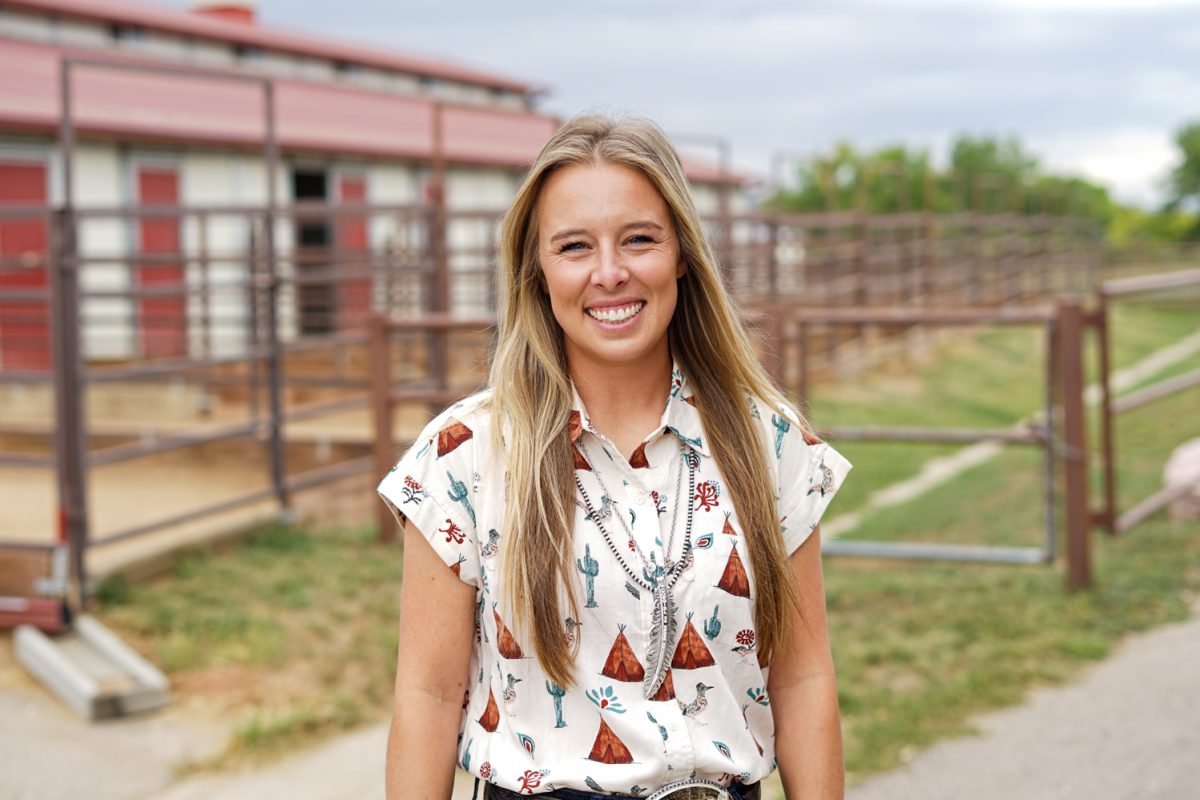
Schneider, a 2018 CSU zoology graduate, returned to Colorado in 2024 after five and a half years doing similar outreach work at a wildlife rehabilitation center in San Diego. She now oversees a team of three full-time staff members and the organization’s 19 education ambassadors, which are permanently disabled raptors unable to survive in the wild who instead work, by choice, in classrooms and at community events.
“They all work free-choice,” Schneider said. “If they decide they want a day off, they absolutely get that day off, and we switch gears and see if another education ambassador is willing to go along to the program as well.”
Selecting a bird as an ambassador starts with nonreleasability, Schneider said, but a bird’s temperament around humans matters just as much. Birds who show signs of chronic stress rather than comfort with handling and training aren’t brought into the program, regardless of their physical condition.
Among Schneider’s favorites is Romeo, an American Kestrel who lost most of his eyesight to West Nile virus as a young bird and has spent years introducing visitors to the species. Schneider said the connections those birds form with the public — a toddler who mistakes every hawk for one named Barley, a little girl who shares a name with a Red-tailed Hawk called Ember or a tour visitor who broke down in tears standing near a raptor for the first time — are what keep the education mission tied to the rehabilitation work happening a few enclosures away.
“(It) really does take a community to do the work that we do,” Avila said. “Not only to be here to do the care through volunteerism or our staff members, but the veterinarians at Colorado State University, who are still our primary care physicians for the birds we take care of.”
CSU remains woven into RMRP’s operations. Veterinary students and faculty provide medical care and training opportunities Schneider said are hard to find elsewhere in a vet program. The organization also runs a competitive summer internship, opening applications each January and filling positions by May. The program also provides semesterlong placements and works with roughly 100 volunteers, whose combined service equates to about 22 full-time staff positions, according to RMRP.
Looking ahead, Avila said the organization’s biggest ambition is a new wildfire and nature center, a project RMRP has pursued since leaving CSU’s campus nearly two decades ago. The current facility isn’t open to the public full time; a future site, like the 30-acre conservation campus on the new voter-approved Foothills Multi-Use Site, would change that.
“That would be our dream, I think, and that would be our hope in definitely 10 years,” Avila said.
For now, the work continues at the scale it always has: one bird, one program and one donor at a time. Schneider said she tries to keep that framing in front of the classrooms and community groups RMRP reaches each year.
“Raptors are indicator species for our ecosystem,” Schneider said. “So if raptors are doing well, that means our ecosystems are healthy. It’s really important to conserve them and make sure that they are surviving and thriving out in the wild because they help us learn and know a lot more than people might think they do.”
Reach Maci Lesh at science@collegian.com or on social media @macileshmedia.