
The City of Fort Collins recently made changes to its land use code, shifting the level of review required for certain types of residential buildings in an attempt to improve housing affordability in Fort Collins.
The land use code is a set of rules for the city dictating the use and development of land in Fort Collins, such as the types of building, height, parking and open space required and more.
Meaghan Overton, senior policy and funding strategist at Housing Catalyst, who was previously the housing manager for the city, explained the purpose of land use codes and the process by which amendments and changes to the city’s code are adopted in an email statement to The Collegian.
“At the broadest level, land use codes are regulatory documents that outline the ‘rules’ for development in a community — what kinds of things can be built, where and how,” Overton said. “These codes are adopted by a local government. In Fort Collins, that means that our land use code is adopted by city council, and city council is the entity that has the authority to make changes to the code.”
The recent changes from the city in Ordinance No. 118, which passed Oct. 6, move the level of review for certain types of residential buildings, including single-unit dwellings, single-unit attached dwellings, two-unit dwellings and more to the basic development review. The Development Review Process is the evaluation a building proposal must go through to ensure it follows city guidelines before it proceeds to permitting.
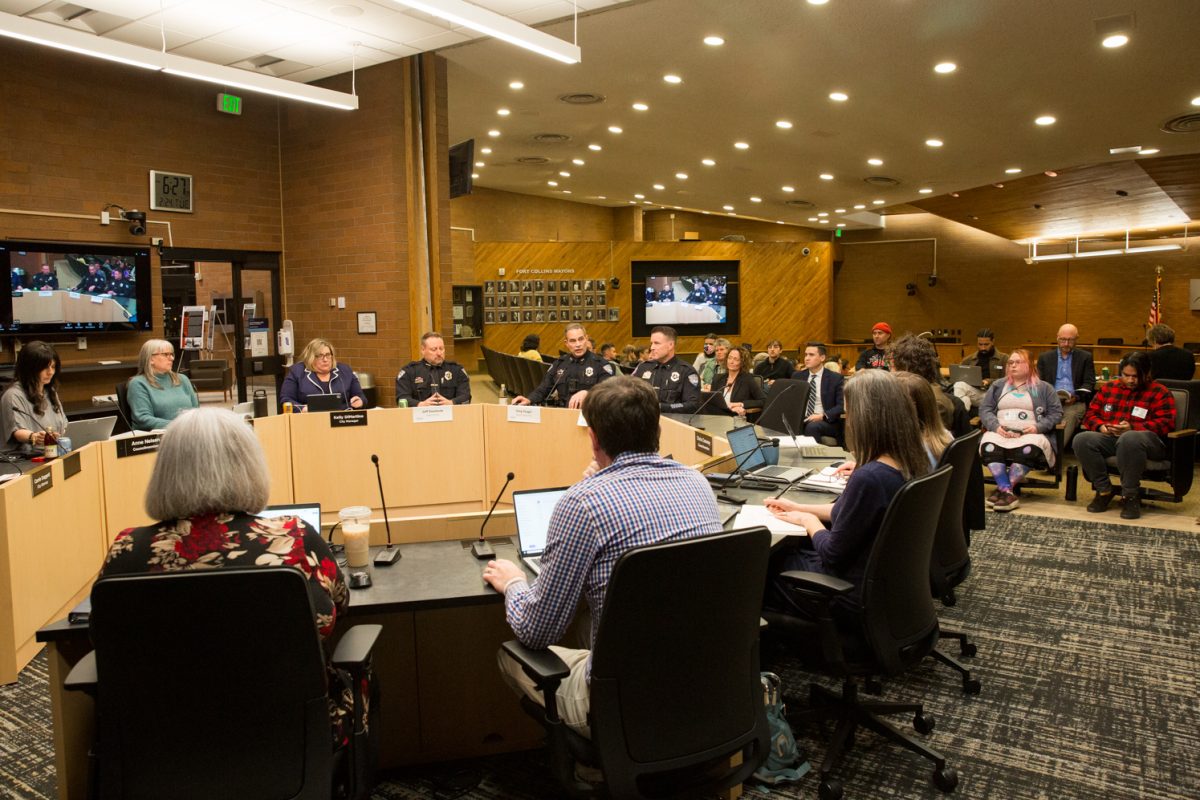
The ordinance passed via a 5-1 vote, with District 5 Councilmember Amy Hoeven being the only member to vote no on the measure.
Hoeven pointed to two issues she had with the ordinance; she argued its shift to the basic development review process is purely administrative and that it does not do enough to directly support renters.
“I really started to analyze Ordinance 118, and for me, it doesn’t do enough,” Hoeven said. “It may speed up development a little bit, but I want to personally focus on helping renters and the immediate needs of the community.”
Hoeven said the council identified five priorities at the start of their term, with affordable and sustainable growth as one of the top priorities. This led to the establishment of the Ad Hoc Committee On Affordable and Sustainable Growth in March, which has played a significant role in the discussions around the land use code. The committee consists of three members of City Council: Mayor Emily Francis, District 1 Councilmember Chris Conway and District 6 Councilmember Anne Nelsen. Julie Pignataro serves as an alternate and Sylvia Tatman-Burruss as staff liaison. The committee’s mission is to “promote affordability and sustainable growth by making development predictable, efficient and cost-effective,” according to its homepage.
Jamie Thorpe, vice president of entitlements at Hartford Homes, addressed council on Oct. 6 and encouraged them to pass the ordinance but to continue to find solutions to the complex problem of affordability.
“Developers often speak of the problem as death by a thousand cuts,” Thorpe said. “So the solution then isn’t a single one time fix, there is no panacea for the cost of housing, but if the problem is death by a thousand cuts, the solution might best be described as healing by a thousand bandages. The BDR proposal in front of you this evening is one very good bandage for one of those cuts.”
During the first discussion of the changes on Sept. 1, Clay Frickey, planning manager for the city, acknowledged these changes fundamentally change the role of community members in the review process. He said that the changes are ultimately intended to speed up the review and approval process of these housing types to better support housing affordability.
Hoeven said her goal to bridge the gap between students at Colorado State University and the local community continues to be a priority for her, especially as rising costs place economic pressure on the student body.
“There is a crevice between the university and the community, and I want to be able to help narrow that and let students know that we at the city council consider their time here,” Hoeven said. “Students bring so much vibrancy and are so vital to our community; we have to be able to meet them where they are.”
Hoeven said City Council will also receive an update on the Fort Collins Regional Housing Needs Assessment and an affordable housing update during the Oct. 27 work session.
Reach Sam Whitted at news@collegian.com or on social media @RMCollegian.