

The Fort Collins City Council had a packed agenda for the month of September, including discussions surrounding electric micromobility device safety, changes to the land use code and the biggest item of discussion was the biennial budget.
2027-28 biennial budget
On Sept. 3, the Fort Collins City Manager’s Office released its Recommended Budget for 2027-28. The budget focuses on realigning the city’s finances and managing quickly growing expenses. According to the City Manager’s Office, capital investments for the next two years are currently projected to be approximately $172 million, which is broken down into $94.6 million for 2027 and $77.4 million for 2028.
After years of following a Budgeting For Outcomes approach, which bases budget allocations on the effectiveness of programs, the city has transitioned to a Priority-Based Budget approach, creating a new budget process that more clearly communicates community outcomes and connections between services and resources.
District 5 Councilmember Amy Hoeven emphasized the council’s focus is specifically on affordable housing and creating sustainable growth within the community. She also said she and other council members are mindful of recent spikes in utility prices and other changes at the state level that are impacting the city’s budgetary decisions.
“What we are really focused on is trying to implement tools that will make it more affordable for people to live here,” Hoeven said. “The city of Fort Collins is facing a $10 million budget deficit, and we are really trying to make sure we’re putting money in the places that will help the community.”
Investments in public safety and police services, changes in utilities infrastructure and a reduction of the Grocery Tax Rebate Program are just a few of the modifications planned in the budget.
Hoeven also acknowledged the struggles Colorado State University students face with high costs of living and tuition. Additionally, she pointed out the importance of the city maintaining a strong relationship with CSU and factoring in its student population when analyzing spending.
“We really want to emphasize our relationship with CSU and all the innovation coming out of the university, making sure all of these homegrown ideas can stay in Fort Collins so students can live and work,” Hoeven said.
City Council budget discussions will continue in a work session Oct. 13. Two public hearings will also take place Oct. 6 and 20, with the final work session following on Oct. 27. City Council’s first reading to adopt the budget will be Nov. 3, with the second and final reading Nov. 17.
Fort Collins Land Use Code changes
The City of Fort Collins is changing its land use code with the goal of creating a clearer pathway within the development review process for housing projects.
The new code would revise the level of review for certain types of housing and residential-land use, allowing the city to bypass neighborhood review and public meetings.
“This fundamentally changes the role of the community a little bit in the development review process,” Planning Manager Clay Frickey said. “This means that less of these projects will have neighborhood meetings and public hearings associated with them.”
The council had a detailed discussion over the potential changes during the Sept. 1 regular meeting, with some members questioning how the process would impact housing affordability and the public comment process, while others found the changes would be a more efficient process and lead to faster development.
Hoeven said she has been researching what these changes may mean for the community and found the changes may not be entirely beneficial.
“The land use code changes, by removing community review, planning and zoning or neighborhood meetings, won’t help lower rent for a particular percentage of (Area Median Income) renters,” Hoeven said. “In my mind, it is simply just bypassing public feedback.”
On Sept. 15, the council passed Ordinance No. 118 on first reading, amending the Land Use Code of the City of Fort Collins to change the type of review for certain residential uses. A vote for final approval will occur Oct. 6 during the regular meeting.
E-Mobility device safety
The use of e-mobility devices — such as e-bicycles and e-scooters — has been on the rise over the last few years, a trend that has sparked concerns over safety. The City and Fort Collins Police Services are actively working to increase safety measures for those who ride e-bikes and e-scooters, including additional education on the dangers of e-mobility device usage, citations for dangerous behaviors and other enforcement measures, such as age or helmet requirements. Usage of these devices has become especially popular among children and young adults, including students at CSU.
According to a report given to the council injuries resulting from e-mobility device usage have increased since 2024, and reported injuries in 2026 are already set to pass those reported in 2025. The risk of injury for individuals riding these devices is significant.
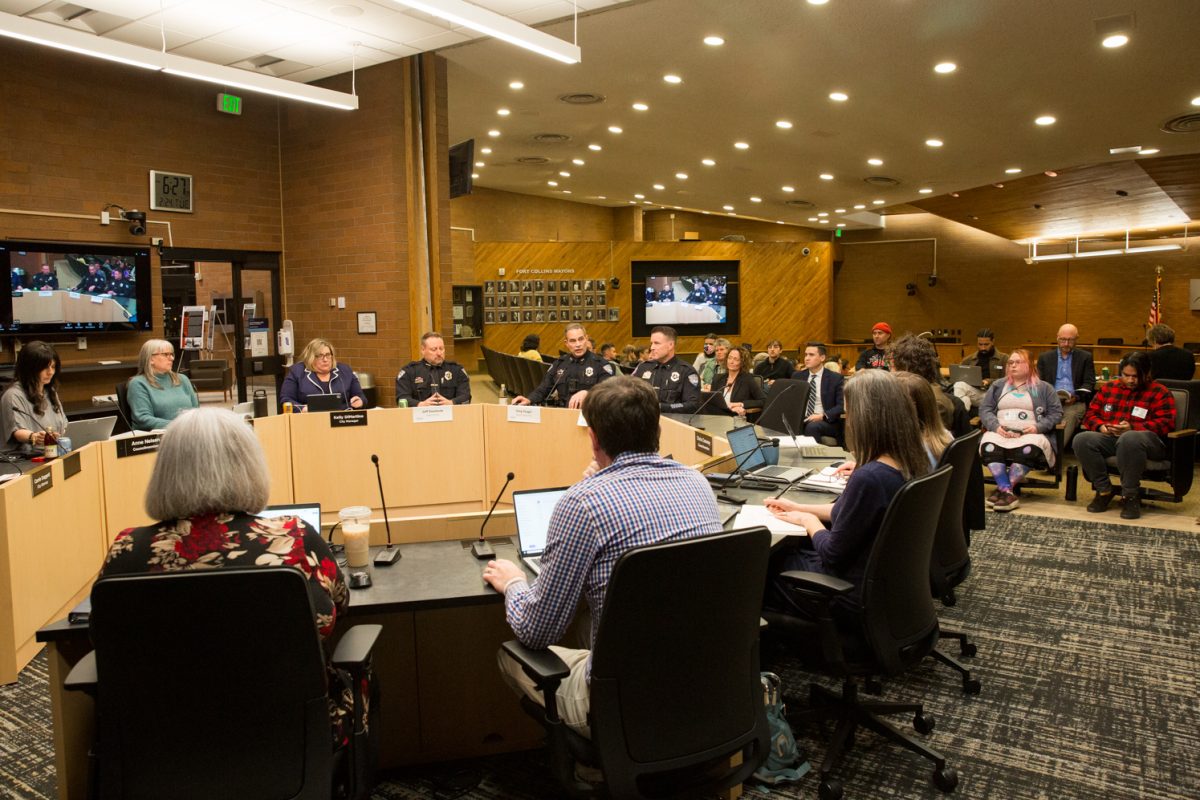
“When we look at our injuries related to e-mobility devices, you stand an 81% chance of being injured if you’re on an e-mobility device and you are involved in an accident,” Assistant Police Chief Justin Gallimore said while speaking to council during the Sept. 15 work session.
FCPS representatives emphasized the importance of safe riding behaviors and wearing a helmet while using these devices, encouraging the public to continue to educate themselves on proper riding behavior.
Reach Sam Whitted at news@collegian.com or on social media @RMCollegian.