
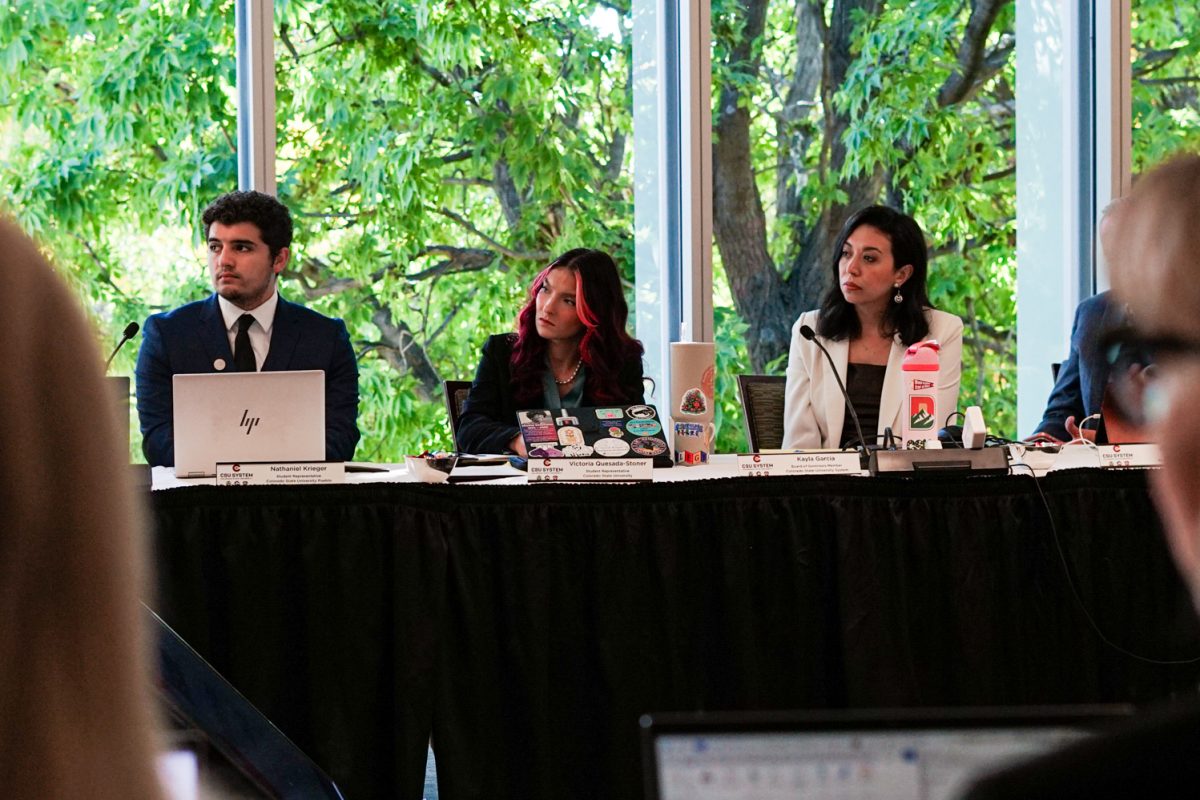
The Colorado State University Board of Governors convened Oct. 1 and 2 on CSU’s Fort Collins campus for their regular meeting to discuss finances, initiatives and updates from the three campuses and programs under CSU System.
The Board of Governors is the 15-member governing body responsible for overseeing the CSU System, which includes its three campuses: CSU Fort Collins, CSU Pueblo and CSU Global. The board is made up of nine voting members who are appointed by the Colorado governor and confirmed by the Colorado Senate to serve four-year terms, as well as six nonvoting members, which includes a faculty and student representative from each campus.
Public comment
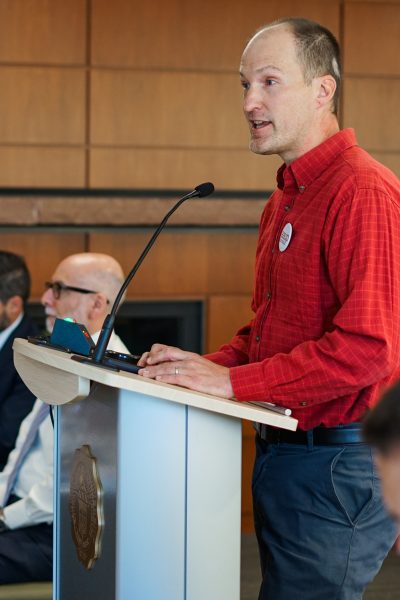
The meeting began Oct. 1 with an opportunity for public comment, during which various students and faculty members discussed their concerns.
Notably, CSU’s chapter of the American Association of University Professors brought over 500 postcards to share with the board as part of its Postcard Initiative, which is in its second year, according to the group’s October Newsletter. It aims to bring the concerns of students, faculty and staff to the members of the board.
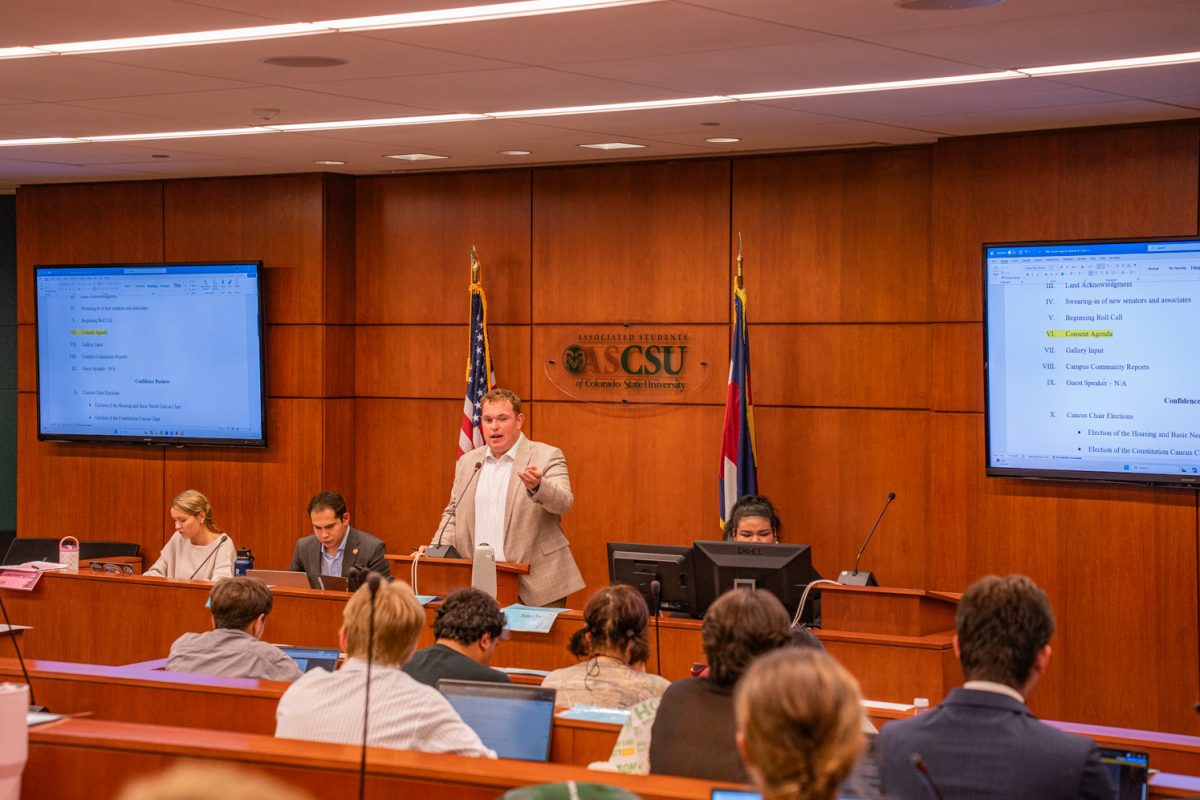
The initiative was held in collaboration with Associated Students of CSU, the campus’ student government, who recently passed Resolution #5609, a renewal of support for the postcard initiative.
“There’s a wide range of issues on those postcards,” said Anders Fremstad, president of the AAUP chapter and associate professor of economics in an interview prior to public comment. “I would say that the main issues that come up besides a lack of transparency and shared governance (is) free speech and making sure people can say what they want to say on this campus here.”
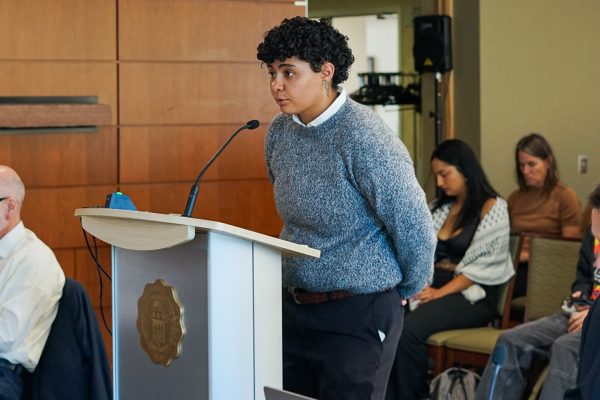
Student speakers touched on the funding of campus resources like Rams Against Hunger and also shared reports of religious discrimination and harassment of students of color on campus.
Chancellor’s Report
During the Chancellor’s Report, the board overviewed the University Design Institute: CSU System Accelerator, an opportunity to “redesign CSU System capacity to advance community-informed innovations that strengthen rural resilience and regional needs,” according to a presentation delivered by Lisa Foss, senior director for U.S. Practice at the University Design Institute at Arizona State University. According to a working document reviewed by The Collegian, participating teams will share their ideas with campus and system leaders, as well as the board.
Also reviewed was the board’s Policy 100, which encompasses its policies and procedures. Some members said the policy is a routine action item and was approved with no dissent.
Other notable updates from the Chancellor’s Report include CSU campuses’ admissions agreements with Denver Public Schools, which will allow for either direct or guaranteed admission to each of the respective campuses. Priorities that fall under the categories of student success and K-12 relationships, land-grant priorities, rural development, innovation and campus collaboration were also addressed through the updates.
Audit and Finance reports
The meeting then transitioned to the Audit and Finance Committee, which is chaired by BOG Secretary Louis Martin. The board reviewed student fees for respective campuses, state budget updates, Fiscal Year 2028 budget update and more.
Much of the projected budget expenditures are still tentative, as the state budget created by the governor is due Nov. 1 and various ballot measures have yet to be decided on by voters. CSU President Amy Parsons said the Fort Collins campus hopes to engage with the board earlier when making decisions this year.
The board approved measures such as the amended FY 2026-27 cash list for CSU and financing for Nursing and Physical Therapy Renovation.
Fort Collins campus updates
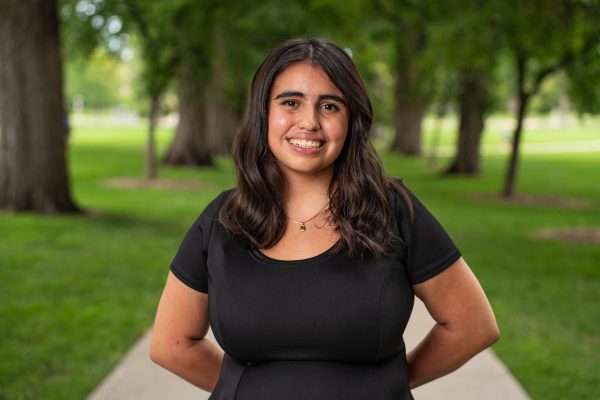
Parsons, ASCSU Student Body President Victoria Quesada-Stoner and CSU Fort Collinsfaculty representative Karrin Anderson presented their respective reports.
During Quesada-Stoner’s report, she noted a number of ASCSU initiatives, such as streamlining printing and working to assemble a Student AI Policy Group. Her report identified three areas of campus concerns: impacts following the closure of Braiden Dining Hall, feedback about the new housing and dining structure and concerns about belonging and student safety following recent campus messaging.
In reference to concerns from students that were shared during public comment, Quesada Stoner said she has been working with CSU Vice President of Student Affairs Blanche Hughes to address them.
“That complexity, however, does not lessen our responsibility to support students or dictate concerns seriously,” Quesada-Stoner said. “My hope is that we can approach this with collaboration, and this cannot be within one office or branch workers alone. … We may not always agree on every part of the process, but we should share the same goal, ensuring that students know where to turn, our concerns are addressed responsibly and that every member of our community is treated with dignity and respect.”
Faculty reports stated that FY 2026 research expenditures were the second highest in the university’s history, only falling short behind FY 2025. Challenges include dwindling faculty as CSU only hired nine tenure-line faculty last year, which Anderson said decreases the number of faculty members engaged in research. She also expressed concerns about the timing of cuts made by the board and faculty having difficulty understanding higher level spending decisions.
Parsons highlighted summer work as well as milestones for the university, such as joining the Pac-12 conference, the 50th anniversary of El Centro and the Black/African American Cultural Center and more.
Friday session
The meeting continued Friday, Oct. 2, wherein board members heard the annual government affairs report that highlighted the university’s relationship with state legislature and the upcoming general election. The board also heard an annual report from CSU’s Agricultural Experiment Station, a statewide scientific research network focused on food production, livestock management, water conservation and more.
The board also reviewed the elimination of seven graduate certificates and the addition of three: AI-driven business transformation, environmental data science and grid modernization.
Reach Chloe Rios and Claire VanDeventer at news@collegian.com or on social media @RMCollegian.