Students filled the Never No Summer Ballroom in the Lory Student Center Nov. 20 for the annual Trans Day of Remembrance ceremony, co-hosted by the Associated Students of Colorado State University and the Black Student Alliance. The program included a celebration of life and a community vigil, offering attendees a space to reflect on and honor transgender individuals who have lost their lives to anti-trans violence.
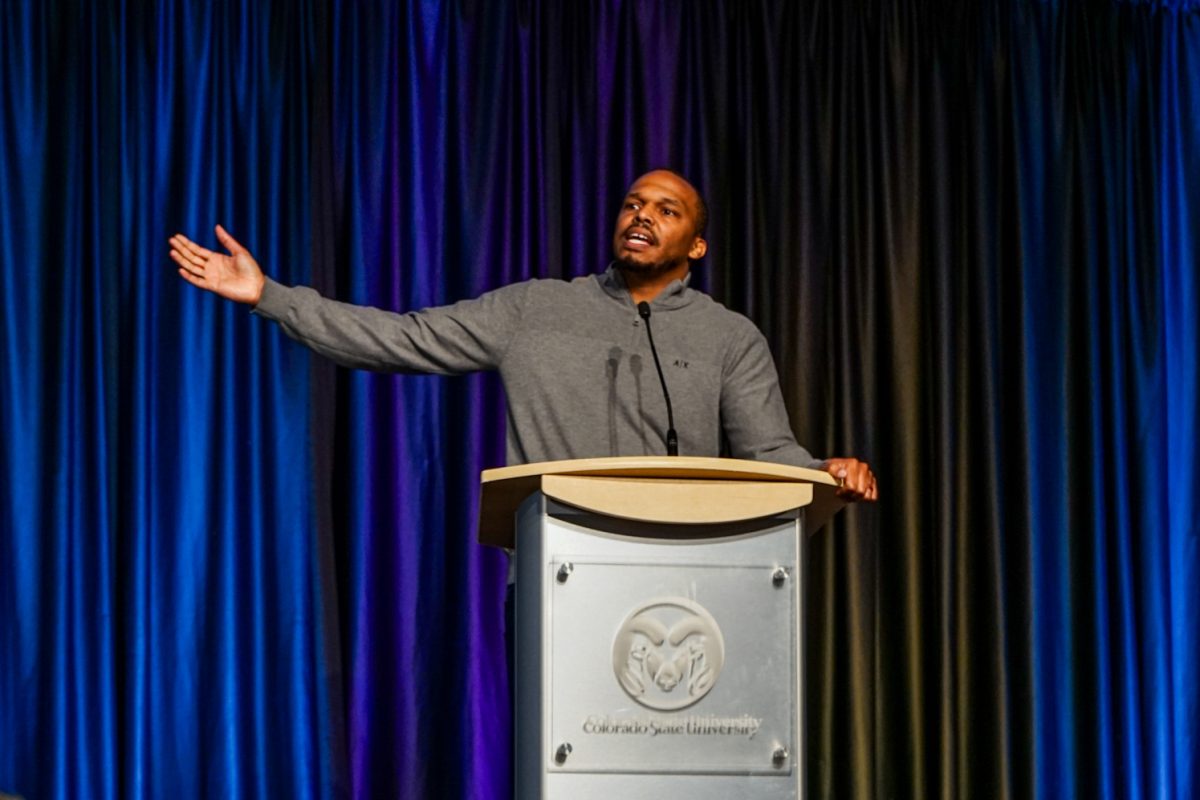
Ellie Lutz served as the emcee, guiding the program through a series of speakers, reflections and communal art activities. Among the speakers was Kristen Draper, former president of Poudre Valley School District’s School Board Directors and manager of Old Town Library within the Poudre River Public Library District. Draper shared data from the Trevor Project highlighting the high suicide rates among transgender and nonbinary youth, emphasizing the importance of acceptance by parents, teachers and trusted adults in reducing risk.
“Support them,” Draper said. “Be that trusted adult. For all of you parents, friends, family, found family, teachers, doctors and librarians who are that trusted adult for a young person: Thank you.”
Other speakers shared personal experiences and reflections, underscoring the unique challenges trans youth face. For instance, one CSU student who did not share a name spoke about the difficulties of navigating puberty and school as a transgender teen, emphasizing the daily realities of being misgendered or denied access to safe spaces.
“Puberty is hard enough to go through, seeing your body change in different ways,” they said. “What makes it even harder is seeing it change in ways that you don’t want to see.”
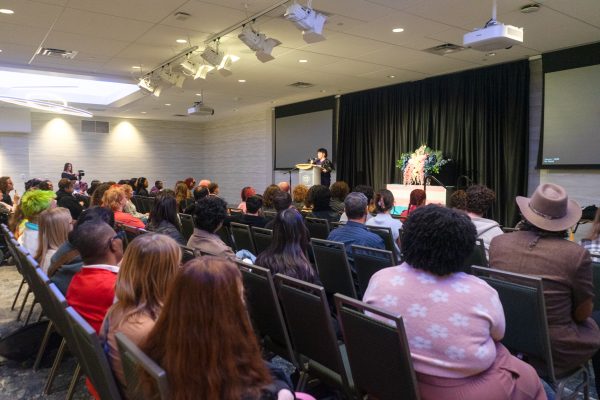
These experiences highlighted not only the personal challenges of being transgender but also the social and digital pressures trans youth face. From navigating school environments to online spaces, students described how misgendering, rejection and harassment can compound the difficulties of adolescence.
“I was told that I could be any person I wanted to online and that I could act any way that I wanted to,” the student said. “This is not the case. If you use any type of pronouns that nobody respects, they will send you death threats. They will track you down. … I was kicked out of many communities once I came out.”
Shifting from personal challenges to messages of encouragement, another participant delivered a “love letter,” emphasizing resilience and self-care as acts of strength.
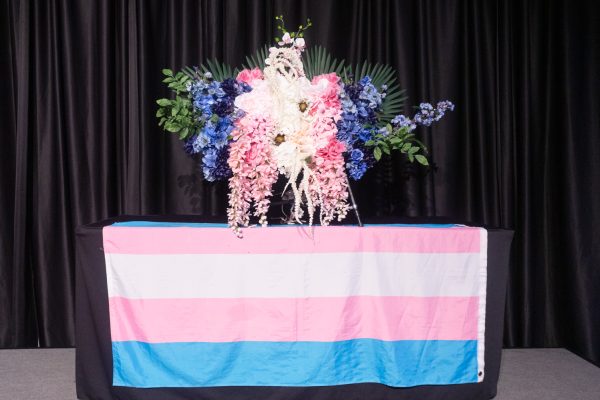
“You were the stars,” they said. “Sprayed across the night sky — baby’s breath among black roses. You, who were made of light that’s been shining for thousands of years. … Just by being visible, you rocked the very world. You earthquake-shaking, breaking things that shouldn’t have been made in the first place. Your very existence, a resistance in their holy war, a war none of us asked for. … Your name will seed the earth, will raise entire forests from the dust.”
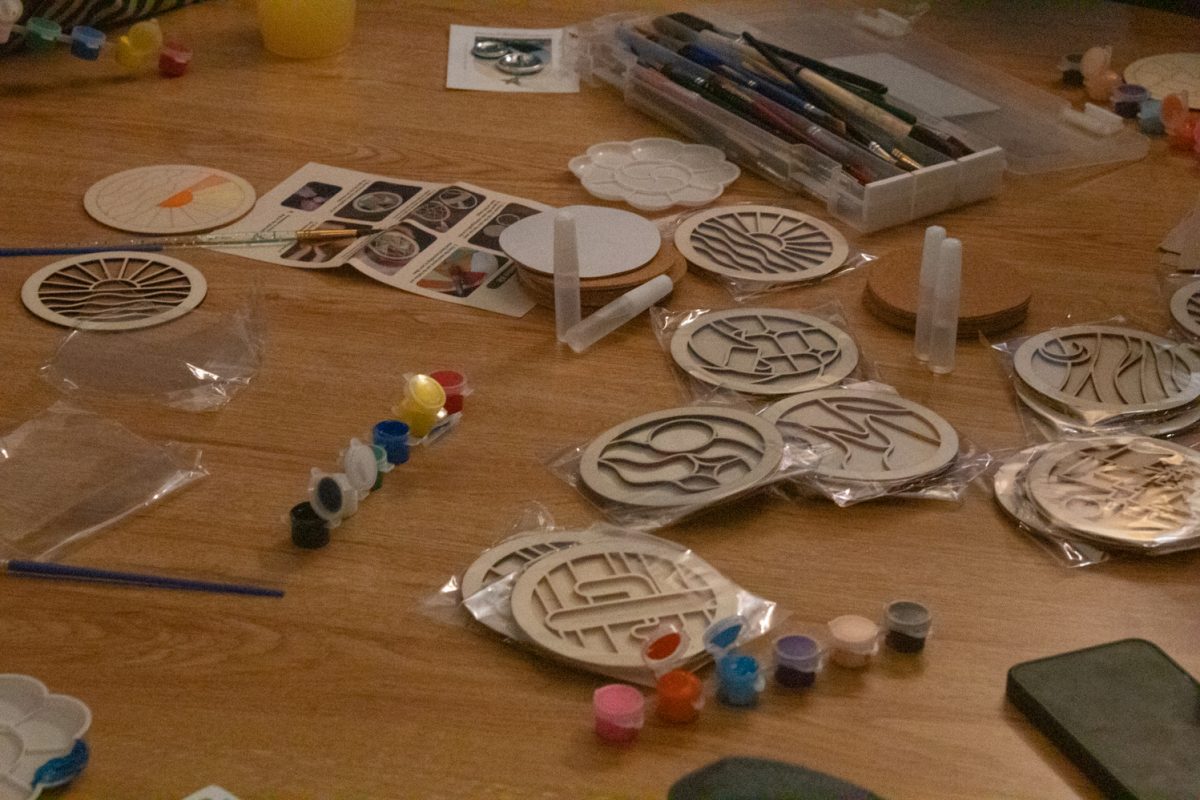
Continuing the theme of resilience and community, the program also included a creative, communal art project celebrating trans lives. Attendees wrote reflections and notes of support on paper hearts, which will later be displayed in the Pride Resource Center, symbolizing love, memory and strength.
“Our survival, our strength and our solidarity is our path to liberation.” – Ferrin Jaudon, ASCSU recruitment and retention officer
The event took place against the backdrop of broader institutional and political challenges. According to ASCSU legislation, CSU will no longer officially publicly support Trans Day of Remembrance due to concerns about potential federal lawsuits. ASCSU senators responded by funding the ceremony through the Student Organization Discretionary Fund, ensuring the event remained student-led. Lutz reassured the Senate that hosting the ceremony as an independent registered student organization did not put federal funding at risk, according to a recent Collegian article.
Despite these hurdles, organizers emphasized the importance of maintaining a space for remembrance, mourning and celebration. Ferrin Jaudon, a co-organizer and ASCSU recruitment and retention officer, said the planning process required rapid coordination.
“We made a team, and we planned this entire event in a week,” Jaudon said. “And we got funding in a week. … It was literally a team of, like, me and three other people that made this entire event happen.”
They added that while they are nonbinary and not trans, supporting the community is essential.
“I feel like if you’re part of any marginalized identity, you should be greatly affected when any of your other brothers or sisters are being hurt,” Jaudon said. “I don’t identify with this community, but that doesn’t mean I shouldn’t show my support and be there for them.”
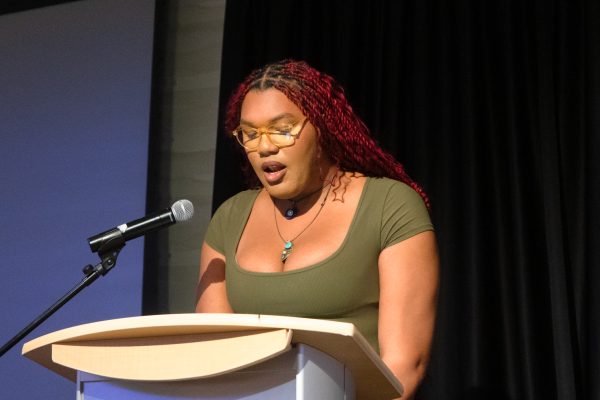
Building on her reflections, Jaudon also emphasized the historical roots and cultural contributions that shape the trans community today.
“When we talk about trans history, we must also talk about Black history,” Jaudon said. “Recognizing this intersectionality is vital because much of what we call trans culture is rooted in Black culture. … Black trans people have created the cultural foundation of queer and trans expression. … From Marsha P. Johnson to Miss Major Griffin-Gracy, their survival and leadership remind us that our power is created through communities, not granted by institutions.
“Resilience is not just about enduring hardship; it’s about surviving and transforming into joy, care and resistance,” Jaudon said. “Tonight, as we honor life’s loss and celebrate those who continue to fight, we carry forward the legacy of Black trans leaders as standing tall together. Our survival, our strength and our solidarity is our path to liberation.”
Reach Maci Lesh at life@collegian.com or on social media @RMCollegian.