
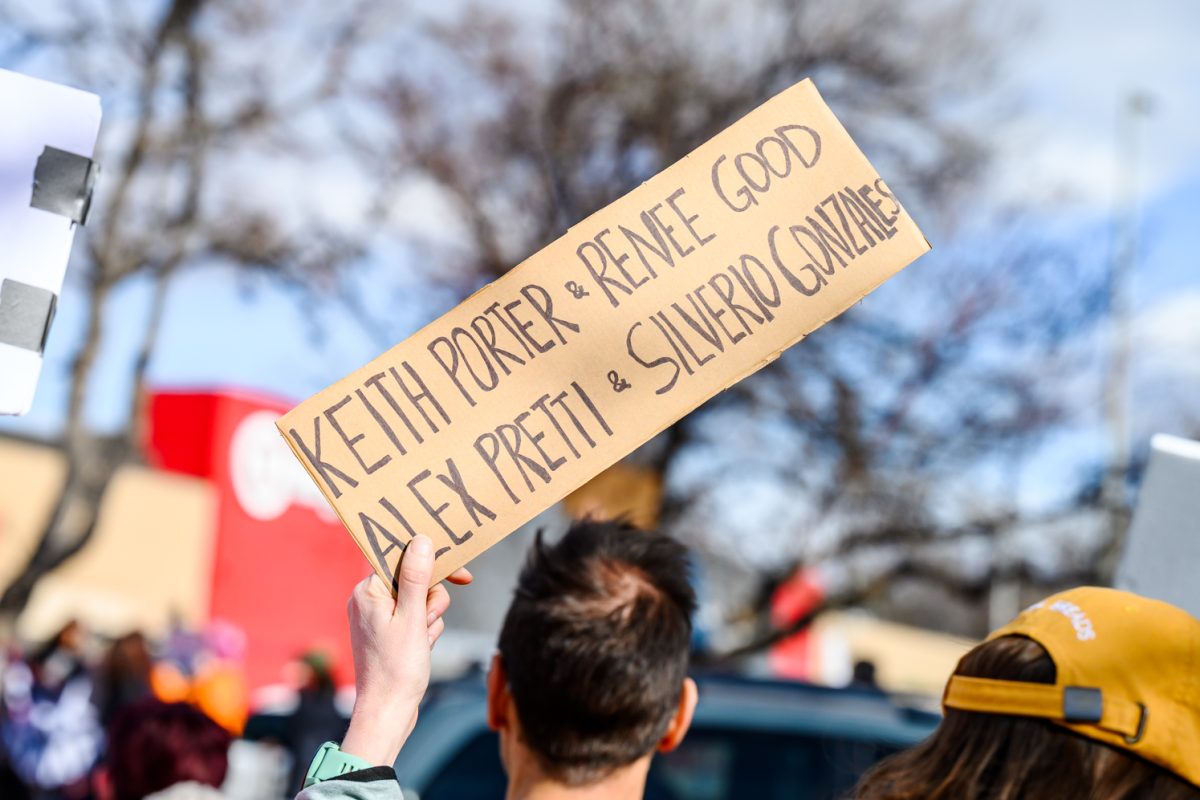
The fatal shootings of Renee Good and Alex Pretti by Immigration and Customs Enforcement agents in Minneapolis have intensified fear among immigrant communities across the nation, including those in Colorado.
Good was killed by an ICE agent who shot into her car windshield Jan. 7. Though it was not the first instance of federal agents shooting a United States citizen, it sparked national outrage and protest against immigration enforcement around the nation.
Weeks later, Pretti was shot and killed by an ICE agent at a protest against the recent crackdown on immigration and ICE presence in Minneapolis Jan. 24.
Following the events in Minnesota, Colorado advocates began monitoring the situation and attempting to serve undocumented communities in any way they can.
“Hearing things coming out of Minneapolis, Minnesota, at large, I think this moment has called for a lot of energy, and it’s called for a lot more eyes on an issue we’ve been working on for a long time,” said Keilly Leon, north region organizer for the Colorado Immigrant Rights Coalition. “What’s been really cool is just seeing (the) community stepping up in a preventative manner here in Colorado. We’ve been seeing a heightened ICE presence specifically in areas like Denver, Aurora, some parts of the northern region of Colorado and a lot of Durango.”
Some advocates believe it is only a matter of time before ICE escalates activity in Colorado, similar to how it has in other cities.
“We haven’t seen ICE escalation and militarization like we’re seeing in Minneapolis, like we’ve seen in LA, in Chicago and D.C., but I think a lot of people feel that it’s only a matter of time,” said Yoselin Corrales, a member of Aurora Unidos CSO.
In Aurora, Colorado, a city that houses an ICE detention center and where, as of 2023, over 21% of residents are immigrants, Casa de Paz Executive Director Andrea Loya said recent events have broadened the organization’s focus.
“Casa de Paz has been in the community for almost 14 years in Aurora, Colorado,” Loya said. “We have mainly focused on the folks being released from the immigrant detention center here in Colorado. Right now, our work is more important than ever. We are not only supporting people being released; we are also supporting family members as they navigate immigrant detention and folks who are still inside detention.”
Casa de Paz’s mission is to provide a sense of hope for community members who are detained by ICE and their families.
“We focus on making sure that people and their families feel seen, and right now that is crucial,” Loya said. “Casa de Paz (gives) a sense of dignity for people when they are released and a sense of hope for people who remain detained.”
Although organizations like Casa de Paz aim to provide a sense of dignity and security, undocumented Coloradans are still living in fear. A CSU student who identified themself as VLP described their experience as an undocumented student.
“Undocumented people legally don’t exist, and I think that is just such a hard concept to grasp as an undocumented person because I walk around and I feel so alienated,” VLP said.
The student compared being undocumented to the closeted queer experience, explaining that it’s difficult to share their status with people due to fear.
“Similarly to being queer and closeted, only certain people know, but you don’t want the whole world to know,” VLP said. “The people that do know, they love you for it, but you always have to be careful where you announce it and how you announce it because there are people out there that are against you and people that genuinely believe that you don’t deserve the right to be here.”
VLP said the dehumanizing narrative has taken a toll on undocumented communities, with fear impacting every aspect of their lives.
“The media just pushes so hard for this agenda that we’re not human, we’re illegal aliens, and that really starts affecting a person,” VLP said. “I think a lot about myself and how sometimes I feel really alone because it feels like I can’t safely leave my house, and it feels like I can’t safely be in school because, constantly, I have this fear that it could be my last day here, like, my education can be stripped away from me — my life can be stripped away from me.”
VLP said they often imagine what would happen if they were deported, in an effort to prepare for the possibility.
“Sometimes I imagine myself getting deported and going through that because, just in case it does happen, I want it to hurt less,” VLP said. “If it does happen, I just don’t want that experience to be traumatic.”
The student also noted that being in the United States without authorization is a civil offense, yet the treatment of undocumented immigrants goes beyond typical consequences for similar civil offenses.
“Being undocumented is a civil offense,” VLP said. “It’s like the equivalent of jaywalking, and yet we are being prosecuted like animals. We’re being torn apart like we aren’t human.”
Colorado representatives said they have heard similar sentiment from their constituents, with many voicing fear about going to work, school or leaving their homes.
“I’m hearing that Trump’s immigration policies make families afraid to go to school, church or the doctor, or even report crimes,” wrote Manny Rutinel, representative for District 32 in the Colorado House of Representatives. “Our communities work best when everyone feels safe. That’s why I cosponsored SB25-276 to keep ICE out of our schools, libraries and hospitals; SB25-276 is now law, which should offer at least some reassurance.”
The bill prohibits Colorado law enforcement from arresting or detaining an individual based on a civil immigration detainer request and sharing information about an individual’s status to immigration authorities.
Colorado legal advocates said they have been preparing for escalated ICE activity across the state, making note of what has been going on nationwide to ensure an effective response.
“The way that we think about our role is as one piece of sort of a comprehensive ecosystem of response to ICE activity, not only in our state, but the threat of ICE activity posed by ICE behavior outside of our state,” Colorado ACLU attorney Emma Mclean-Riggs said. “We’ve really done probably all of our work in coalition with grassroots partners. We can’t be everywhere in the entire state, so we really rely on our community partners and the folks who are directly impacted to bring us information about what’s happening, and to help us craft what would be the most helpful response.”
Mclean-Riggs also discussed ongoing litigation in the state regarding immigration enforcement.
“We have two big cases going on right now,” Mclean-Riggs said. “We sued (the Department of Homeland Security) on behalf of a person who was held under the assertion that he was ineligible for bond. We believe that under the laws that have stood for the last 30 years, he is eligible for bond, and he was actually released by a federal court. Our other big case in that area has been our case about ICE’s practice of arresting people without warrants and without an analysis of their flight risk. We have an active preliminary injunction preventing that practice that we are hopeful will make a difference in everyday people’s lives as they go about their business.”
Colorado elected representatives have also implemented legislation to protect residents across the state.
“Every Democratic Colorado State Representative except for Shannon Bird came together last year to protect Colorado immigrants from ICE brutality by supporting Colorado SB25-276, which I proudly cosponsored,” Rutinel wrote. “(The legislation) keeps Colorado law enforcement focused on keeping us safe rather than supporting ICE’s cruelty by limiting Colorado law enforcement’s cooperation with ICE.”
Rutinel said the legislation has been generally effective, but lawmakers are continuing to monitor aspects of the bill that may need to be strengthened.
Although representatives are doing what they can to serve immigrant communities statewide, Rutinel said more must be done beyond the state level to provide reassurance and protection for communities.
“Unfortunately, not everything can be done at the state level, which is why I am running for Congress to protect Latino immigrant families like mine,” Rutinel wrote. “In Congress, I will hold Trump and ICE accountable for their actions. Trump’s ICE agents should not be wearing masks, taking people in unmarked cars or stopping people based on their skin color, and they should be wearing body cameras, required to use judicial orders, and held accountable when they break the law. Americans deserve strong standards for all law enforcement.”
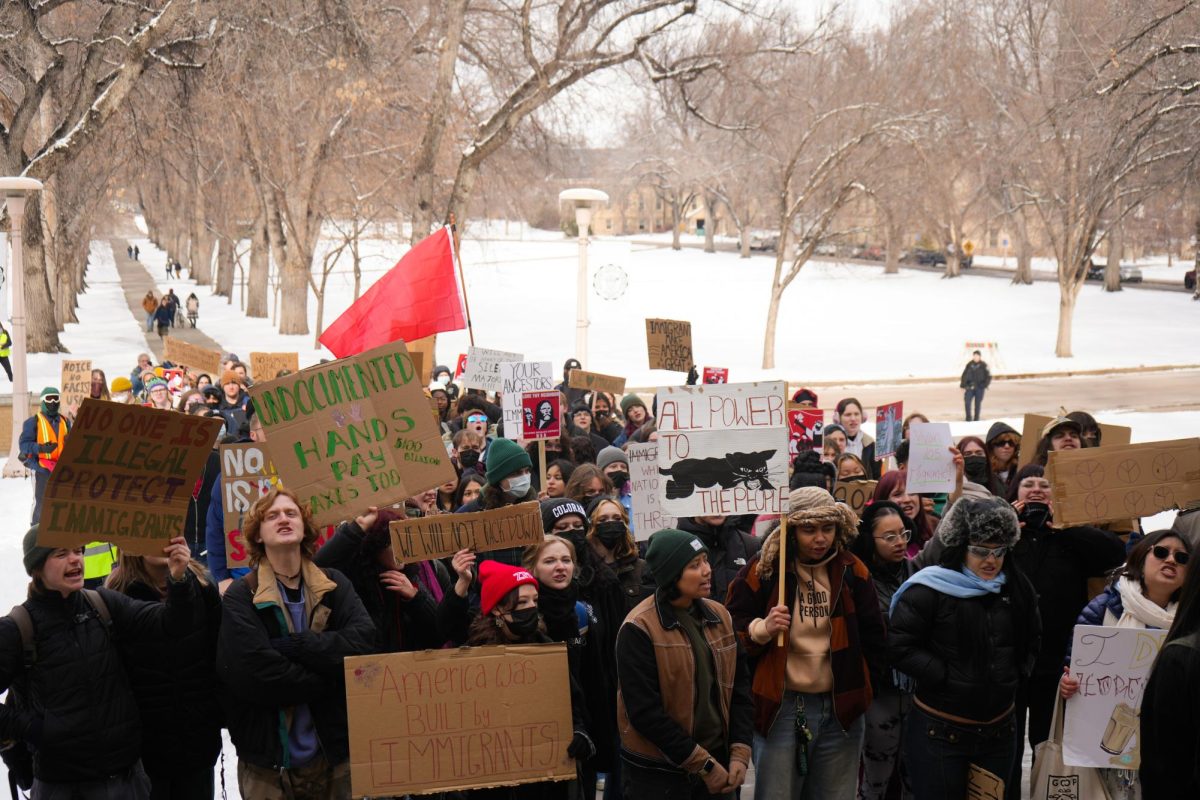
In Colorado schools, the impacts of increased immigration enforcement have become apparent. Hundreds of Fort Collins students organized walkouts and protests against ICE, with students from Lesher Middle School participating in a walkout Feb. 2 and about 500 students walking out of Rocky Mountain High School and marching miles down College Avenue Feb. 10.
In a statement given to The Collegian, Poudre School District Executive Director of Communications John Cope said the district is aware of student protests and demonstrations in response to recent ICE activity.
“Poudre School District is aware that some students have participated in walkouts this week,” the statement reads. “Our priority is maintaining a safe, supportive learning environment for all students and staff, and school leaders followed established procedures to ensure student safety and continued campus operations. Students have the right to express themselves, and the district neither encourages nor discourages participation in political demonstrations.”
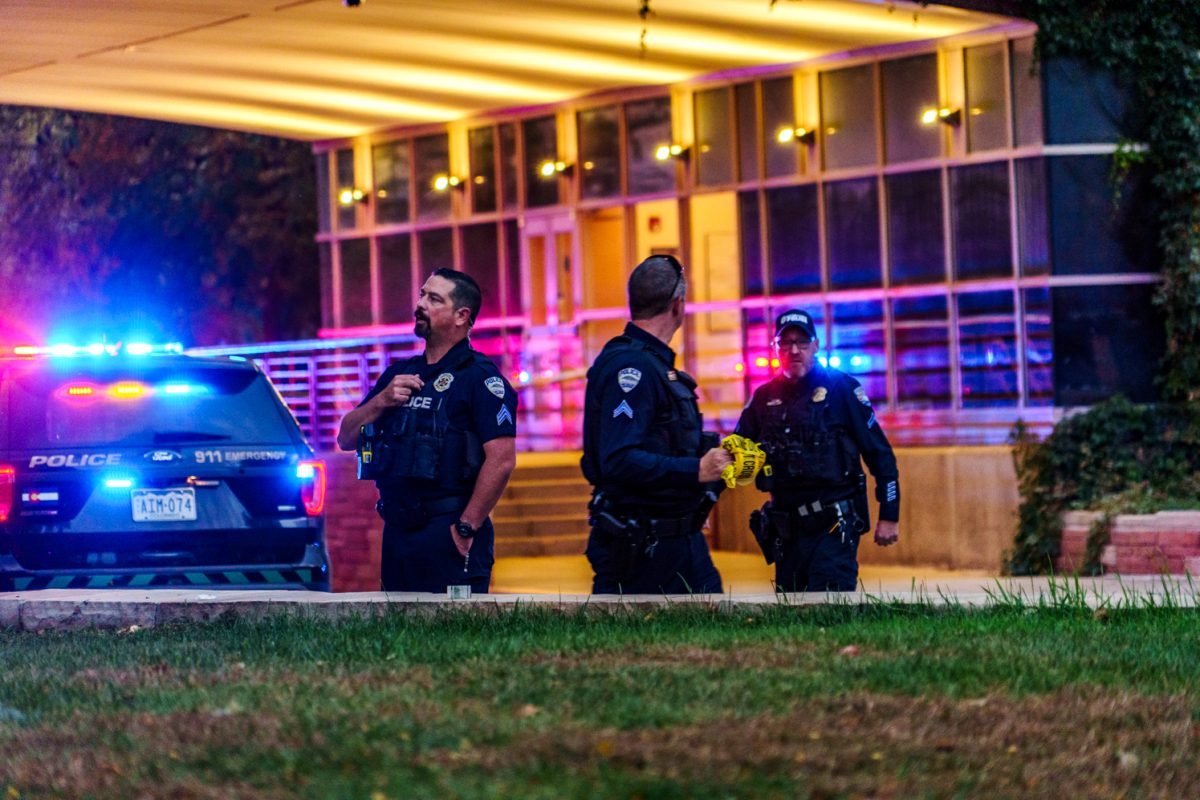
Local law enforcement is preparing for a potential ICE crackdown in Fort Collins as well.
During the Feb. 6 City Council meeting, Fort Collins Police Chief Jeff Swoboda addressed community concerns and explained how the department plans to respond to immigration enforcement.
“One of the things that we have recognized early on is, in this stage, there is a clear separation between local law enforcement and ICE,” Swoboda said. “As we are watching what’s going on around the country, it appears at times where if local law enforcement is not on the scene, things aren’t running very smoothly, to say the least.”
While responses may vary depending on specific situations, Swoboda encouraged residents to call Fort Collins Police Services if they are unsure whether or not federal agents are active in their neighborhoods.
“I can’t get into exactly what we’re going to do, but I want to commit that anyone who calls Fort Collins Police Services, we’re coming, our body cameras are on, our officers are highly trained and our plans on any call for service is to de-escalate and protect life, and that’s exactly what residents can expect,” Swoboda said.
Across Colorado, community groups, legal advocates and law enforcement are attempting to reassure residents and prepare for potential escalations in ICE activity, emphasizing the importance of staying informed, attending Know Your Rights trainings and documenting and reporting ICE activity and misconduct.
“Stay vigilant, stay safe, spread power, not panic,” Leon said.
The Colorado Department of Law and Colorado Attorney General Phil Weiser have launched a form to report misconduct by federal agents. Additionally, residents are encouraged to call the Colorado Rapid Response Hotline to report ICE activity and provide details in order for trained volunteers to come to the scene.
The Colorado Rapid Response Hotline can be reached at 844-864-8341.
Reach Laila Shekarchian at news@collegian.com or on social media @RMCollegian.