

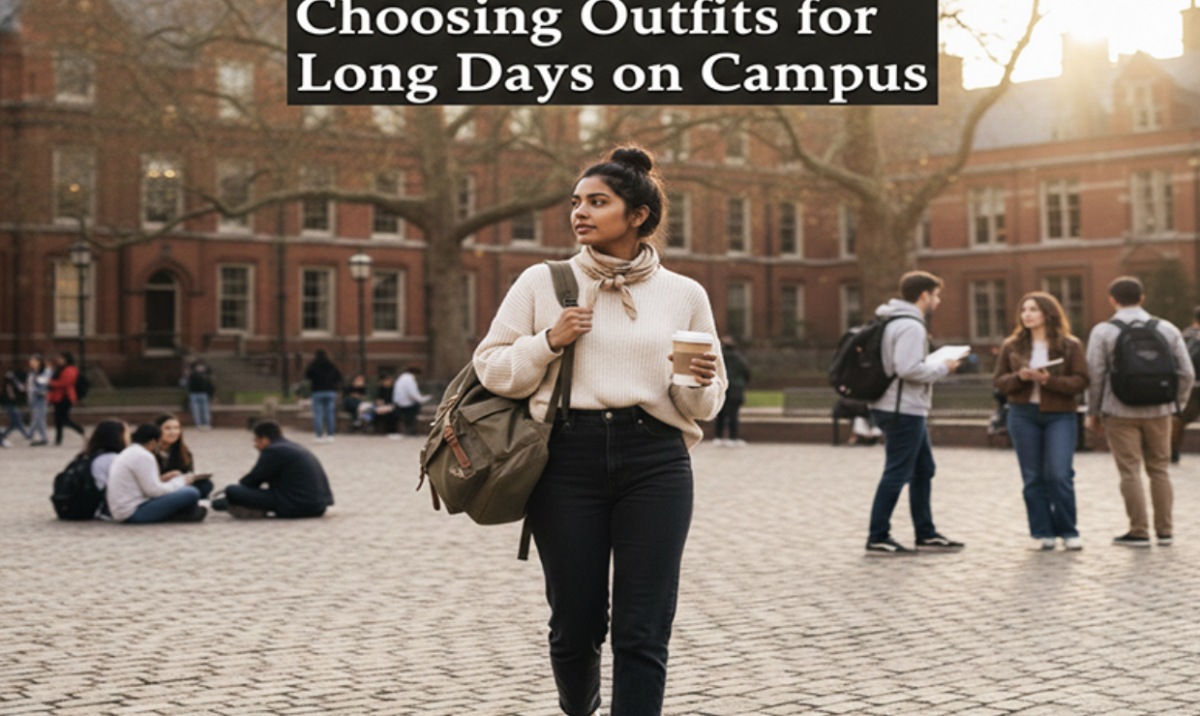
Campus life is rough on clothing. Between walking to classes, biking around, sitting through lectures, and studying for hours, students need outfits that actually hold up. A shirt that feels fine in the morning can turn into a nightmare by lunchtime. Jeans that looked good start digging into your waist during a three-hour seminar.
The whole point is finding clothes that work from start to finish without causing problems.
What Actually Happens During the Day
Students walk way more than they realize like getting between buildings, grabbing food, and meeting friends; it all adds up to several miles. Then there’s all the sitting. Lectures run long. Library sessions stretch for hours. Coffee shop study groups take up entire afternoons. Sitting in different positions and hunching over laptops.
Clothes have to handle both extremes, moving around and staying still. That’s a lot to ask from one outfit. Not to mention, the weather isn’t consistent either. The mornings are cool and the afternoons are warm.
Fabrics Worth Wearing

Cotton works everywhere. It breathes, absorbs sweat, and doesn’t trap heat like synthetic materials. A cotton shirt stays comfortable even when rushing between classes. Wool gets a bad reputation, but it’s actually great. It keeps you warm without overheating and doesn’t smell after one wear, and good for cooler days.
Linen is perfect when it’s hot out. Light, airy, and it dries fast if you sweat. And what about Polyester and other synthetics? Skip them. However, some blended fabrics work well, as cotton mixed with a little spandex gives you stretch while keeping things breathable. That combo handles movement better than pure cotton.
Clothes Should Give Room to Move
Fitted clothes sound good, but actually, they don’t work in practice. Slightly loose jeans move with you instead of fighting every step. Shirts with actual room in the shoulders don’t ride up constantly. Clothes with stretch help too. Jeans that have some give let you move normally. Shirts that flex with your body don’t need constant adjusting.
The Scottish kilt outfit is also a good option. People wore kilts for walking long distances. The pleated design let legs move freely. Wool fabric kept them warm but didn’t restrict anything.
Layering That Makes Sense

Campus buildings have unpredictable temperatures. But you don’t have to carry extra outfits around; you just have to layer smartly. You can wear it with a basic tee or long-sleeve shirt. Add a button-up or sweater over it and wear a hoodie or light jacket, and you are good to go.
When it gets warm, remove the hoodie. When it’s cold, put it back on. Thin layers beat one thick piece every time. Easier to adjust, easier to carry when you don’t need them.
Pants That Work
Bottoms play an important part while sitting, walking, biking; they need to survive all of it without falling apart. Jeans are popular for good reason. Durable and works with anything. But fit matters. Relaxed or straight cuts are way more comfortable than tight styles.
For warm weather, shorts should be long enough to prevent rubbing but short enough to move easily. Athletic shorts are fine for casual days. More structured shorts work for classes. Skip anything with a waistband that digs in. That ruins your ability to focus on anything else. Look for slight stretch or adjustable waists.
Shopping Without Going Broke

College life means tight budgets. Thrift stores have quality stuff at cheap prices. You won’t believe it, but a good cotton shirt from a thrift store outlasts cheap new clothes. End-of-season sales are goldmines. Stores dump inventory to make room for new stock, and basics get marked down heavily.
Buy less but buy better. Three solid pairs of pants last way longer than ten cheap ones. Better quality costs less long-term because replacements aren’t needed constantly. Check what’s already there, too. Most people have decent clothes buried in their closet that they forgot about.
Actually Making Changes
Don’t overhaul everything at once. Choose the worst problem in your outfit and solve it first. Are shoes killing your feet? Replace those. Jeans uncomfortable? Start there. One change at a time adds up. Each little upgrade makes the day a tiny bit more bearable. Eventually, the whole wardrobe actually functions.
Campus throws enough problems at students already. Clothes shouldn’t be one of them. Get stuff that breathes, moves right, and lasts. When outfits work properly, everything else gets easier. Focus stays on classes and life instead of constantly fighting with uncomfortable clothing.