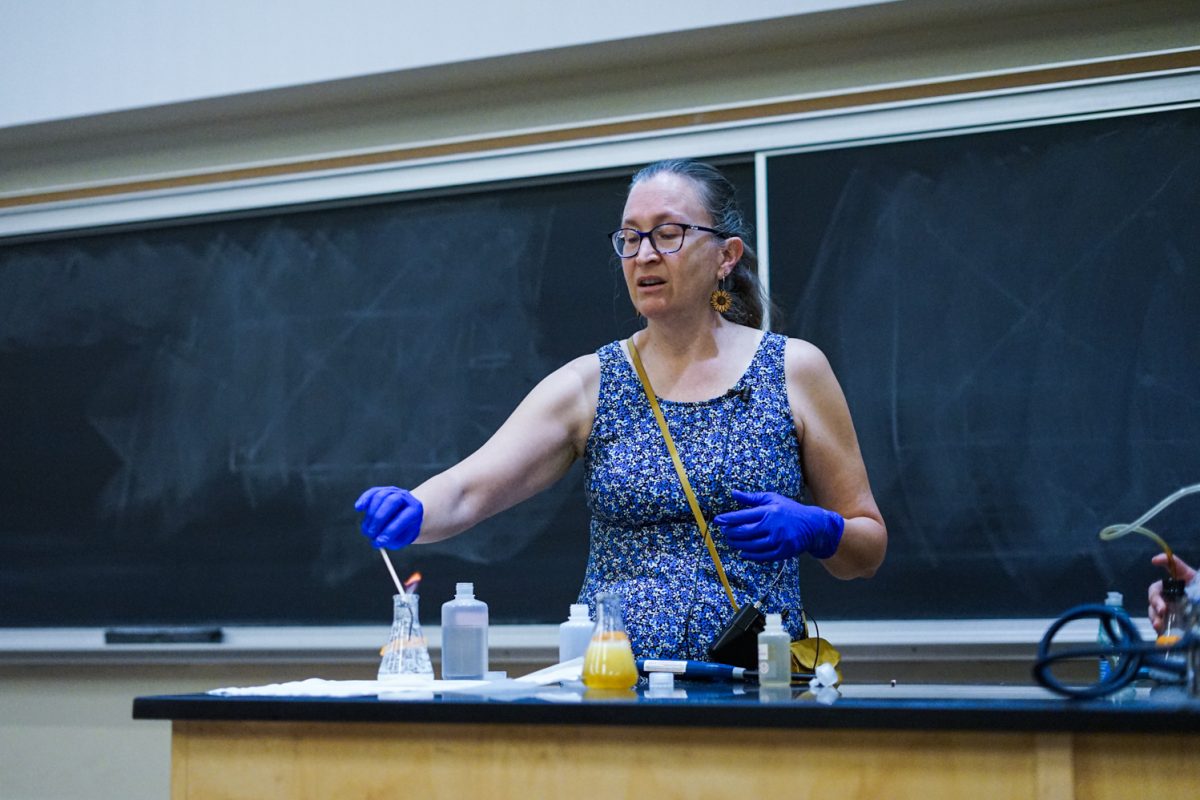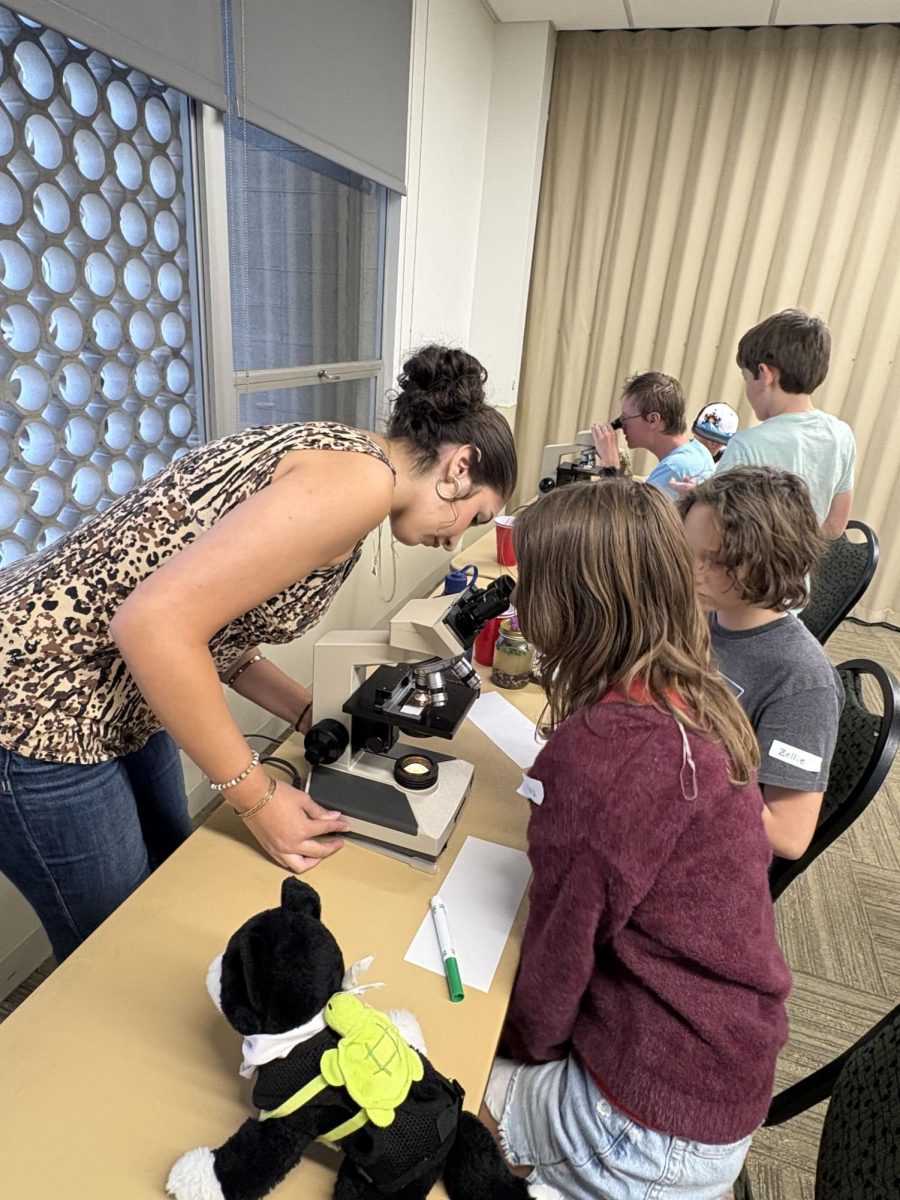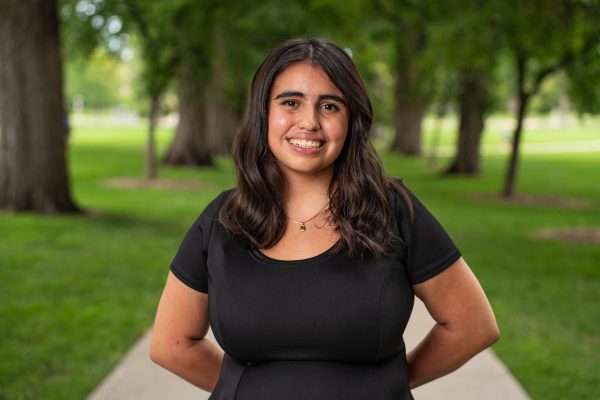


Colorado State University’s Women in Science Network hosted the annual Women in Science Symposium April 15 in the Lory Student Center Theatre. This year’s event centered on the theme of “Learning from the Earth and Giving Back,” and featured several women involved in the STEM field, including keynote speaker Kimberley R. Miner.
“The theme is a reminder that science is not just about data and discovery, but it’s also about community and stewardship,” Vice Provost for Faculty Affairs Mendy Smith said prior to Miner taking the stage.
Miner is a scientist, professor, author and motivational speaker, notably working with NASA’s Jet Propulsion Laboratory. She is also a National Institute of Health and American Association for the Advancement of Science fellow.
Delving into her book, “Considering Climate Change,” which examines what will happen to the climate in upcoming decades as well as provides actionable steps for readers to prepare for climate change, Miner’s speech touched on two main points: mental health in regard to climate change and joining the fight against climate change.
“Every day, people are bombarded with bad news on social media, including news about climate change,” said Miner, who said she was speaking on behalf of herself and not NASA. “It helps, I think, to understand strategies that we can use individually to confront this information and move it through our systems.”
Following the return of the recent Artemis II mission, Miner said she was reminded of the Earth’s interconnectedness.
“Everything that we do impacts every other system, just as they impact us,” Miner said. “It’s important and normal to have feelings about the way our ecosystem is functioning. But it’s also really important to talk about these feelings together and to share what folks are feeling, what folks are doing about that (and) any experiences that people are having. Not only to raise awareness, but just to have that sense of camaraderie and that sense of being part of the community that sometimes we lose.”
The next step, Miner said, is choosing how to move forward with those feelings. Miner recommended a variety of small actions, including increasing biodiversity in local ecosystems by planting native flowers, eating more home-grown foods and talking about climate change and biodiversity in people’s respective communities.
“These little things that you can do to help you feel connected to the ecosystem, that also makes a really big difference,” Miner said. “I believe that the more that we talk about them, the more that it inspires others to do the same.”
Miner stressed the importance of residents engaging in representative democracy. This point stood out to Fort Collins District 5 Councilmember Amy Hoeven, whose constituency largely consists of CSU students. Hoeven said Miner created a space for people to be themselves and embrace their curiosity, noting that she enjoyed Miner’s discussion on mental health and the climate.
As a local representative, Hoeven shared similar sentiments as Miner in terms of democracy.
“I kept kind of thinking of just the process of democracy and making sure that we all can play a role,” Hoeven said. “We all have access to this information. We all have access to conversation. We all have the ability to help improve the narrative and just really making sure that we all can participate in this particular topic … (and) making sure that I, as a council member, can make sure that I’m always focusing on creating access for people so they can provide information and gather information and (that) they’re just always a part of the process.”
Miner’s time also featured a Q&A and dialogue with attendees that touched on a variety of topics.
“It was really amazing how everyone was willing to share their experience in the sciences and with their specific backgrounds and openly have a conversation about the challenges and successes we all face as a community,” Miner said.
Juliette Dashe, a CSU senior studying statistics, saw the event as an opportunity to find community.
“As someone in the Gen Z generation who is bombarded with information every day — just like how Dr. Kimberley talked about how easy it is to see negative news — I needed a space to be with people face-to-face,” Dashe said. “I think that’s a huge, important thing these days, is to see everyone in person and talk to them and have real conversations. I think with the job market and war and how interconnected we are with bad news, I think it’s really important to see someone who’s successful and who wrote a book on how to see the light in today’s society.”
Reach Chloe Rios at science@collegian.com or on social media @RMCollegian.