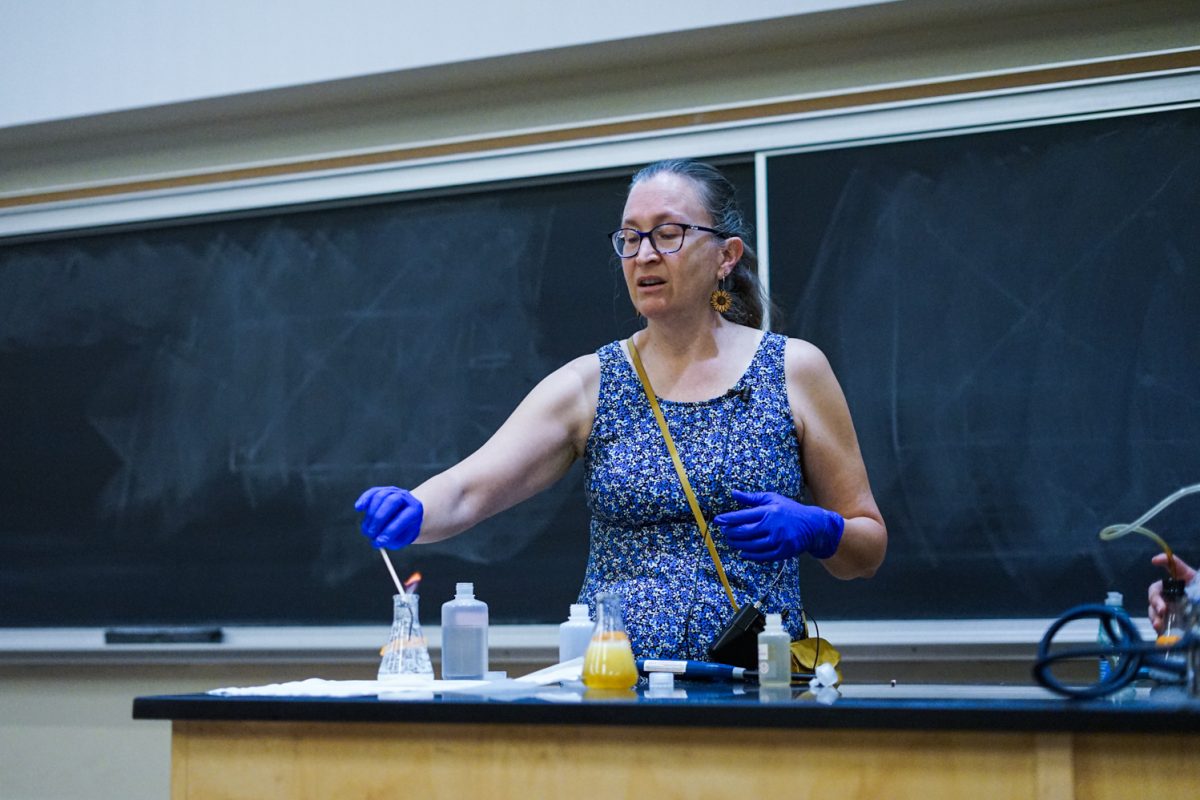
Colorado State University Master Instructor Harmony Tucker is combining education and entertainment to make science education less intimidating.
For many students, the second-best part of a science class is when the teacher lights something on fire or creates any hot, flashy or slimy chemical reaction for the class to enjoy.
The best part is getting to do it themselves.
In 2026, Tucker celebrated her 20-year anniversary as a professor at CSU. She said she has found that fireworks can encourage people to stay curious and engaged in class.
“Students tend to perk up like wilted flowers after rain when it’s obvious that I am going to do a demo,” Tucker said. “Something different is about to happen.”
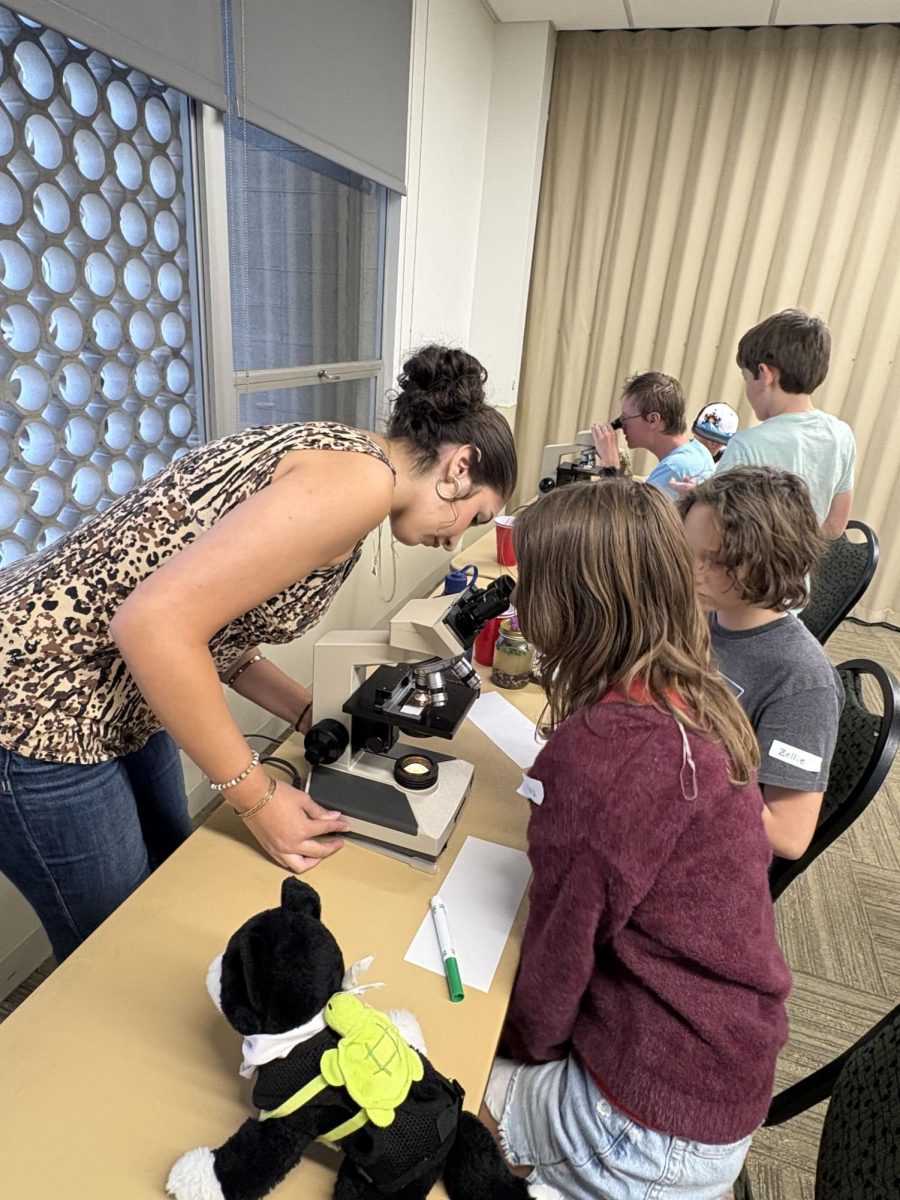
During classes, instead of relying on the typical slideshow lecture to teach students, she often draws students’ attention away from their notes to a demonstration she set up to explain the difficult concepts in a more engaging style.
In a class demonstration Sept. 29, Tucker stood at a table filled with graduated cylinders and beakers and poured a liquid from one cylinder into another, showcasing the formation of covalent bonding chains. From this reaction, she pulled out a strong, yet flexible string of nylon.
“I love doing demonstrations in class,” Tucker said. “I mean, I like to burn things, but it’s not just about the ‘Golly, wow, that was on fire.’ I’m interested in doing things in a context.”
Tucker said demonstrations can explain concepts in a less intimidating and more memorable way — a principle she said also applies when sharing scientific research with the public.
“Science educators of all types need to communicate their love of their subject with the public,” Tucker said. “And demonstrations offer an opportunity to draw people into that interest.”
Tucker said performing what looks like a magic trick to an observer opens their mind to further questions about the principles at play and how else they appear in life. She said a spark of curiosity can burn away the fear that can taint academic settings, especially for math-heavy subjects like chemistry and replace it with a moment of joyful receptivity.
Tucker said she has recently noticed students are largely uncomfortable handling equipment like Bunsen burners, which she plans to fix.
“If people feel more comfortable doing them because they’ve practiced them (and) because they were in a class where they had to do this, then I think that they’d feel more comfortable sharing them with other people,” Tucker said.
She said that while the course has practical uses for students in academia, it can also bring a sense of wonderment and discovery to anyone regardless of who they are.
“I think that sort of hands-on experience is something that can be really, really important and enriches your existence, frankly,” Tucker said.
She said she is aware of criticism around how demonstrations can veer into simple entertainment and muddy academic pursuit in the classroom. This, she said, is a valid concern, which is why she takes care to explain the tie between the demonstration and material that’s being discussed in class; these experiments act as an exploration of scientific principles, not stand-ins for lectures.
Reach Kooper Hahn Shagena at science@collegian.com or on social media @RMCollegian.