

A study period at the London School of Economics and Political Science changes more than a Colorado State University student’s timetable. Moving from Fort Collins to central London means navigating an unfamiliar housing system, a different transport network and a university set within the city. Before choosing a room from photographs, it helps to establish which accommodation routes fit the course, the length of stay and the way the student wants to live.
Start with the course, not the room search
The first housing decision begins with the LSE programme. A student spending part of a degree in London may face different accommodation arrangements from someone enrolling on a full degree or a short course. Confirming the course dates, enrolment status and accommodation eligibility with LSE makes the search more focused. It also prevents a student from treating a university residence as an option before establishing whether it is open to their particular programme.
LSE’s central campus is around Houghton Street, close to Holborn. That address is a useful starting point, but a housing search needs the student’s actual teaching locations and weekly routine, not just a pin marking the university. Classes, library time and social plans may involve different parts of the city. CSU students should also establish how their London study fits their academic requirements in Colorado before committing to accommodation dates. A booking that starts after an essential arrival event, or ends before the last required assessment, creates a problem that a convenient location cannot solve.
Halls and private apartments solve different problems
University halls can offer a ready-made student community. Shared kitchens and common areas make it easier to meet people, particularly for someone arriving without an established circle in London. They can also suit students who prefer accommodation arranged through university channels. The practical questions are whether the relevant residence accepts students on the particular course, what type of room is offered and whether its contract covers the whole period of study.
A private apartment offers a different arrangement. A furnished studio may appeal to a student who wants a quiet place to work and control over daily routines, while a larger apartment may suit friends who have agreed to live together. Privacy can come with more responsibility for organising a social life outside the building. Neither model has the same services everywhere: students should compare what is included in the charge, which spaces are shared, how maintenance requests are handled and what happens if arrival or departure plans change. Looking at the full terms makes the comparison more useful than judging halls and apartments by their photographs alone.
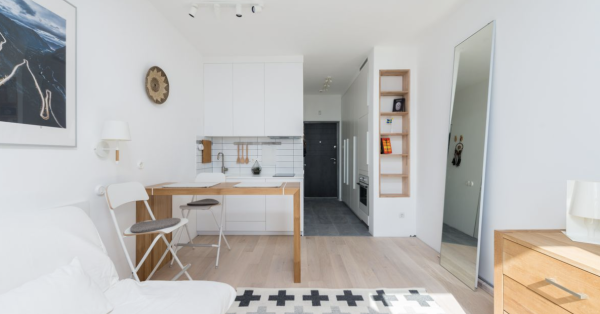
Image by Max Vakhtbovych on Pexels
Choosing a base around Holborn and Covent Garden
Central London neighbourhoods can look close together on a map while offering noticeably different daily journeys. Holborn places a student near the Houghton Street campus and its surrounding streets. Covent Garden offers another central base, with shops and cultural venues woven into a busier visitor district. Bloomsbury has a different feel, with residential streets and academic institutions to the north of Holborn. The right choice depends on whether the student values a short walk to class, a particular kind of street life or convenient connections elsewhere in London.
For each prospective address, it is worth mapping the journey to the building where classes are held, then checking the route at the times the student is likely to travel. A walking route may be simpler than changing London Underground lines for a short cross-city trip. The return journey matters too, especially after an evening at the library or an event with classmates. Students expecting visitors should consider how easily someone unfamiliar with London could reach the property. A central postcode is useful, but the building entrance and the journey from it are what shape an ordinary weekday.

Image by mingche lee on Pexels
What a private booking includes, and what to check
Serviced apartments can simplify parts of an international move by providing furniture and combining several household services in one arrangement. Student Luxe, a family-run agent that curates and books furnished serviced apartments near LSE, is one private route to consider through studentluxe.co.uk. Its apartments include bills, Wi-Fi and weekly housekeeping, and its booking route does not require a UK guarantor. The agent arranges accommodation in buildings run by others, so features such as a gym, concierge or staffed reception depend on the individual building.
The useful comparison is between the complete terms of each prospective stay. A CSU student should check whether the proposed dates cover the course, which apartment and building are being offered, what is included in the payment and how changes or cancellations are treated. A furnished property may remove the need to buy basic household items on arrival, but students still need to know which items are actually supplied. Those sharing an apartment should establish how bedrooms, communal space and payments will work before booking. Keeping the written accommodation details alongside travel documents makes it easier to resolve practical questions during the move.
Closing the practical gaps before leaving Fort Collins
Once the course and housing dates are settled, preparation becomes less about browsing and more about making the journey workable. Students should keep their LSE admission and course information accessible, confirm the address and arrival arrangements for their accommodation, and make sure the name used on bookings matches their travel documents. Anyone whose plans include travel before or after studying should account for those dates when reviewing entry requirements.
UK immigration requirements depend on the course and the traveller’s circumstances. Before departure, a student should check the current instructions from the UK government and LSE for their particular programme rather than assuming that another American student’s experience will apply. The same principle holds for any documents needed on arrival: an up-to-date personal set of instructions is more dependable than a packing list passed down from a previous trip.
Day-to-day arrangements deserve attention as well. A payment card that works abroad, access to banking without relying on a single device, and a workable mobile connection can make the first days less stressful. It helps to save the accommodation address and arrival contact details somewhere accessible offline, alongside the route from the arrival airport. Students can also think ahead about prescription medication, academic materials and the belongings they will need before they have time to shop. These small preparations leave more room to concentrate on settling into classes and meeting people.
Matching the choice to the semester
The most useful housing comparison is one built around confirmed course dates and a realistic week in London. A student who wants shared spaces and a university-centred community may favour halls, provided their programme gives them access to a suitable residence. Someone who places greater weight on privacy and a furnished living space may prefer an apartment. In either case, the address, contract length, included services and total cost need to be considered together.
For a CSU student, the sensible next step is to make a shortlist only after checking LSE accommodation eligibility and the academic calendar. Comparing written terms for properties that cover the required dates, then tracing the journeys from each address to Houghton Street and other regular destinations, turns a distant housing search into a decision grounded in the student’s actual semester.