
Editor’s Note: All opinion section content reflects the views of the individual author only and does not represent a stance taken by The Collegian or its editorial board.
Election campaigns are soon to be in full swing, and with them will come endless bipartisan divides. It’s draining, I know to walk through the Colorado State University Plaza every day to see someone tabling for something you disagree with or to open social media to find someone you know has shared a post you don’t support.
Their vote cancels out yours. Your vote cancels out theirs. Nothing lost but also nothing gained.
In a time when we grow more divided every day, we need to work on the way we view our future. It’s understandably easy to lose hope coming into another election cycle; each one has become increasingly divisive, with worsening headlines crossing your feed every day.
I don’t think it’s the division itself that hurts us — you don’t have to agree with everyone around you to be hopeful. But I think we all need to get better at seeing our future through an optimistic lens.
Oftentimes, I hear people, especially left-aligned voters, talking about our future with nothing but pessimism. I don’t blame them. News in the past year — stories of droughts, wildfires, genocide and child trafficking — makes you start to lose faith in our future. Especially for voters who align with the Democratic party, the current administration makes it hard to imagine a future that sparks hope.
There shouldn’t be partisan divides in our hope for this country, but statistically, there is. Conservative-leaning voters are more likely to report being happy, content and hopeful about the future of the U.S. We all want what we believe to be the best for us, but some see it as more achievable than others.
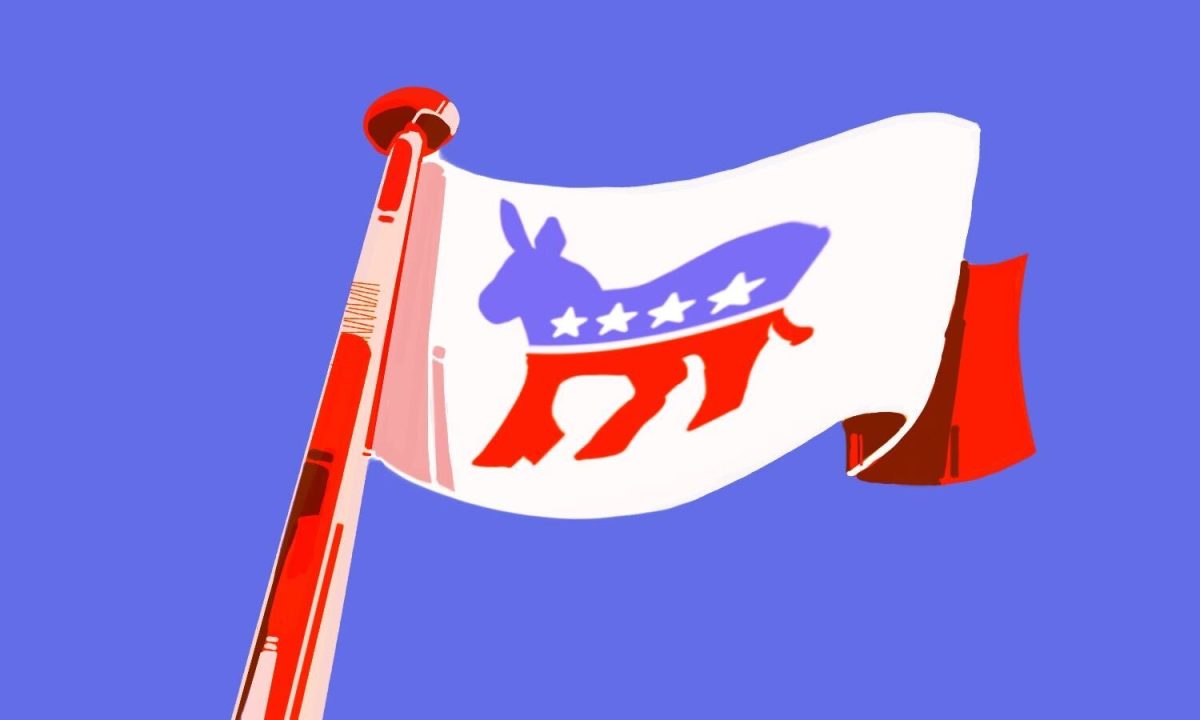
This year, there is an unusually high number of Democratic candidates with religious doctrine in their campaigns. In the past, religion has often been strongly associated with the Republican party, whereas atheist-identifying voters are more likely to support Democratic leaders.
In 2024, President Donald Trump won 83% of white evangelical voters, and then he won the election. Correlation doesn’t equal causation, but being religious shouldn’t equate to specific political beliefs. We should be able to separate faith and political affiliation. Faith shouldn’t be a bipartisan issue, nor should it be capitalized on by one group.
But it’s not about the religion — it is about the feelings religion brings voters. Hope, faith and a belief in something better are important if we’re going to progress as a country. Regardless of what you believe to be progress, you need to have adequate hope that there is actually a better world for us to reach for. Or else, you risk losing sight of what you’re fighting for.
Alternatively, when one party shies away from faith, it leaves the other party to capitalize on a large demographic of voters. Pushing away voters is never in the best interest of a party.
Many Democrats have embraced religious diversity, yet certain communities of faith are still fairly disconnected within the party.
Religion fosters hope, a feeling that should never be used as a partisan tool. What it should be used as is a moral framework to create a future people actually want to see.
Reach Skylar White at letters@collegian.com or on social media @RMCollegian.