

Editor’s Note: All opinion section content reflects the views of the individual author only and does not represent a stance taken by The Collegian or its editorial board.
Since February, I’ve been on the other side of The Collegian — the one people don’t see, yet the one that ensures every story we publish is polished and correct.
Along with beginning my work as a copy editor for The Collegian in February, I began another life-altering process: eating disorder recovery.
After months and months of starving and purging, one day I had a fleeting thought I should get help. I could feel my brain and body shutting down. There were times when I would get back to my dorm after a day of classes and think to myself, “How did I even get back here?” There were other times when I thought I simply wouldn’t finish the five-minute walk to my dorm without collapsing right there on the sidewalk with hundreds of my peers scrambling around me to get to their own classes.
If I hadn’t listened to the tiny beacon calling out for help from the center of my brain, I would’ve been sent to an inpatient eating disorder treatment facility. My entire life would’ve been taken away from me in front of my very eyes.
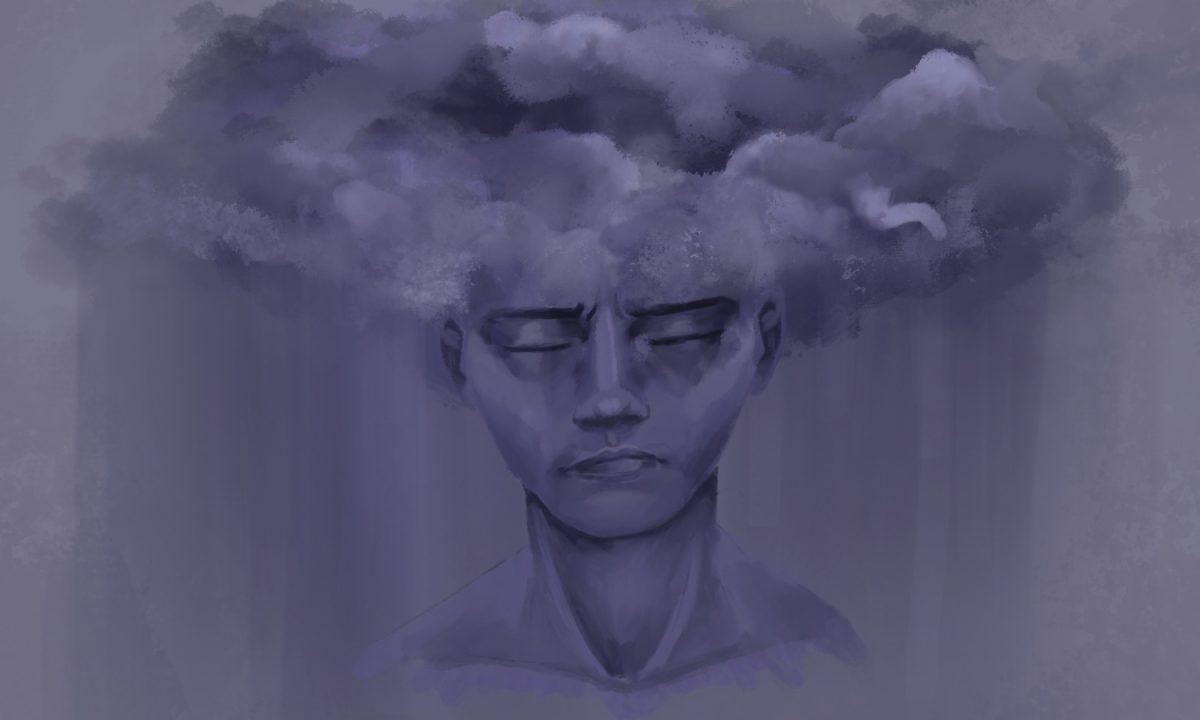
Anorexia nervosa has one of the highest mortality rates of any mental disorder. Yes, the true scientific reasons for this come from organ failure and other body mechanisms failing, but from my personal experience, another reason behind this statistic is because eating disorders in general — not just anorexia — take over every aspect of one’s life.
Like ivy, eating disorders may look beautiful at first, but as they grow and grow and begin to take over the entire brain, they start to look unkempt — until soon you can no longer see the original structure the ivy was growing on.
My eating disorder bled into every aspect of my life. Obviously, my eating habits and routines were greatly affected, but there was more to it, which I don’t think many people without eating disorders realize.
I couldn’t focus on my schoolwork. Every free moment my brain had, I found myself looking up ways to get my hands on GLP-1s, pouring over dining hall menus to see if I could afford to eat anything that day based on the number of calories a meal had or calculating the maximum calories I could consume per day if I wanted to lose a certain amount of weight in a week.
My relationships were falling apart. After I told my parents I needed help, I felt like they were walking on eggshells around me — actually, I was the eggshell they were trying not to break. They didn’t know what to do with me. I’m a people pleaser, and the mere thought that I was adding more stress to my parents’ already chaotic lives killed me.
My friends didn’t want to hang out with me anymore, which I understand. And I forgive them for it. What fun is someone who is essentially a zombie walking around, unable to focus on anything other than food- and weight-related issues? I wouldn’t want to be around me, either.
And my roommate. Oh, my dear roommate. When I was drowning in my eating disorder, she and I were getting into fights every night. She begged me to get help, threatened to call my mom and tell her what was going on when I passed out from not eating all day. I didn’t want to hear any of it. I resented my best friend. I was away from my dorm as much as possible, resorting to the dim fluorescent light of Morgan Library’s third floor, running from the truth that faced me back at my dorm.
My eating disorder made me isolate myself. It fed me lies. It told me it didn’t matter if I lost all of my friends because it was my best friend and it would be there for me no matter what. It told me no one else could possibly understand what I was going through except for it; it told me it would make me happier.
All of these months later, my eating disorder still tells me these things. Some days it’s louder than others, yet I work to block out the noise everyday just the same. It’s exhausting. And I am tempted — so tempted — to listen to it. But I don’t. And every time I ignore it, the voice in my head gets quieter.
Recovery is one of the hardest things I have ever done in my life, yet it is also one of the most worthwhile things I have ever done in my life.
According to statistics published by the National Association of Anorexia Nervosa and Associated Disorders, 9% of people living in the United States will experience an eating disorder in their lifetime. This may seem like a small number, but it amounts to 28.8 million people. Texas’ population, as of 2025, is just over 31 million. Imagine if everyone living in the state of Texas had an eating disorder — that’s about how many people this illness affects. It is far from a small number.
Research published in 2025 found that around the world, people aged 20-24 are at the highest risk for getting an eating disorder, this is period when many attend college.
I believe if we can bring more awareness to eating disorders and disordered eating, as well as the resources available for anyone who may be struggling, this statistic can go down. I know it’s hard to decrease this on a global scale, but why not start here at Colorado State University?
If you — like I did — have a fleeting thought to get help: Listen to it. I’m not saying it will be easy; it’s not. But it’s so worth it. I would much rather be living, breathing and feeling all of the love in the world around me than feeling half-dead, floating from place to place without retaining any of it.
Even if you have troubles around food or body image, but you don’t think it’s a full-blown eating disorder: Ask for help — it’s best to nip it in the bud.
The CSU Health Network has resources for anyone with an eating disorder or disordered eating behaviors, including free mental health services available to CSU students and dietary counseling at the Kendall Reagan Nutrition Center.
The National Eating Disorder Association’s website has information about eating disorders, advice on how to help someone you know who may have an eating disorder and resources if you are struggling.
Crisis Text Line has a 24/7 hotline if you are in need of immediate support at anytime regarding any mental health concerns.
And if you ever need anyone to talk to because, trust me, I know how lonely it can feel to be stuck in your brain, contact me. I am here to listen and to help.
Reach Brighton Hathaway at letters@collegian.com or on social media @RMCollegian.






Corey • Sep 9, 2026 at 10:20 am
Beautifully written and shared