
As the semester begins, Colorado State University students who live off campus are once again navigating the most effective way to commute to campus. With a number of recent developments in transportation costs and availability, however, many students are finding new ways to get to class.
Gas prices are currently at record highs due to international conflicts around the world, Transfort has recently made changes to its bus routes around campus and temperatures are at consistently high levels, making many students’ choices more difficult than in previous years.
According to data from the U.S. Energy Information Administration, Colorado gas prices in August 2025 were $3.09 per gallon. In August 2026, gas prices now sit at $4.28 per gallon.
“I do have a car, (and) I do have a license, but the reason I don’t use it is mainly just because of gas prices,” CSU senior Hank Frazier said.
While high gas prices add to the cost of commuting by car, many students noted this was not the only cost deterring them from driving. CSU senior Chantelle Caldwell said the cost of parking passes played a role in her decision-making.
“For me personally, (it’s) the prices to park on campus,” Caldwell said. “I’m not paying that.”
The price of parking passes can vary depending on the location relative to campus. For students parking in the Moby Arena lot or near the University Tennis Complex on Research Boulevard, the permit costs $350 for the academic year. Alternatively, the Z, R and V parking permits that allow students to park in the various parking garages across campus or in correlating lots cost $567 for the academic year.
While the combined cost for gas and parking permits are one factor encouraging students to seek alternative transportation methods, many students said they also enjoy the quality of service, convenience and financial benefits of the fare-free bus routes to and from campus.
“It’s free, so you might as well use it,” Caldwell said.
CSU junior Rafael Medina said he has chosen to take the bus over purchasing a parking pass since his first year.
“(It’s) convenience as well,” Medina said. “It’s pretty reliable and it’s always been fast. My main source has always just been the bus. It’s the easiest (way), (and) it’s free.”
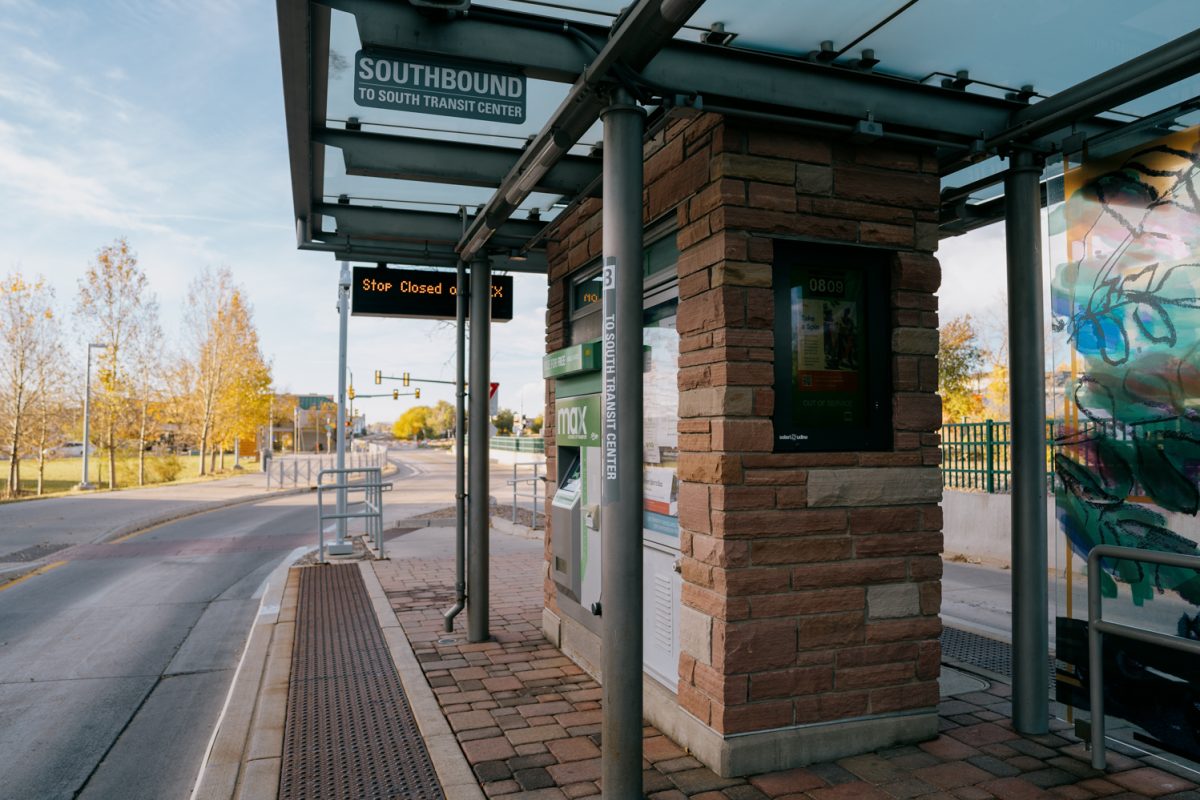
The City of Fort Collins announced Transfort route changes effective Aug. 17, which are a result of the Transfort Optimization Plan. The revamped fare-free network “strenghtens high-demand corridors and improves connections across the city while operating within Transfort’s existing resources,” the announcement reads.
The route changes include a shift in frequency of HORN, MAX, Foothills Shuttle and three numbered routes; the elimination of five routes; and a termination of Sunday bus services.
Senior Benjamin Williams said he takes several buses around Fort Collins, and the change in bus routes affected him “a little negatively” due to routing discrepancies, but it hasn’t had a significant impact on his commute. Williams, like others, also cited high parking pass prices as a reason to opt to take the bus.
High temperatures may also have a significant impact on students during their commute to campus, with August temperatures in Fort Collins hitting an average high of 91.5 degrees Fahrenheit and a maximum high of 105 degrees.
Despite abnormal temperatures, many students are still effectively getting to and from campus on foot, bike, skateboard and more. However, a study from the Harvard Kennedy School analyzing student performance and its relation to the presence of air conditioning in classrooms found high temperature “inhibits cognitive skill development.”
Jamie Gaskill, associate director of active transportation with CSU transportation, said in an email statement to The Collegian that students are continuing to adapt and find the transportation option that best suits their needs.
“While we do not have comprehensive data on the specific impacts of these factors, early indicators suggest students are adapting in a variety of ways,” Gaskill said. “We’ve seen increases in bike registrations and transit ridership on several routes that serve CSU students.”
Gaskill also said there has been a general trend since the COVID-19 pandemic of students shifting away from driving to and from campus.
“Based on CSU Transportation’s annual travel survey conducted each February and March, we’ve seen a steady return to transit use, biking and walking since the significant changes in travel behavior brought on by the COVID-19 pandemic,” Gaskill said. “Over the last several years, and especially in the past two, more students have been choosing active and shared transportation options rather than driving alone. That trend likely reflects a growing interest in affordable, sustainable and convenient ways to get around campus and the community.”
Amid changing circumstances for commuting students, Gaskill emphasized that the university hopes to continue adapting to the shifting needs of CSU students in their daily commute.
“Providing a range of transportation options is a priority for CSU,” Gaskill said. “We recognize that students, faculty, staff and visitors have different schedules, budgets and personal preferences, so our goal is to offer a variety of ways to travel to and around campus. Whether that means walking, biking scootering, riding transit, carpooling or driving, we want Rams to have options that help them get where they need to go safely, efficiently and affordably.”
Reach David Martinez at news@collegian.com or on social media @RMCollegian.