

Colorado State University’s Occupational Therapy program has been ranked first in the nation by U.S. News & World Report, a quick rise since the program landed in third just last year. Similarly, CSU’s Doctor of Veterinary Medicine program has ranked among the top three programs in the nation for over two decades.
How these programs have become and stayed highly ranked varies drastically between the two, but the prominence of community and support echo across student testimonies.
The Occupational Therapy program at CSU is bound by certain standards — as are all occupational therapy programs — but it is differentiated through its lack of affiliation with a medical school, instead being affiliated with the Center for Community Partnerships and the Assistive Technology Resource Center.
“We have had a community-based focus, so much of our fieldwork, much of our coursework focuses on community-based programs. … Because we’re bound by certain standards, we must prepare generalists,” said Anita Bundy, department chair of the program. “We prepare occupational therapy students to work in any setting in which they might find themselves.”
First-year OT student and Professional Development Chair of the Student Occupational Therapy Association Chloe Schmidt elaborated on how the OT program has supported her, demonstrating the same values of community and preparation for the workforce as Bundy identified.
“(The) No. 1 (reason for choosing CSU) would be the holistic nature of the program,” Schmidt said. “We have multiple opportunities to work within the community of Fort Collins doing occupational therapy, so I liked that right off the bat we’d be working as a first-year. We’re already working with community members.”
Schmidt also reflected on the possibility to pursue exact interests, noting the specialists who are willing to work with the students.
“If you have any interests at all, there’s probably someone who works in the department who can kind of point you to the right direction, or at least point you to people who know about the thing that you want to know about,” Schmidt said. “That’s been really awesome because they’re very approachable and people are really looking to help you.”
This approachability and community emphasis is exemplified in the CSU Veterinary program as well. Susan VandeWoude, the dean for the College of Veterinary Medicine and Biomedical Sciences, highlighted the program’s high level of clinical care and research.
In addition to its No. 3 U.S. News & World Report ranking in Veterinary Medicine, the program is ranked No. 2 in North America by the Planetary Health Card and has been ranked No. 1 in Schools of Veterinary Medicine by the Blue Ridge Institute for Medical Research for the past two years. VandeWoude said the program is anticipating a pivotal moment that entails shift in curriculum and a new facility in the near future.
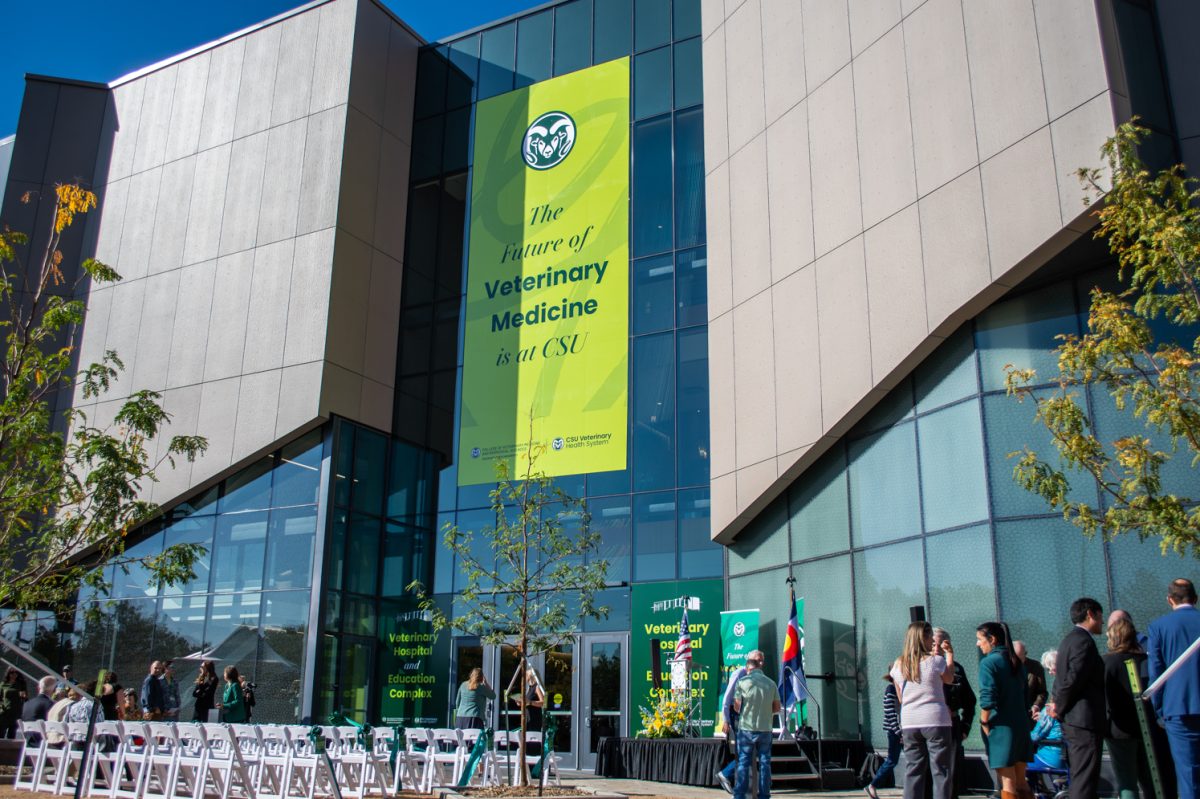
“We’re about to open a 230,000 square-foot new facility that will move all of our veterinary students to that campus,” VandeWoude said. “This is opening this summer, and the classes will start over there in August. All four of our veterinary classes will be there. It has a brand new clinic for primary care that’s expanded more than twofold.”
VandeWoude said the new facility will be open to the public, allowing students to bring their animals and CSU employees to get a discount.
“Our third- and fourth-year veterinary students will be running that hospital,” VandeWoude said. “And by doing that, we’re also changing the curriculum completely to make it much more problem-based learning and experiential learning. So our students will get more hands-on experiences that are going to prepare them for the workforce immediately.”
Both students beginning their journeys in the veterinary program and those nearing graduation spoke of their pride in the communities the program has created.
“I really wanted a school where they prioritize the students’ well-being as well as their education, and I figured out that CSU was the best option for that because I’ve heard so many great things from my previous mentors,” said Orli Algranatti, a first-year vet student and president-elect of the CSU Student American Veterinary Medical Association. “Overall, I knew that this was going to be the best school for me to grow as a person and in my education,”
Téa Ned, a fourth-year veterinary student and president emeritus of SAVMA, echoed Algranatti’s sentiments and said her years in vet school were hard, but they set her up for her future career.
“I feel like I have been given the tools to be successful in my veterinary career, and I think that all of the faculty are very open to staying in contact after vet school,” Ned said. “I think that this is a school that definitely likes to take care of their students once they graduate and keep that door open.”
Reach Abby Barson at news@collegian.com or on social media @RMCollegian.