

“We are still here” echoed among the crowd gathered for the 41st Annual Powwow held Saturday, Nov. 1, by Colorado State University’s chapter of the American Indian Science and Engineering Society.
The powwow marked the beginning of National Native American Heritage Month, celebrating enduring Native American traditions that have been upheld from generation to generation through song, dance and community gathering. The celebration included dancers, drum groups, vendors and a variety of traditional cuisines.
“It’s been really nice,” said Andrew Morgan, president of CSU’s AISES chapter. “It’s a great way for the community to come together. At least for me, the powwow (is) just another way to showcase us on campus, to educate people and (to) let everyone know, ‘Hey, we’re still here.’”

Doug Good Feather, founder of the Lakota Way Healing Center, delivered the event’s opening prayer.
“I want people to leave wanting to come back and learn more and to know that we come from different backgrounds and different cultures, but we are all a piece of each other’s puzzle,” Good Feather said. “When we come together like this, we fit perfectly.”
The event was held in collaboration with the Native American Cultural Center at CSU, which supports Native and Indigenous students on campus, promoting cultural education and awareness.
Grace Pratt serves as the liaison between RamEvents and NACC and is a representative of NACC in the Associated Students of CSU Senate. She highlighted the importance of this event to Indigenous and non-Indigenous students alike at CSU.
“NACC is like family to me,” Pratt said. “It means a lot to us to carry on this tradition as college students ourselves. We want to show non-Indigenous people our traditions and remind them that we are still here as a people and we still exist, and we’re getting our education. We’re a really close community as well, and everyone’s invited.”

Attendees like Misunkala Clairmont, who is a member of the Lakota Tribe, said events like these serve a vital community-building purpose.
“Dancing and being here at powwows is something that I grew up doing since I could walk,” Clairmont said. “I feel home when I’m out there dancing or hearing the music or being around the community. I grew up with everyone here. It means a lot to me.”
This year’s powwow marked the 10th anniversary of the Laramie Foothills Bison Conservation Herd, a collaborative program that has bred, raised and returned more than 200 bison to Native American tribes and other conservation herds.
The program has played a critical role in reintroducing American bison to landscapes where they have been absent for over a century since their near extinction. Ty Smith, the director of NACC, explained the significance of the bison’s return.
“Bison have always played a very important role in certain Native tribes,” Smith said. “The bison have impacted Native nations (when) there are bison that are given and gifted to tribes to either help them with establishing a herd of their own or to help bring in new genetics into their existing herds.”
Smith further emphasized that the return of the bison herds represents a revival of Native Americans’ relationships with bison.

“They have really — meaning the bison — have given so much to us,” Smith said. “Today’s event is an opportunity to celebrate that and to share that information with people attending the powwow.”
This year’s Student Research Showcase was a new addition to the event, spotlighting the work and research Native students have done across a variety of disciplines. Brianna Maxwell, the research coordinator at NACC, emphasized how the change represents a significant step toward affirming Indigenous researchers’ rights to control and manage their own data.
“For example, in my research with the Indigenous Land and Data Stewards Lab in forest and rangeland, we started partnering with the Northern Arapahoe tribe, whose homelands we’re on,” Maxwell said. “We’ve started to reach out to other tribes that called this place home and still call this place home.”
“It’s great for people to learn the culture and learn the history — the truthful history. Seeing younger people wanting to learn and wanting to know more about that is a great thing.” –Bernedette Rocha, Lakota jewelry maker
Maxwell noted that this step is intended to ensure research is conducted ethically and in partnership with Native tribes, all urging CSU to go further in recognizing Indigenous sovereignty of their data.
“We also recently just developed an Indigenous people’s data agreement, which makes it so that the tribe owns their own data, so we’re not stealing their knowledge,” Maxwell said. “CSU has never acknowledged the rights of Indigenous peoples to steward their own data, so that’s a huge thing to come out of this so far.”
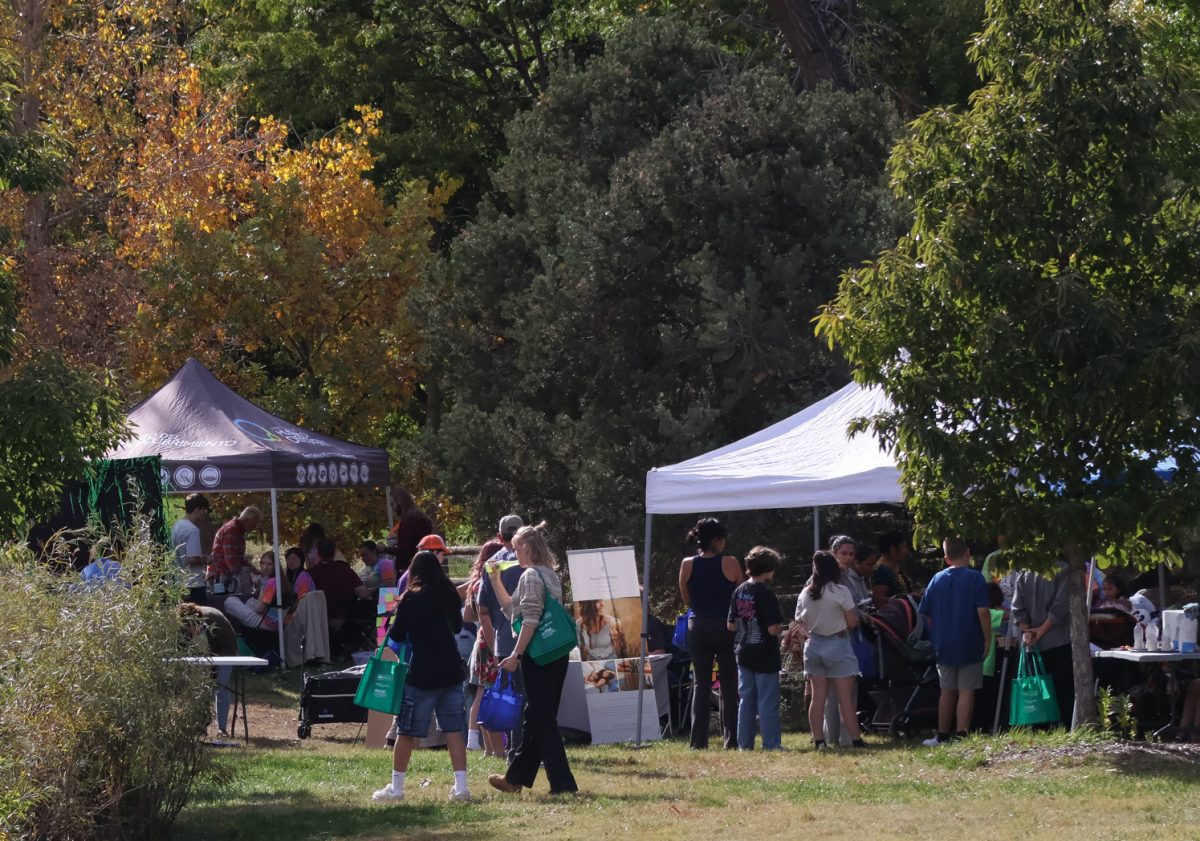
The powwow was also an opportunity to support Native artists and creators. The event featured a variety of vendors displaying hand-crafted pieces of jewelry, charms, clothing and more, all rooted in Native American culture, craftsmanship and storytelling. Gilbert Morgan, a vendor and a member of the Navajo Nation, said he had been coming to the powwow for over 20 years.

“I was a student here,” Morgan said. “I just keep coming, sharing my culture and keep the tradition going so it can be recognized and show students that we’re still here.”
Bernedette Rocha, a member of the Lakota Tribe and owner of Aunt B’s Things, pointed out the importance of sharing culture through art.
“I’ve been making jewelry since I was a teenager, but I’ve been actually selling at powwows for probably 12 years now,” Rocha said. “It’s great for people to learn the culture and learn the history — the truthful history. Seeing younger people wanting to learn and wanting to know more about that is a great thing.”
The powwow was open to everyone, along with all events during Native American Heritage Month. Everyone is encouraged to attend and experience Native American culture, whether they are Indigenous or not.
“You just (get) to really experience some of the celebrations that Native American communities do, and it’s an opportunity for everyone to get involved, too,” Smith said. “I want people to go away from it just being able to experience Native culture and also recognize that these are really celebrations for us to see old friends, make new friends and just be in community with one another.”
Reach Claire VanDeventer at life@collegian.com or on social media @RMCollegian.