

Editor’s Note: All opinion section content reflects the views of the individual author only and does not represent a stance taken by The Collegian or its editorial board.
Many of us grew up with a dream job — something you’d wake up thinking about every morning, discuss endlessly with your parents and friends, and dream about after watching the latest movie featuring the career. Whether it was working at NASA and flying to Mars, being a secret agent at the FBI — my personal obsession — or opening your own bakery to sell pastries, most of us had something we looked forward to.
Fast-forward to today, I’d proffer that a great deal of those dreams have been crushed by our current reality: pivoting toward jobs that offer more security out of multifaceted fear. Fears like, “Will I even land a job after graduation?” “What kind of job will I be able to get?” and “Why is it so hard to get a job if I went to college and have a degree in exactly what’s needed?”
With data showing recent college graduate unemployment rates hovering around 5.6% and underemployment — college graduates working jobs they’re overqualified for — at 42.5%, labor prospects are becoming increasingly frightful.
The struggle to find a degree-pertinent job is an undeniable concern for college graduates, but there’s even more.
Data from 2022 shows that the average job required more than 1,000 days of prior experience. Quick math: To fulfill the average job requirement in the U.S., you must have nearly three years of work experience to consider simply writing out your resume.
Jobs in the sciences, legal fields and management roles require much more experience, often requiring undergraduate work experience. These are some of the leading fields at Colorado State University. This isn’t just a statistic; it’s personal.
Of course, it’s a battle to get your dream job right out of college. But the current requirements and employment statistics paint a terrifying image of the struggle to find degree-related jobs point-blank.
Artificial intelligence has been and will continue to be a growing concern in the labor market. We’re already seeing it take over entry-level job positions, which adds onto the mountain of expectations within the job application process. The issue with permitting AI in these spaces now is that it inevitably creates a gap between college graduates entering the field and experienced workers already in these careers.
Though it’s possible that entry-level jobs may re-emerge in a new form, statistics are not in our favor as higher expectations of education begin to take form. By 2031, a projected 72% of jobs are going to require completed postsecondary education or training, according to Georgetown University’s Center on Education and the Workforce.
Undergraduate degrees are no longer enough.
But this is where I believe we’re looking in the wrong places. I don’t want to write a message that discourages students’ perception of the future — we deal with enough pressure, fear and confusion as is. But I argue we should become archeologists. We should become actors. Educators. Scientists. Firefighters. Leading engineers. With the correct mentality — and what I believe is the only healthy way to remain sane in times of depressing reports — we have to stay realistically optimistic.
While at CSU, we’re all here for a reason: to fulfill some kind of passion, whether it be through extracurriculars or our majors. My hope is that with your degree, undergraduate or postgraduate, the little you — a librarian to be, the next Hamilton on Broadway, the up-and-coming news reporter — can still follow that love of a career with meaning.
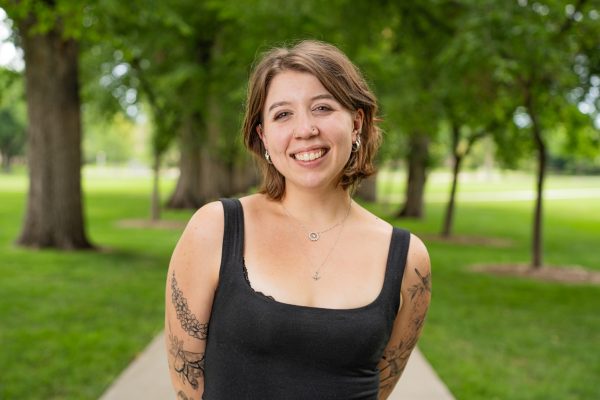
Reach Vivian Szostak at letters@collegian.com or on social media @RMCollegian.