

Editor’s Note: All opinion section content reflects the views of the individual author only and does not represent a stance taken by The Collegian or its editorial board.
I have never gotten the appeal of the huge designer clothing brands. I think having a brand plastered all over a t-shirt looks tacky, and I would never buy from them — but they do not want my money.
A pair of jeans from Dior will run you an insane $2,600, Prada’s bags cost $5,000 and, in some cases, a wallet chain from Versace is a little over $1,000. Another fatal flaw of those wildly expensive designer clothes is the sizing. The largest size of jeans Dior carries is a U.S. 14. A large.
Dior is not the only perpetrator; of the designer names I’ve listed, none carry above a size 14. The largest size Saint Laurent carries is a U.S. 10. None of their websites even have a plus-sized catalogue.
Based on data from over 42,000 American women, the majority are a size 14 or larger, the most common size being a 16. This means that designer brands are not catering to a large percentage of the American population. The fact that designer brands exclude fat people from their demographic is wild, and it’s a huge amount of missed profit. But I doubt this decision is based in ignorance, especially when founders like Karl Lagerfeld, the man responsible for the Chanel we know today, was a wildly fatphobic man.
Designer brands make the conscious choice to exclude fat people, continuing to keep these luxury goods as a status symbol. Not only do you have the wealth needed to buy these clothes, but you have the body that the brand, and society, deem “worthy” of that luxury.
I know I am not the target demographic for these brands. I wear a size 18, and they have already decided my money or any fat person’s money is not worth their time. But wealth is not relegated to only thin women, and designer clothing shouldn’t be, either.
“Celebrating all body types through designer clothes could remove the stigma and revulsion of fat, and imagine the cultural change that would bring; we know that what designer brands put on the runway eventually trickles down into everyday clothing.”
Fat people want beautiful, trendy and designer clothes, too. If brands like Torrid can make an annual $16.3 million with clothing that’s barely on-trend, designer brands could stand to make a profit from this audience. Fat people have money to spend; designer houses just have to be willing to accept that money.
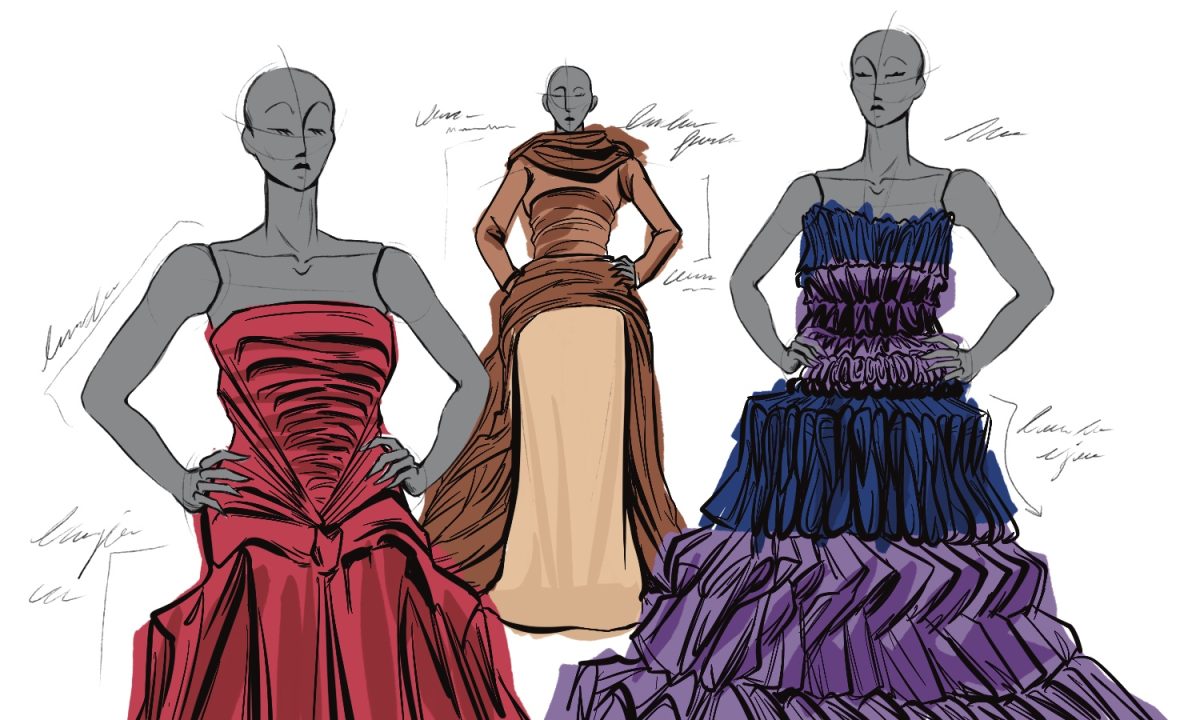
These brands set the standard, so they could change it. They have decided that fat people are not worth designing for, which is why fat people — especially fat women — do not get luxury, cute or trendy clothes. But if these houses started showing love to fat people and creating lines that are specifically for fat bodies, it could revolutionize how people view fat bodies.
Not to mention, these expansions would grow designer brands’ audiences and, therefore, their revenue. The positive PR they would get from expanding their sizes would likely form a free marketing campaign through social media.
If designer brands catered toward fat bodies, it would change the game for fat people. Celebrating all body types through designer clothes could remove the stigma and revulsion of fat, and imagine the cultural change that would bring; we know that what designer brands put on the runway eventually trickles down into everyday clothing.
Reach Audrey Weishaar at letters@collegian.com or on social media @RMCollegian.