
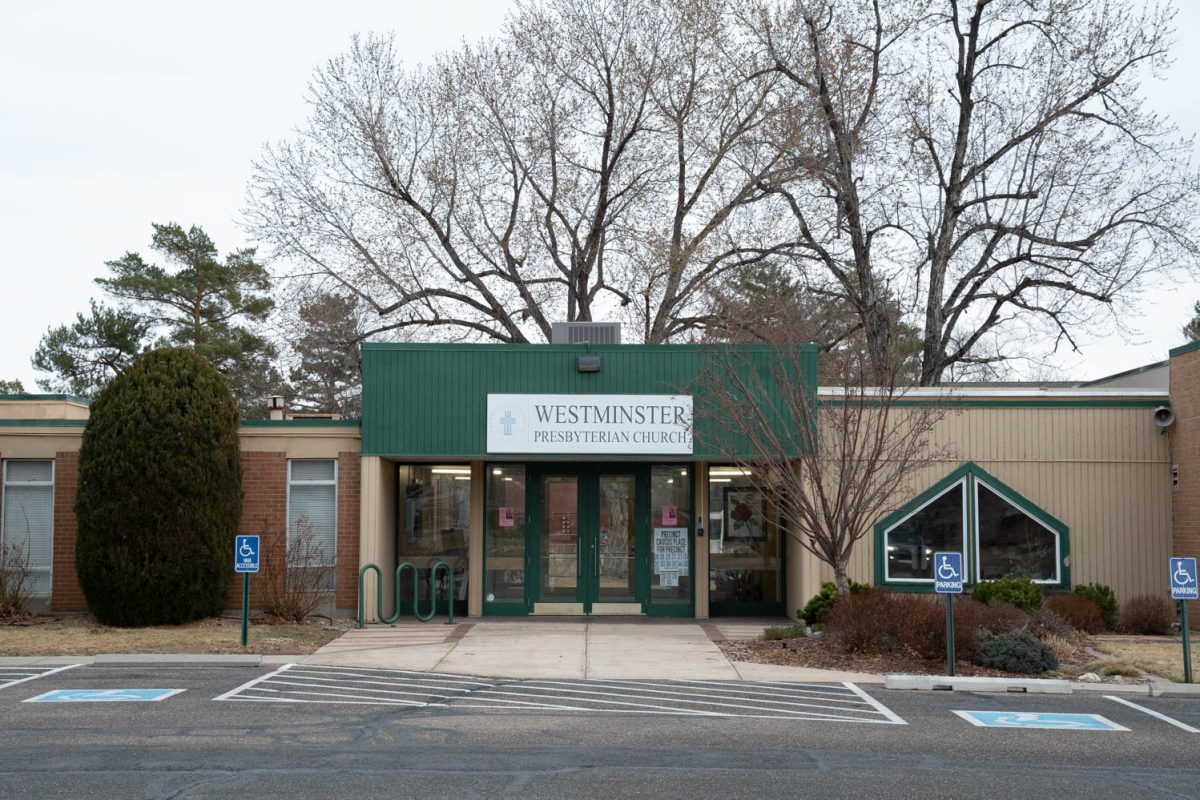
On Tuesday evening, about 25 to 30 Larimer County Republicans gathered inside Westminster Presbyterian Church for the 2026 Republican precinct caucus, a two-hour meeting that offered a small but direct look at grassroots political organizing in Colorado.
The meeting, held from 7-9 p.m. March 3, was part of Colorado’s caucus system, a neighborhood-based process used by political parties to discuss candidates, debate issues and select delegates who will later attend county and state assemblies.
After attendees arrived and checked in, the group opened the evening with the Pledge of Allegiance and a brief prayer. Participants were then separated into smaller groups based on their precincts, each gathering in different areas of the church to conduct their discussions.
In Colorado’s caucus system, registered party members meet locally in precinct groups rather than immediately casting traditional primary ballots. Attendees discuss candidates and vote to elect delegates who move on to the next level of the process: County assemblies and, eventually, the state assembly, where candidates must earn enough support to appear on the primary ballot.
Because the gathering included voters from multiple precincts, the roughly 25 participants quickly divided into smaller circles. Within those groups, attendees discussed candidates, shared campaign materials and voted on delegate positions.
Flyers and campaign literature were available as the caucusgoers reviewed candidates seeking statewide and local offices. Several candidates running for governor were among the names discussed.
One candidate, Maria Orms, highlighted her background as a U.S. Air Force veteran, engineer and cybersecurity professional. Her campaign materials focused heavily on technology and civil liberties.
“Technology and AI are reshaping our world, but I’ve seen how they can erode our rights and manipulate society,” Orms’ flyer reads.
Her platform emphasized protecting privacy, increasing transparency in government and supporting responsible technological innovation.
Another gubernatorial candidate, Jason Mikesell, presented a sharply critical view of the state’s current direction.
“Colorado is unrecognizable, unsafe, unaffordable and unattainable for our children,” his flyer reads. “I want my Colorado back.”
Also in the governor’s race is Scott Bottoms, whose campaign materials emphasized reducing regulations, supporting small businesses and increasing transparency in state government spending.
Another gubernatorial hopeful, Victor Marx, framed his campaign as an outsider effort focused on crime, economic concerns and government reform. His letter to caucus delegates described frustration among Colorado residents over affordability and safety issues, while calling for increased support for law enforcement and reduced government regulation.
Bob Brinkerhoff, another candidate mentioned by attendees, highlighted a platform centered on constitutional rights, lowering taxes and what he describes as stronger public safety policies.
Beyond the governor’s race, several other candidates were discussed during precinct conversations.
Sean Pond, a candidate for U.S. Senate and fifth-generation Colorado resident, emphasized a philosophy of limited government.
“The people are the authority,” his campaign flyer reads. “Government should answer to them, not the other way around.”
Local races were also represented.
Lori Garcia Sander, running for reelection in Colorado House District 65, promoted policies focused on affordability, reducing regulations that affect small businesses and education involvement from both teachers and parents.
Meanwhile, Tina Harris, who is seeking reelection as Larimer County Clerk and Recorder, highlighted nearly 25 years of experience within the office, including work aimed at modernizing election systems and processes.
Unlike larger political rallies or campaign events, caucuses operate on a much smaller scale. Conversations were informal, and attendees often asked one another questions about candidates or shared opinions before voting within their precinct groups.
The evening concluded once precinct groups completed their votes for delegates and finalized the paperwork required to move forward in the party’s nominating process.
While turnout at this particular caucus was modest, the meetings represent one of the earliest steps in Colorado’s election cycle, a process that can shape which candidates ultimately appear on the ballot.
Reach Maci Lesh at news@collegian.com or on social media @RMCollegian.