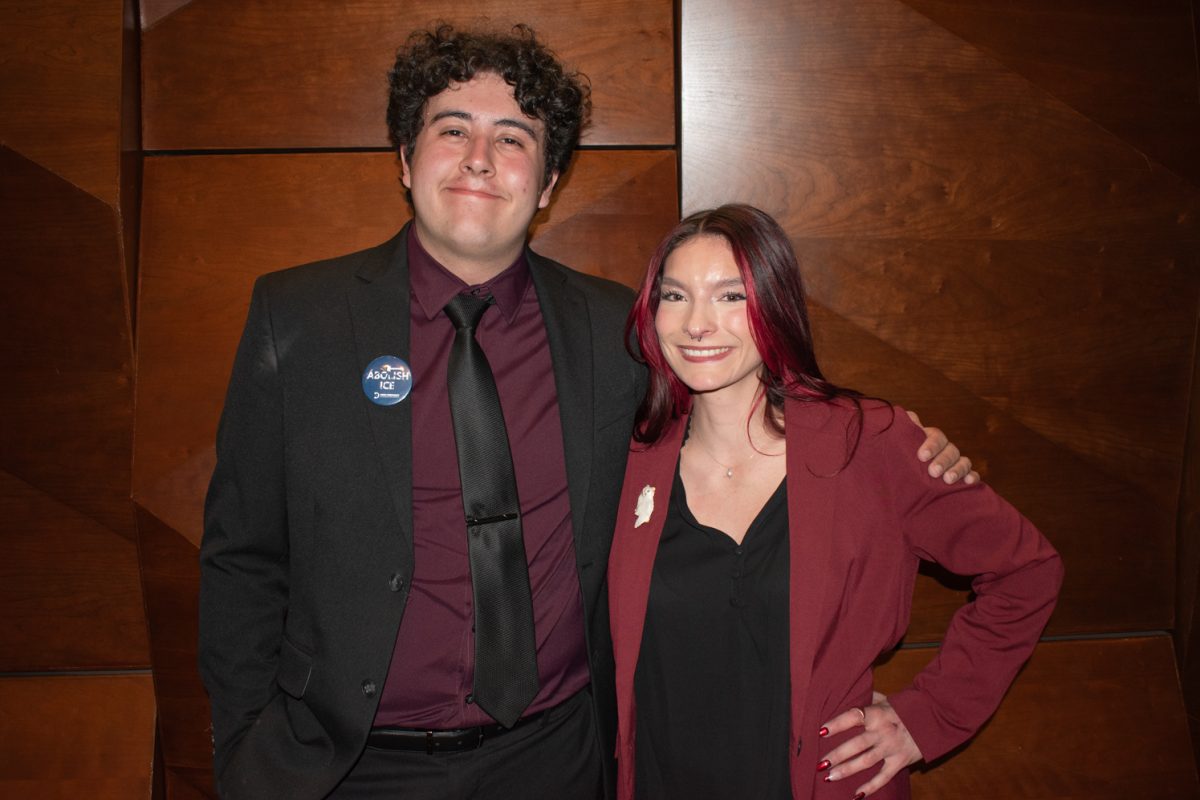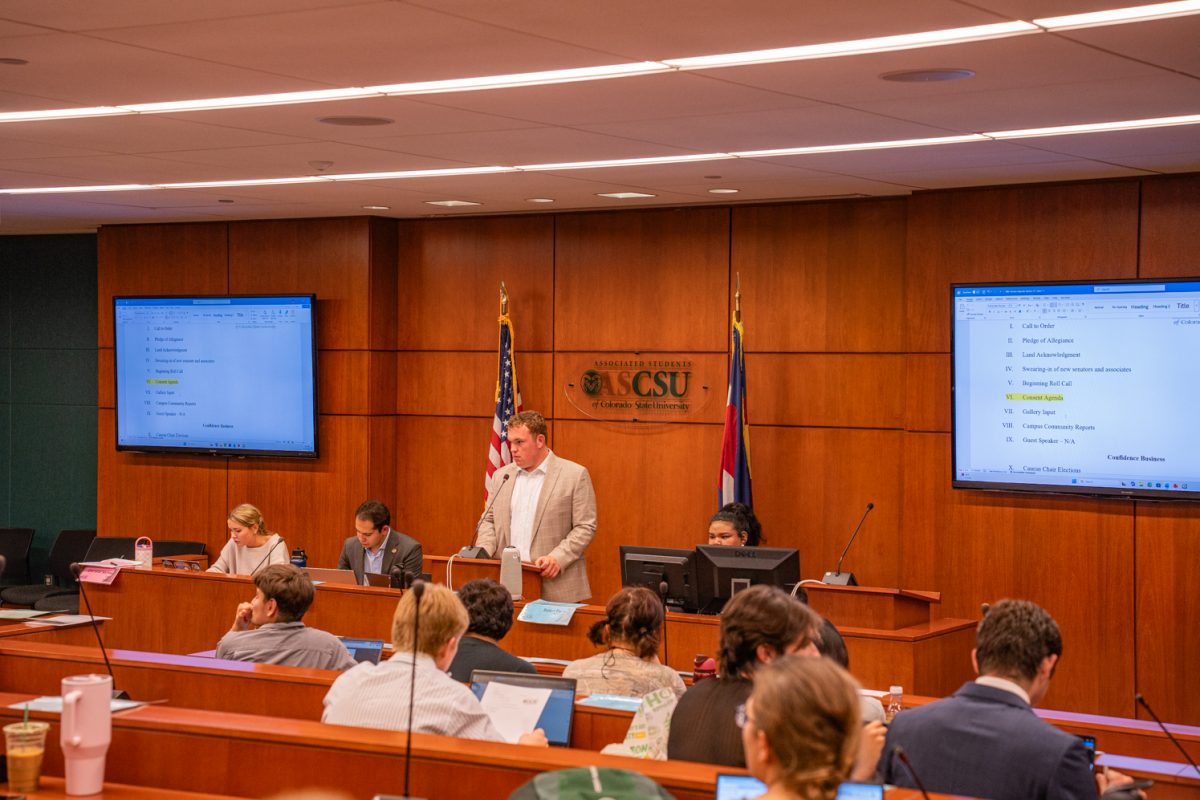


On Thursday evening, the Associated Students of Colorado State University hosted a debate featuring the candidates for ASCSU president, vice president and speaker of the senate.
The debate was held in preparation for students to begin voting for their preferred candidates on RamWeb, giving students an opportunity to learn more about each candidate before the voting period begins. The campaigning period concluded March 6 and voting will take place March 9-11. ASCSU Elections Manager Emily Arnow said that she hopes students leave the debate feeling more confident about their decision of who to vote for.
“I want students to leave this debate feeling better informed about the candidates that may represent them in the coming years and make sure that they feel confident and informed as they’re making their decision of who they want to lead them next year,” Arnow said.
The debate kicked off with a conversation with speaker of the senate candidate Ryer Roberts, who is currently running unopposed for the position. When asked what inspired him to run, he drew on his first experience in the ASCSU Senate.
“From my very first time in ASCSU, my very first senate meeting, I was hooked,” Roberts said. “I just thought it was so cool how we have a student body who is working for students and it’s by the students. Being able to share that student voice was something I really enjoyed, and being able to advocate for my home College of Agriculture was really, really exciting to me.”
Many students within and outside of ASCSU often say that most students feel disconnected from ASCSU decisions. Roberts agreed and said that he planned to increase transparency within the space.
“One of my goals as speaker of the senate is to address the student body four times throughout the school year,” Roberts said. “I think that’s a way that I can advocate and speak on behalf of the legislation that we’re passing in the senate and hard work that our senators are putting in and accomplishing.”
When asked about how he will protect the expression of free speech, which has become a central topic on campus, he said he would strive to be impartial but advocate for the rights of students.
“If we read the job description, a lot of it comes down to impartiality when I’m running the senate space,” Roberts said. “Keeping my opinions out of that but also making sure that we’re advocating for free speech, whether that is to upper administration or just advocating for free speech on a random Tuesday (and) making sure that students know that their voice matters here at Colorado State University and that it matters in the ASCSU space.”
ASCSU oversees more than a $57 million budget of student fees every year. To keep this decision-making process transparent and hold ASCSU accountable, Roberts said that communication and ensuring complete student representation are key.
“Communicating with the student body is a very big piece of that,” Roberts said. “Another thing is also making sure that all those senator seats are full. If our senator seats are not full, our voices aren’t being heard, so we need to make sure we’re representing constituencies actively. It’ll be my No. 1 goal to make sure every single senator’s seat by the end of the year will be filled.”
Looking ahead, when asked about what kinds of legislation or initiatives that he would like ASCSU to focus on, Roberts said that it matters more what the students want to see.
“I would turn that question around and say, ‘What do the students want to see?'” Roberts said. “I want to actively reach out. I want to actively understand their concerns and what they want to see to make Colorado State University that much better.”
When asked what makes him the best candidate for the speaker position, Roberts said his diverse experience and skill set has prepared him for role like this.
“I would say that I have a very unique set of skills that have prepared me for a position like this,” Roberts said. “I was PR-trained, I was trained on how to be impartial, I was trained on how to work with people, and that is the goal and root of this position, right? (It’s) making sure that I’m putting those student initiatives first and using those skills that I’ve obtained over my 20 years of life to make sure that I’m providing best for the students.”
Voting will open at 8 a.m. March 9 and close at 4 p.m. March 11. All students can vote online through RAMWeb during this period, with results announced at 6:30 p.m. March 11.
Reach Claire VanDeventer at news@collegian.com or on social media @RMCollegian.