

While most humans and animals have the ability to physically remove themselves from stress-inducing or harmful situations, most plants must remain stuck, literally, to face their antagonist and suffer the biological consequences. New research from Colorado State University, however, may offer a new path forward to improve plant genetics and yield.
Cris Argueso, an associate professor of plant pathology in CSU’s department of agricultural biology, and Grace Johnston, an associate researcher in the Argueso Laboratory, published a study in Current Biology Feb. 23 that centered on the hormonal responses of plants to environmental conditions.
“So in our lab, this is studying plant hormones; they’re also known as phytohormones, and these are molecules that plants (turn into) hormones,” Argueso said. “They help plants make decisions. They’re essential for plant growth, essential for responses to the climate, such as what happens when it’s too hot or what you do when there’s a lot of water.”
These chemical messengers also regulate a plant’s development, reproduction and responses to environmental threats. The way these traits present themselves, as the study explained, are defined as the growth-defense tradeoff: the negative cost to growth when defense responses are activated. This reaction is directly influenced by a plant’s stationary nature.
“Plants are very interesting organisms in the sense that they are sessile,” Argueso said. “They can’t move from the place where they are and when the environment changes, when they need more water, when they have a predator around or when the light’s not OK. Whenever the environmental conditions are not great, plants have to stay in place and deal with whatever is happening.”
Johnston, the paper’s first author, was funded by the National Science Foundation. She explained the pair’s goal was to establish control of phytohormones through exposing plants to specific environmental and hormonal conditions.
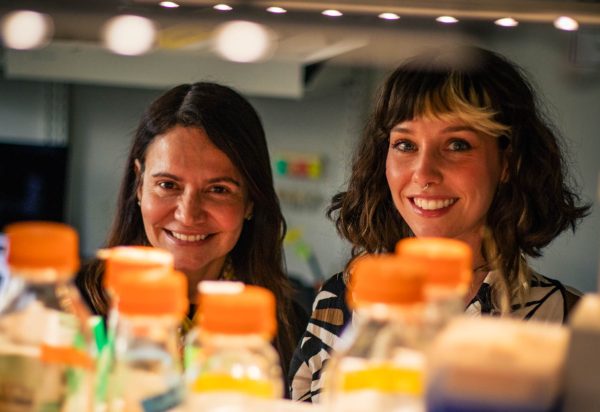
“So the main idea behind the paper itself is essentially using these hormone signals and manipulating them to get an outcome that we want, and the outcome that we were interested in is maintaining immunity to pathogens, as well as, like, increased yields,” Johnston said.
Their specific focus throughout the study was on cytokinins, a type of phytohormone associated with cell division and plant yield.
“Cytokinin is (a phytohormone) that is derived from adenine, which is derived from DNA,” Argueso said. “So it’s a DNA-derivative, or at least a nucleic-acid-derivative, and it’s something that plants make, and most perceived by other plant cells, (which) leads to a lot of cell division.”
The pair utilized Arabidopsis plants to conduct their tests in which they introduced a pathogen to the sample specimens to then measure the defense phytohormones that accumulated in response to facing the aversive stimulus. Arabidopsis is utilized by plant pathologists industrywide for its easily applicable genetic makeup. The weed, which is native to Eurasia and Africa, was the first plant to be genome sequenced over 20 years ago.
“(Arabidopsis) also has a small genome, which means that, genetically, it’s a very simple organism,” Argueso said. “Eventually, when we identify something of interest in this plant that can be applied to crops, we can just do that like the same genes (as) the existing crops.”
After introducing pathogens, the pair then measured the plant’s accumulation of several phytohormones, including salicylic acid, jasmonic acid and ethylene. With cytokinin marking a plant as having experienced biological stress, salicylic acid and cytokinins serve as an inverse indicator of plant immunity.
Johnston and Argueso utilized a suite of Arabidopsis known as autoimmune mutants, which have highly active immune systems. Smaller and dwarfed, the plants always believe a pathogen is attacking them. This variety was then crossbred with plants that presented knockout mutations, resulting in a variety the pair named s35.
“Our triple mutant outcome of that cross was the s35 plant that we characterize, and this plant was really special,” Johnston said. “It remains small dwarf vegetatively, so it looked like it’s parental (segment) one when it wasn’t flowering. But then once it started flowering, we noticed that it had this novel sleek which is also named for fruits in rhabditis, sleek phenotype, where they were essentially at the, like, ends of the stem, like, bursting out. So we named them (the) Starburst phenotype.”

The new variety’s dual ability to both produce a crop yield while remaining resistant to disease and environmental stress marks a new point of plant hormone therapy and the ability for humans to edit plant genetics to best suit our societal and environmental needs.
The phenomenon was first introduced by Norman Borlaug through a period known as the Green Revolution. He created a dwarf wheat variety through selective breeding attributed with saving millions from starvation.
“So we joke that it is a green Green Revolution,” Argueso said. “Because it is also the idea of phytohormone manipulation. (Our) plants, they’re smaller and highly productive and also don’t require any pesticides to be free of pathogens and pests.”
Their discoveries have potential widespread applications through CRISPR genetic editing, a tool that edits specific DNA sequences and their resulting trait in organisms.
“Hopefully, there’s, you know, many pathogens out in the wild, growing crops and fields that they need to have resistance to, and it’s a big deal if, you know, a farmer’s crops gets decimated by a pathogen,” Johnston said. “So using the plant’s own, like, immune system and own hormones to defend itself against that and maintain growth is kind of a broad goal that I would say we have.”
For Argueso, the study’s culmination reflected a greater peak of watching Johnston mark a new level of her academic achievement and growth, from when Johnston first began in her laboratory as an undergraduate research assistant.
“She started the work as an undergrad,” Argueso said. “Then she became a grad student. Now over the last few years, she’s in my lab as the lab manager … She’s like a CSU success story.”
Reach Katie Fisher at science@collegian.com or on social media @RMCollegian.