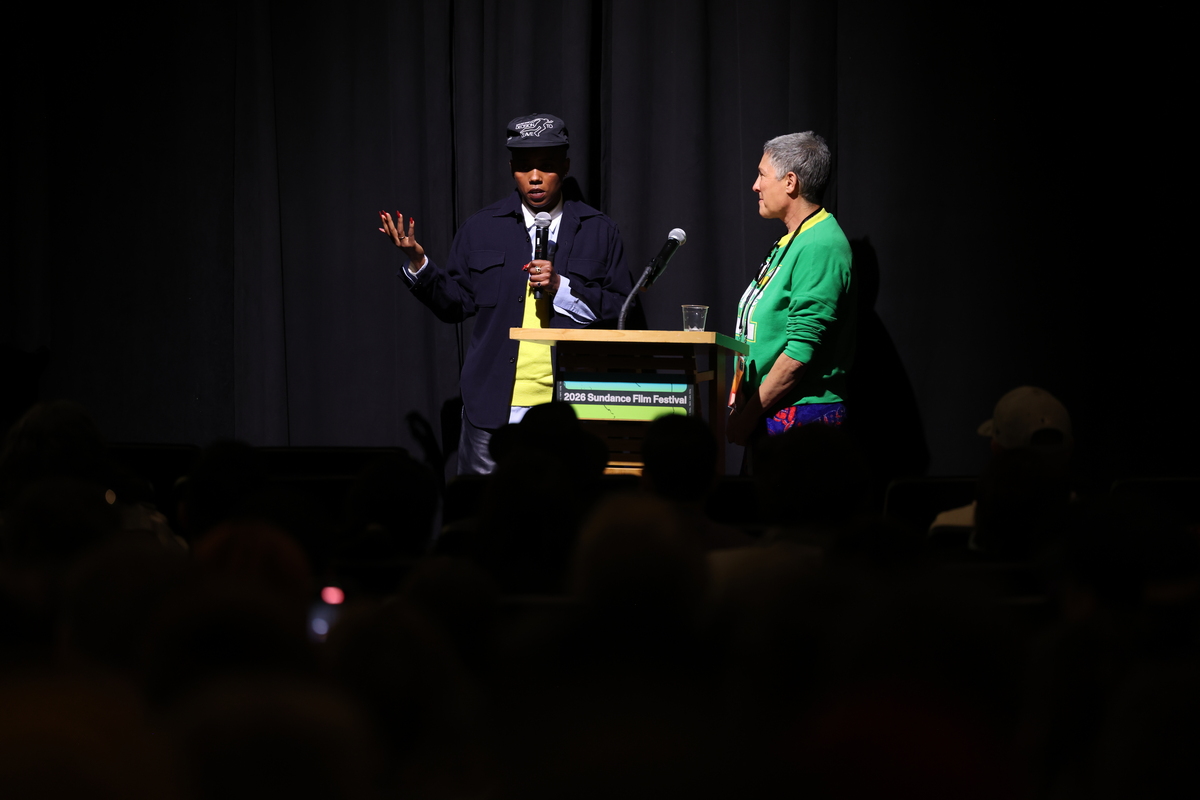
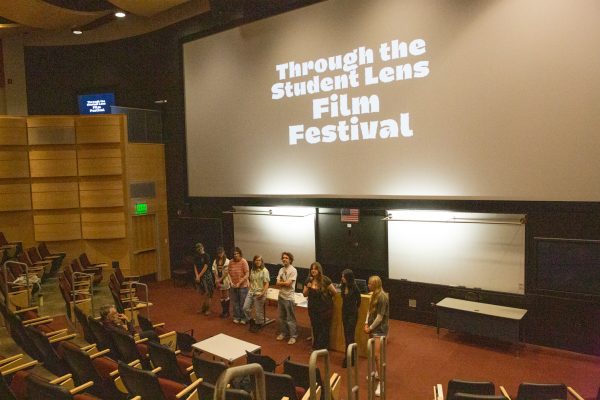
Presented by Colorado State University’s department of communications and the ACT Human Rights Film Festival, 22 student films lit up the big screen at the fifth annual Through the Student Lens Film Festival. Hosted on Wednesday, April 22, and Friday, April 24, students, family and friends gathered to watch the student-made films.
The idea for the film festival came from Program Director and Teaching Associate Professor in the department of communications Usama Alshaibi, who said he wanted to showcase some of the best student films produced in his course: SPCM 360 “The Personal Lens — Making Media.” Over the years, the festival has expanded, with several works coming outside of Alshaibi’s course that represent CSU’s active film community.
The film festival is also student run and student judged. Elieana Garrick and Stella Leslie, this year’s co-student directors, headed the festival alongside Alshaibi.
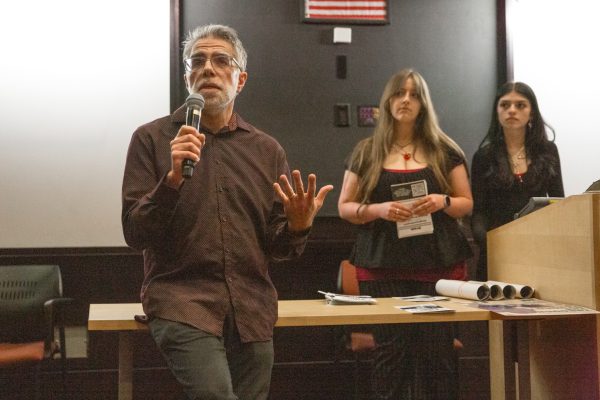
“I’m a big believer in making films but also screening the films,” Alshaibi said. “There’s something about sitting in a theater in the dark with a bunch of people in the audience and having your film on the big screen; it changes you — it transforms you.”
Showcased films fell into one of five sections: Fright or Flight, Through the Queer Lens, In Motion, Experimental Form and The Earth and Sky, according to the event’s program. Films also spanned in subject matter, echoing themes of friendship, culture, identity and more. Attendees had the opportunity to vote on their favorite films in each category.
Lucan Wrigley, a student majoring in journalism and media communication, showcased his film titled “Bravo,” during The Earth and Sky section of the festival. Inspired by composers Claude Debussy and Frédéric Chopin, Wrigley said his film aimed to cultivate the feelings of affection and grief the composers’ music ignites for him.
From shots of Wrigley playing piano in the Lory Student Center to videos from his childhood, the film primarily focused on Wrigley’s history with piano throughout his life.
“A big part of my concept was, what has (piano) done for me in the past two years that has made me be able to step away from the difficulties of life and deal with the anxiety that goes and plagues all of our days naturally?” Wrigley said. “Why is it important to me?”
Wrigley got involved with the festival through Alshaibi’s SPCM 360 course, which he said offered him strong criticism from people who care about movies as he returned to the space of filmmaking.
What makes the festival different, Alshaibi said, is that all the work is done and the films are produced by students. Through the festival, Alshaibi said “do-it-yourself filmmaking,” is encouraged, noting that many films were made with iPhones and free editing software, making the festival accessible and catered to personal filmmaking.
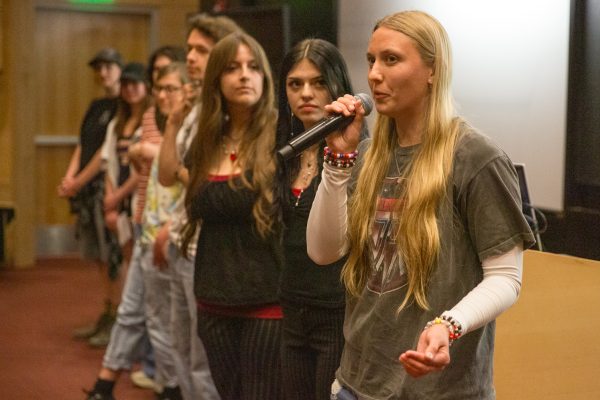
“I think it’s impactful that you don’t need to be the best and that you don’t need to have the best camera,” Leslie said. “You just need to submit your art, and it’s amazing seeing what people can make with just being in their living room. I think it’s really magical.”
Around 300 films were submitted and later judged based on the student’s vision, including elements such as plotline and creativity, Garrick said.
Tristin Tumeka Astbury said creating their film “Call Us When You Land, Star Child,” gave them an opportunity to return to who they are naturally. As an experimental film, Astbury’s work “reflected my internal world onto the screen visually,” employing bright colors, nature scenes and transitions.
“I’ve had to do a lot of rigorous, disciplined structure throughout my education, in college and before,” Astbury said. “But for this (film), it was very spontaneous, and I let it come from experimenting in the world, like picking things up, actually looking at what was around me, wondering what would make something interesting based off of the perspective that I’m getting from it in real time.”
As student programmers, Garrick and Leslie promoted the festival through posters and social media content; the two also contributed their own films, with Garrick’s titled “Sisu” and Leslie’s titled “Take Note.”
“It’s just nice for us to get together in a dark theater and share a world,” Alshaibi said during the Friday showing. “I really believe that filmmaking is a way to enter another person’s life, to enter someone’s dreams and their desires and their fears, and to share that experience helps us to understand one another a little better. I think it makes a better world when we can all share our stories.”
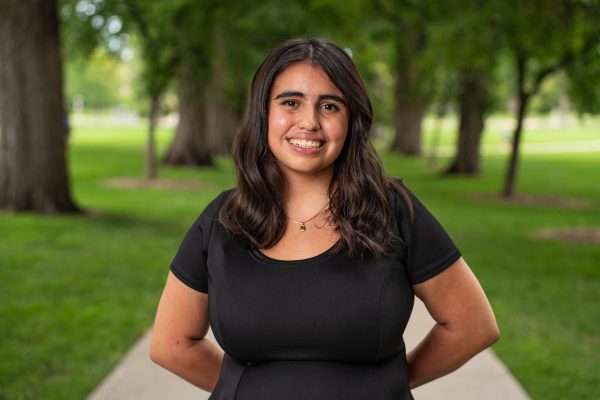
Reach Chloe Rios at entertainment@collegian.com or on social media @RMCollegian.