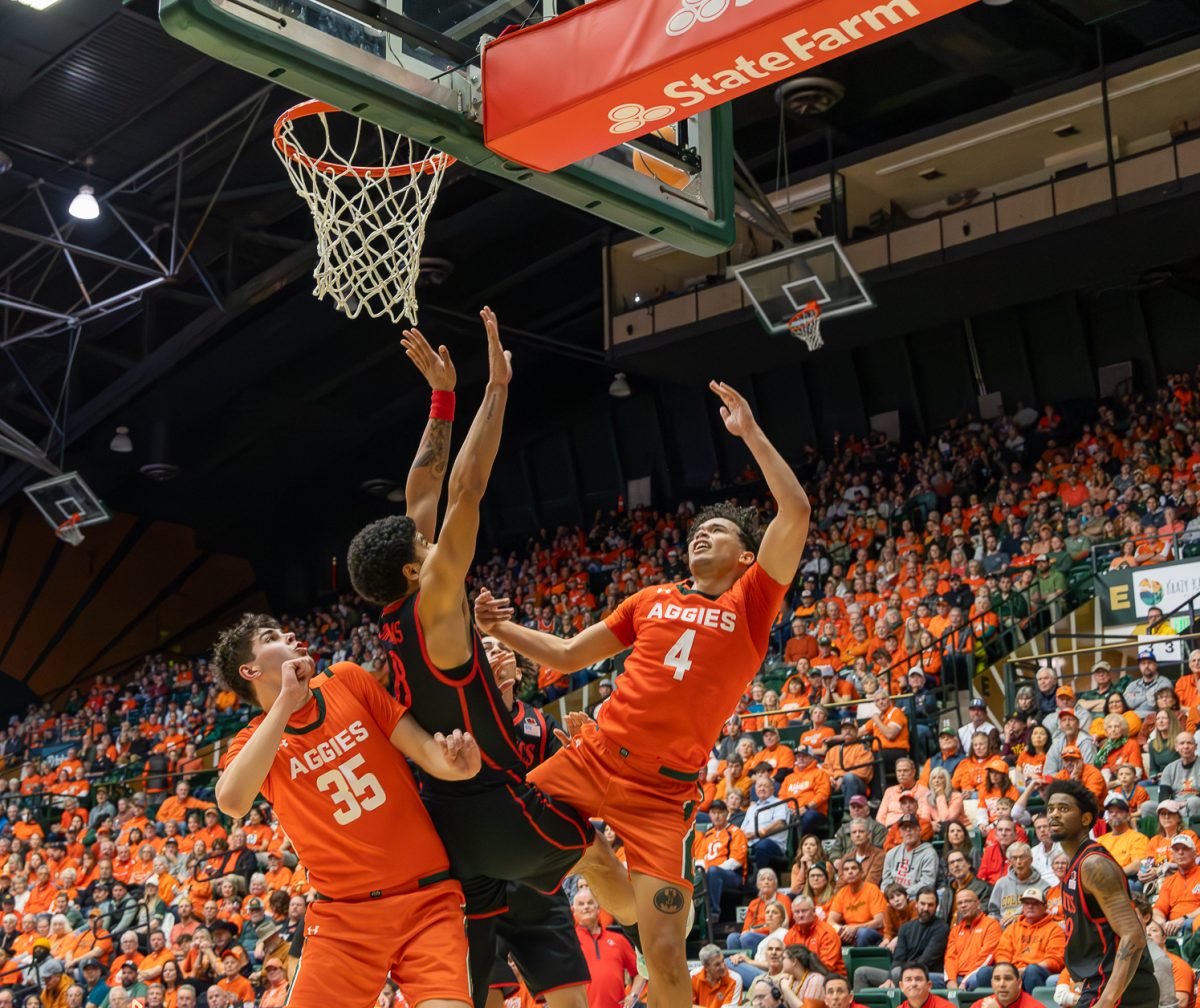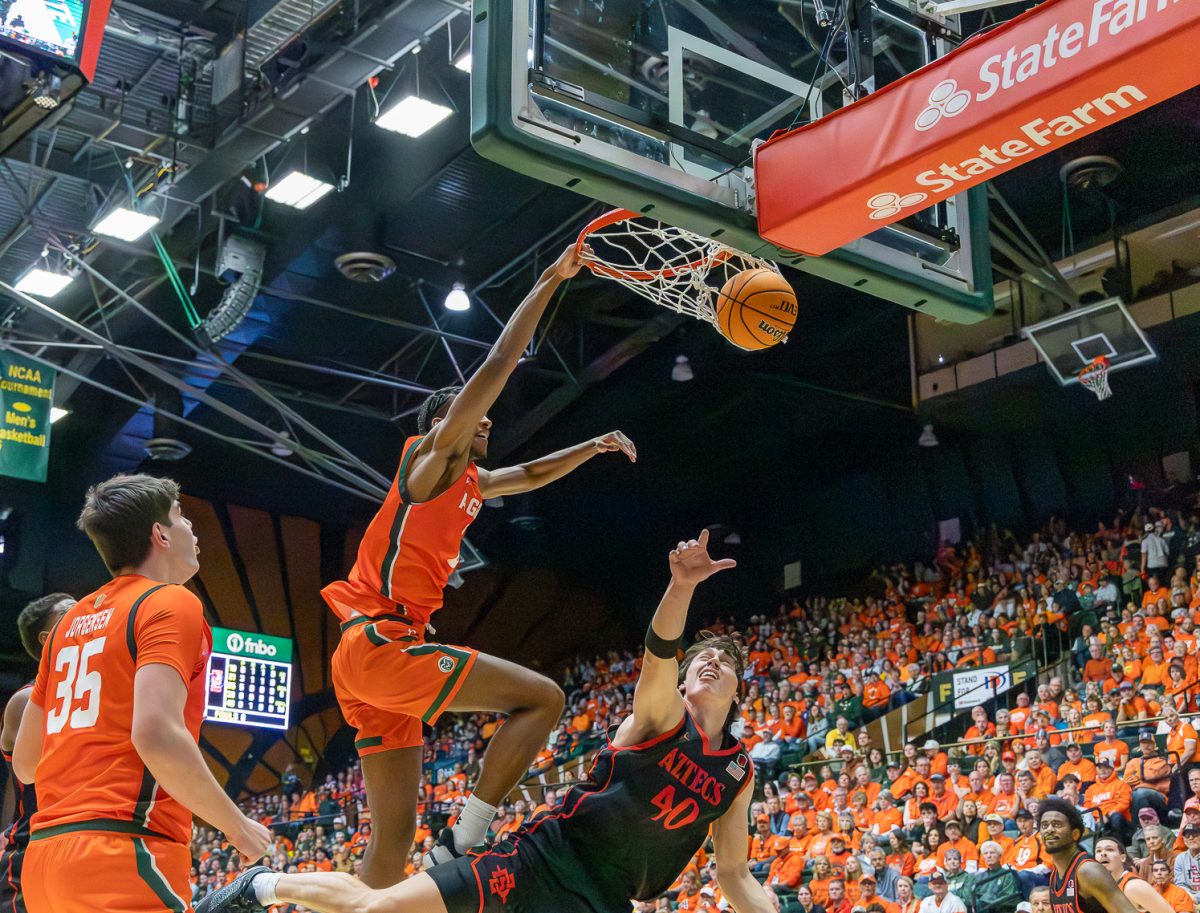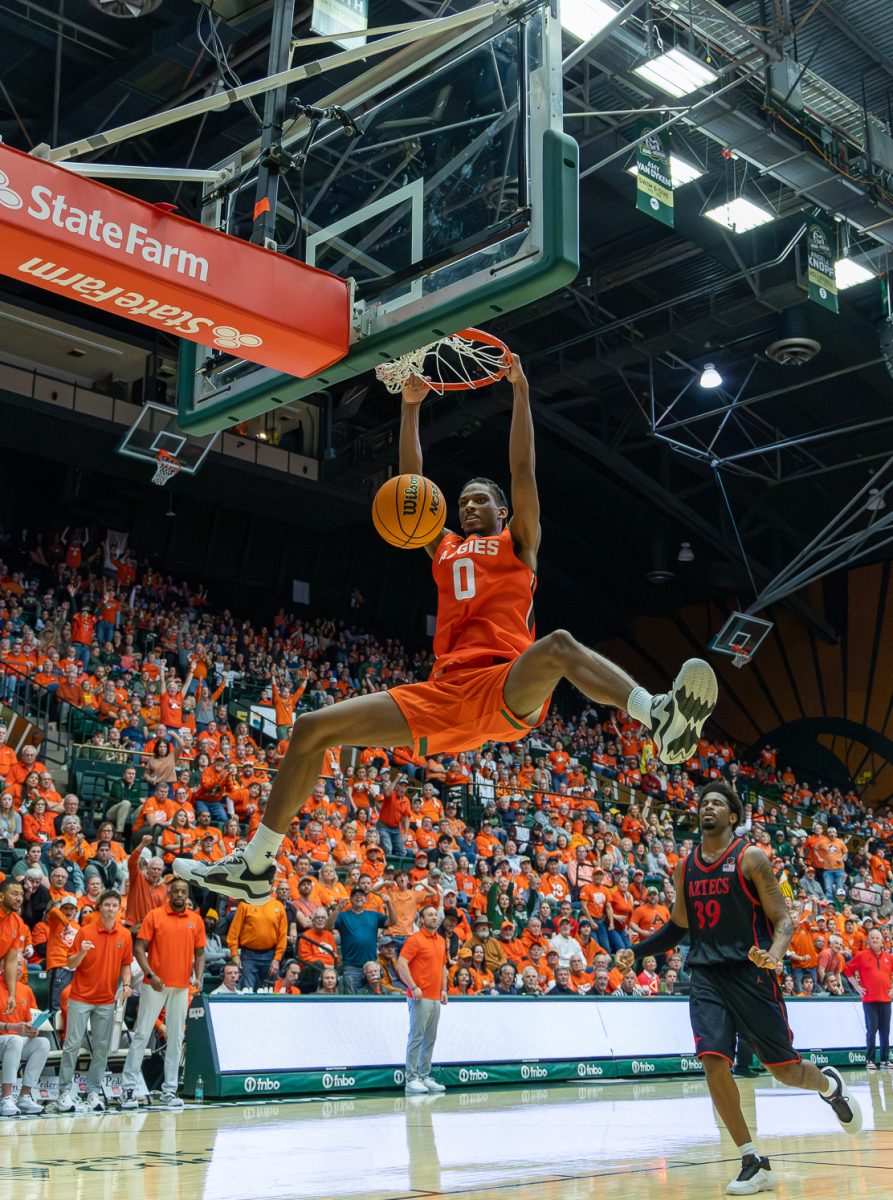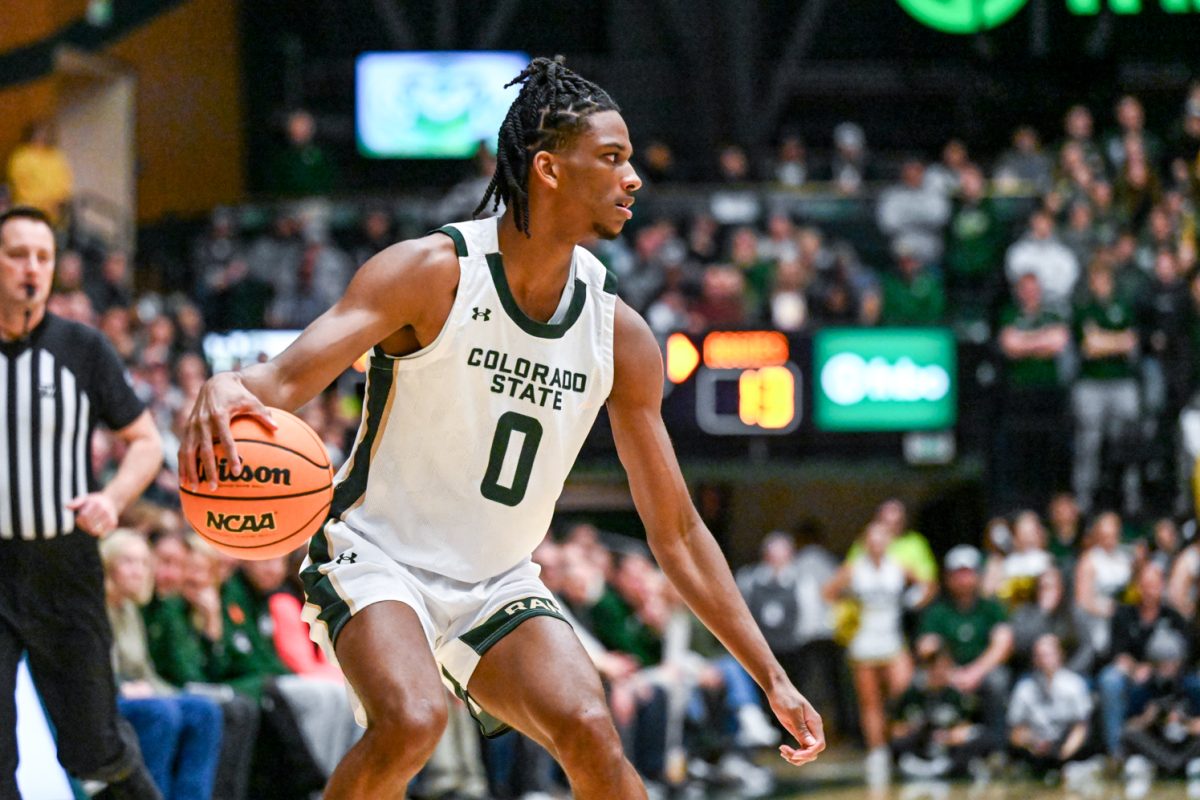
Moby Arena wasn’t expecting a poster dunk just three minutes in.
There was a beat after Carey Booth took off — that half second when people are still processing what they just saw before the noise arrives. He landed, briefly chirped at San Diego State’s Miles Heide, and let a smile slip out as Kyle Jorgensen gave him a shove.
But moments like that tend to linger longer than the play itself.
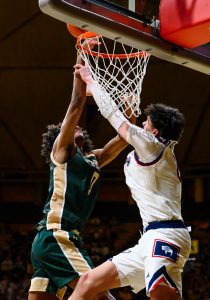
Over the last few weeks, Booth has started creating more of them. They aren’t always as loud nor above the rim, but they’re noticeable in the way his decisions come quicker and his presence feels steadier, with the reads arriving before the hesitation and the hesitation showing up less.
Against SDSU, that shift showed up in production as much as feeling. Booth finished with a career-high 22 points on 8-of-12 shooting with a pair of 3s, moving between perimeter cuts and interior pressure in a way Colorado State men’s basketball had been talking about for months.
“Well, I took the first dribble, and I thought he was going to step up, so I was ready to swing the ball,” Booth said after the win over the Aztecs. “But if you don’t get outside that charge circle, then I knew I had room to take off. So once I took off, I didn’t really see him anymore, so I just dunked it.”
That play fit into a larger shift for the journeyed 6-foot-10 forward.
Booth looked more comfortable asserting himself, cutting harder and catching with intent instead of reacting late, finishing through contact instead of away from it.
Later in the same game, another transition opportunity appeared, helping cap off a somewhat transformative night.
“I was thinking of windmilling it, but my hands were a little sweaty; I didn’t want to (risk it),” Booth said. “So if we had a little bit more of the lead, I definitely would’ve windmilled that.”
Booth’s path to that comfort, like many others, hasn’t followed a straight line.
The former top prep prospect played his first-year season at Notre Dame, averaging just under 20 minutes, before transferring to Illinois. But his sophomore year brought just 5.2 minutes per game and fewer opportunities to develop on the floor.
When he arrived at CSU, the expectation centered less on immediate production and more on gradual expansion, learning when to apply the skill set that had made him a prospect in the first place while navigating a rotation that changed frequently due to injuries.
Head coach Ali Farokhmanesh has pointed repeatedly to experience as the missing variable rather than ability.
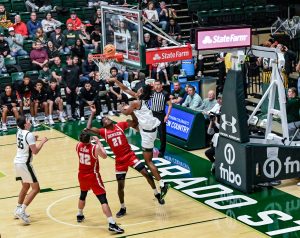
“He’s still learning,” Farokhmanesh said Feb. 14 after the Wyoming redemption game. “He came into college at 17. In today’s age, like, I mean, look at half the freshmen in college basketball (at) 19 and 20 years old. … Well, he was down a year and a half already in experience to start his career. Then he goes to Illinois and doesn’t get to play, so he’s down another year of experience.”
That developmental gap shaped how Booth’s season appeared.
The flashes were visible early, but the instinct that’s connected those flashes into consistency often lagged.
Instead of linear progress this year, his role shifted with circumstance, sometimes starting, sometimes anchoring bench units, learning spacing and responsibilities in different contexts week to week.
Farokhmanesh described that stage as Booth beginning to understand how to apply physicality rather than simply possess it.
“He’s still growing, and I think that’s what’s exciting for us,” Farokhmanesh said. “I think Carey’s getting more excited about it because I think he’s starting to see, like, ‘OK, there’s these small little adjustments I can make,’ because he is highly skilled. And now he’s starting to learn how to use his body in certain situations, how to attack people with his body before they attack him.”
Those adjustments appeared defensively first.
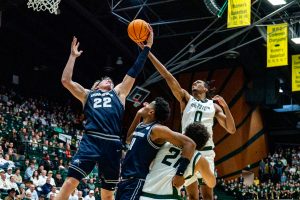
Booth’s length altered decisions even when the block never came; drivers often hesitate mid-step or release earlier than planned simply because he occupies space as the tallest player on the roster.
The statistical spikes, including a six block performance against the Cowboys, reflect a broader pattern rather than an isolated performance.
Farokhmanesh emphasized the deterrence as much as the blocks themselves when evaluating Booth’s impact, but Booth described that defensive role in simpler terms.
“I’m not really thinking about it,” Booth said after defeating the Cowboys. “I feel like they were just challenging it, trying to get layups, and I blocked it. Some of them, they didn’t see me. So I’ll just react off instinct.”
As the roster shifted through injuries, that defensive presence became part of a broader expectation.
Rashaan Mbemba missed nine weeks, and Jorgensen’s absence reshaped the rotation. Booth moved between roles, learning different responsibilities while the team searched for stability.
And that movement expanded his offensive role as well, particularly around the rim.
“Yeah, look, we’re a great shooting team, but you (have) got to score the ball from the paint, too,” Farokhmanesh said Jan. 20 after CSU’s game against Air Force. “And I think with Rashaan back and Kyle back, we can get some more of our paint scoring going again. We need it from Carey also.”
That change surfaced gradually for the big man.
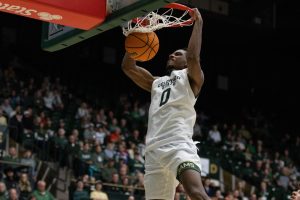
Early seals, well-timed cuts and finishes that came before help rotated instead of after are the type of possessions that aren’t always highlights but accumulate into confidence over time.
But that confidence has also appeared in demeanor.
“Carey’s such an unassuming guy, but when you get to know him, he’s actually really funny behind the scenes,” Farokhmanesh said. “And I think his teammates would say the same thing about him, but it’s been fun to see him just kind of come into his own, like you can see him smiling out there randomly.”
The visible comfort mirrors the internal development coaches have referenced throughout the season, connecting Booth’s growth to a larger team philosophy that has been centered on patience and adjustment in 2025-26.
“The biggest thing that (the team has) grown in, I think, is that they’re truly buying in to just keep getting better,” Farokhmanesh said about development as something that requires accepting uneven stretches.
Within that framework, the SDSU performance felt less like an epiphany.
Booth attacked space that day without waiting, finishing plays with emphasis. And when a wide-open transition opened again late, the hammer dropped quickly but the room reacted faster the second time.
Not because the play was bigger, but because it looked all too familiar.
Reach Michael Hovey at sports@collegian.com or on social media @michaelfhovey.
Interested in more sports content? Sign up for Ram Report here for weekly CSU sports updates!