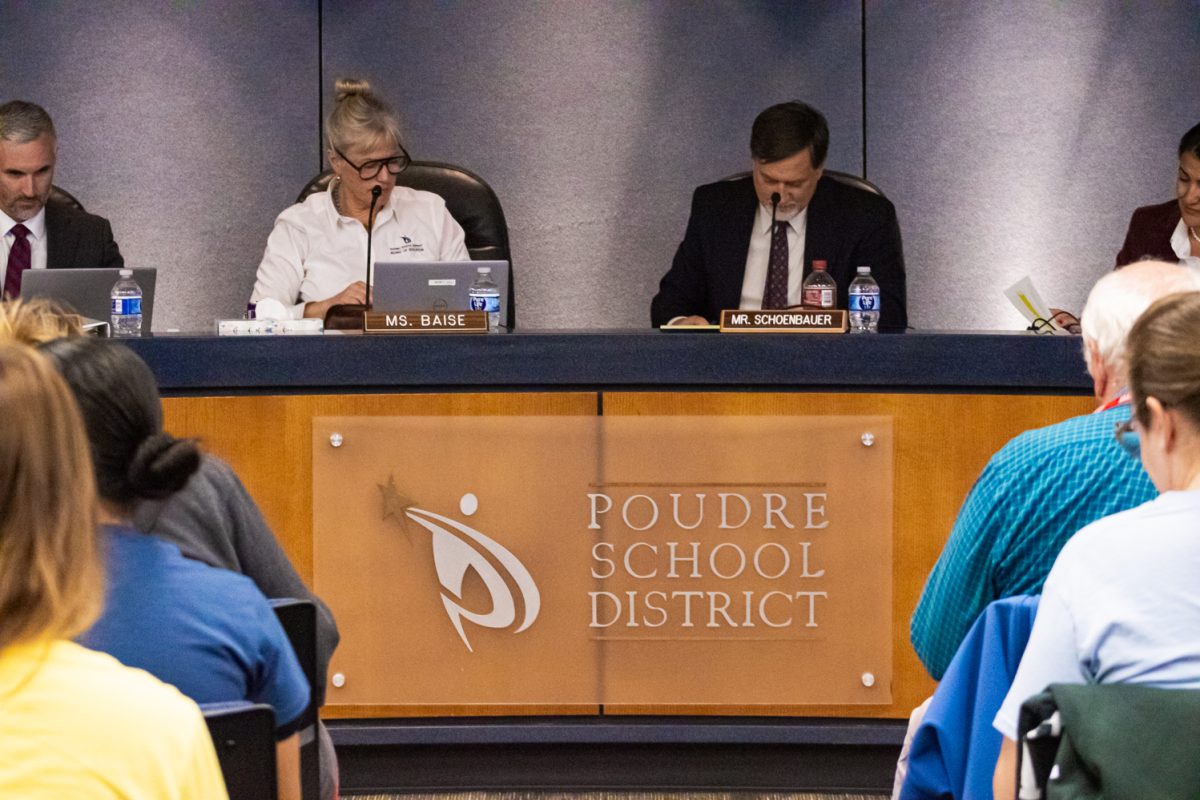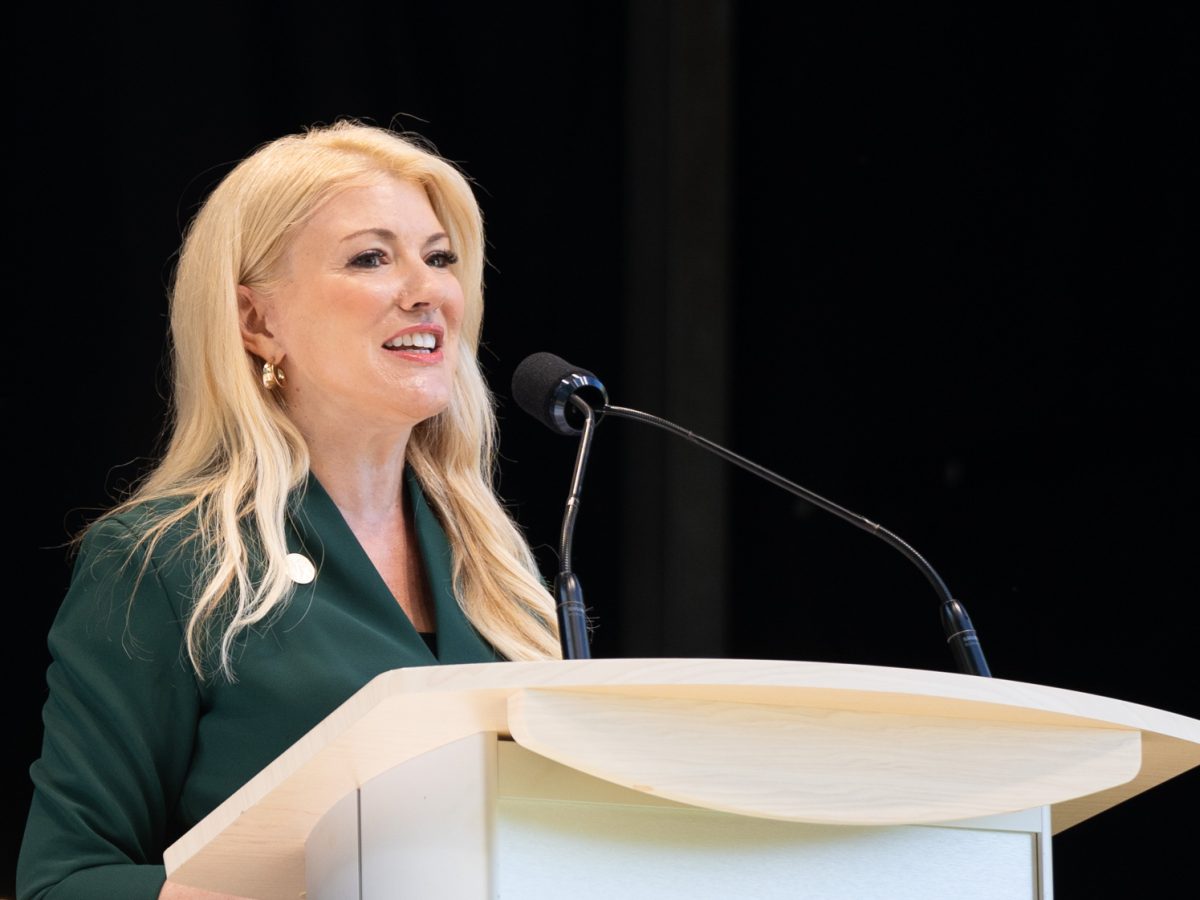

About a week before the 2026 midterm elections, Colorado State University students, faculty and community members had the opportunity to engage in conversation on the subject of democracy at the fourth annual Democracy Summit.
The event was hosted Oct. 26-27 by the College of Liberal Arts and included two days of lectures, workshops and forums.
This year, organizers opted to move the summit away from it’s typical spring schedule as part of a “new annual rhythm,” according to the College’s website.
“The Democracy Summit is an opportunity for our campus and community to come together to learn about democracy, to connect and to get involved,” said Katie Knobloch, associate professor of communications at CSU and director of the Democracy Summit.
Knobloch said they planned the summit to coincide with the midterm elections on Nov. 3.
“It’s the first time we’re doing it in the fall,” Knobloch said. “We’re hoping to really capitalize on the election and get folks excited to vote.”
At the “Building Civic Capacity in Colorado: Models for Democratic Innovation” session, the dean of the College of Liberal Arts, Kjerstin Thorson, touched on the various topics covered in this year’s summit.
“I love that this summit gives us so many different ways to think about democracy,” Thorson said. “Courts, liberation, journalism, technology (and) leadership — each of these topics raises important questions about how democracy works, how we keep on making it work and how we take part in it.”
The summit provided attendees the opportunity to speak with local judges and justices, who shared their insights of the legal world with prospective law students. Other events included a celebration of the anniversary of the Center for Public Deliberation, a keynote speech on the political crossroads of artificial intelligence and more.
Despite how far back the value of democracy can be traced through CSU’s history, the summit attempted to move beyond a simple history lesson and expand into civic life and innovation.
“It’s really both a showcase of what we do well here at CSU and a highlight of all of the great work that’s already happening and pushing us forward to what’s next,” Knobloch said. “I think that this is a place where we get to put all of these cool civic innovations, cutting-edge research into conversation together, so that we’re learning across those programs instead of just kind of learning about those programs in isolation. And it gives us a sense to kind of step back and look at the bigger picture of how does democracy function (and) how can we shape its future?”
The summit featured a number of organizations committed to furthering democracy, including The Civic Canopy, a community-based nonprofit who works to strengthen intracommunity connections and bolster civic capacity in Colorado. Bill Fulton, founder and executive director of the organization, was an event panelist and highlighted the conditions democracy creates for society.
“We became a nonprofit and have ever since had the chance to pursue this mission of creating the conditions where the many work as one for the good of all,” Fulton said, “And while these are innovative, we think, really, it’s more about just remembering what makes us human and why we’ve existed as a species is because we’ve got this superpower of being able to create these conditions and become more than the sum of our parts.”
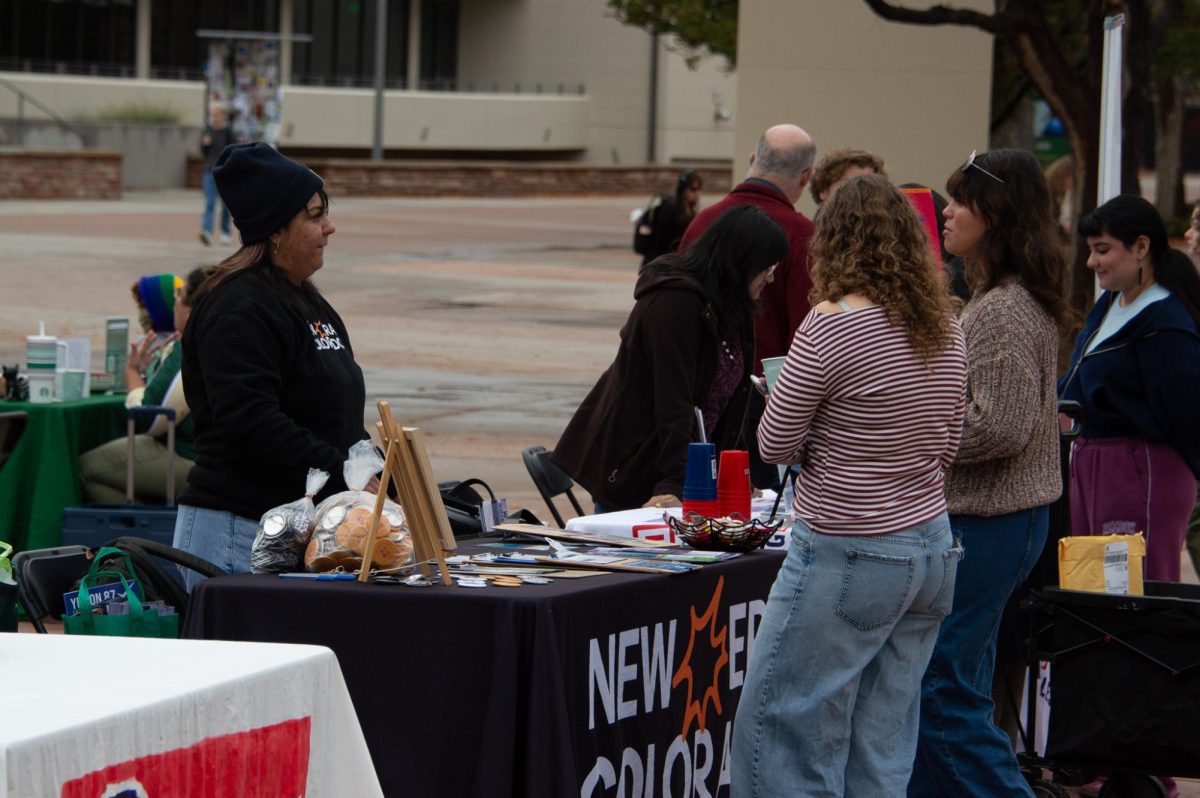
For students at CSU, the summit is an opportunity to learn more about ongoing work being done at the university and in the community to further civic engagement. CSU student Harper Dorris, one of this year’s Democracy Fellows with the Straayer Center for Public Service Leadership, said the summit is a chance to act as stewards of democracy.
“The democracy summit is my favorite week of the year,” Dorris said. “I say that every time. The civic fair is like probably the best two hours of my school year, every year. … I feel nothing but pride for the community I’m a part of.”
The summit ultimately brings people together across the spectrum of civic life, including researchers, judges, community leaders, journalists, politicians and more to engage in conversations around current events, concerns and hopes for the future.
“It’s really easy to get down in the dumps on what’s happening everywhere else and even (what’s) happening here,” Dorris said. “And then being able to have a sense of hope, I leave feeling very excited for the future and excited about the great things that are happening at CSU.”
Reach David Martinez at news@collegian.com or on social media @RMCollegian.