
Colorado State University’s annual Civics and Voting 101 seminar brought county, city and student government representatives to the Lory Student Center Sept. 23 to discuss how students can vote and influence decisions beyond Election Day.
Sam Houghteling, program manager of Straayer Center for Public Service Leadership, opened the event by urging students to see themselves as active participants in government and civic life.
“We think of CSU students not as, like, future civic leaders, but actually, current civic leaders,” Houghteling said.
Jake Friedman, an election communications specialist for Larimer County, highlighted the most immediate opportunity for students to get involved: the Nov. 3 election. He urged students to check their voter registration and mailing addresses before ballots are sent in early October.
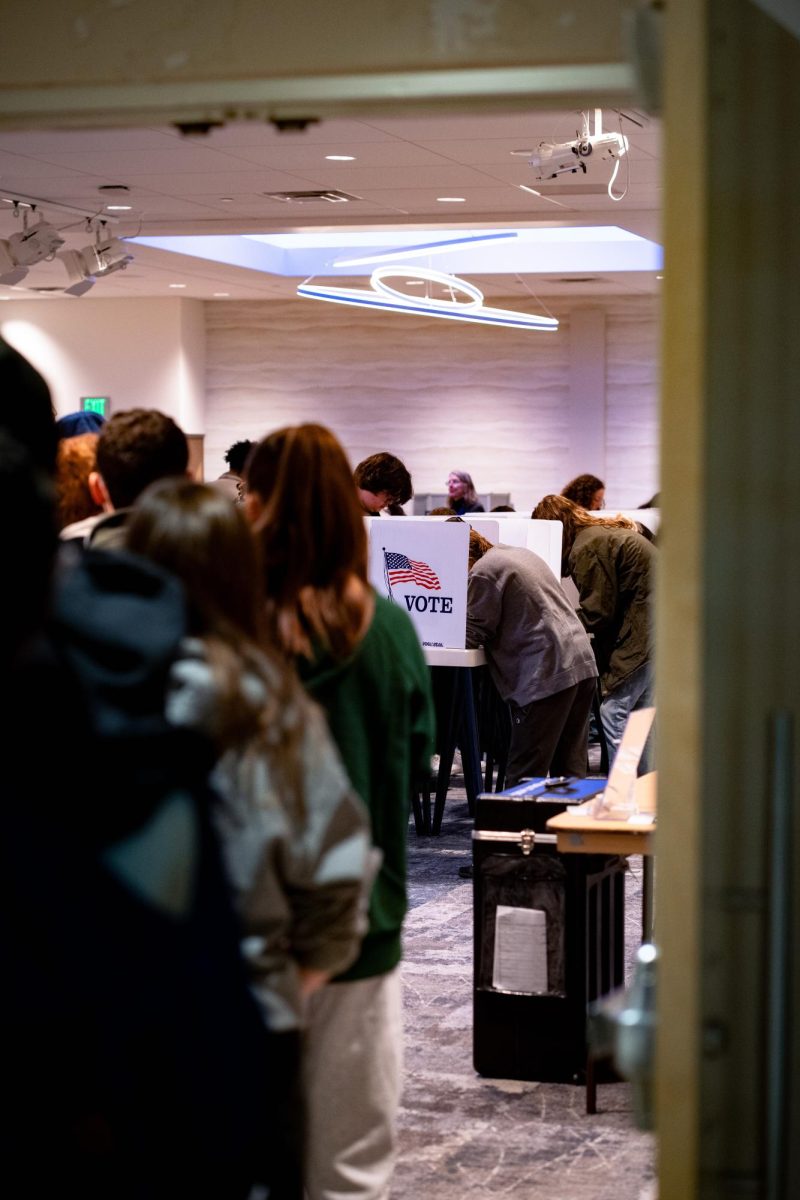
Students voting in Larimer County can use the ballot drop box outside of the Lory Student Center or visit the building’s in-person voting center. Friedman said registered Colorado voters can also apply for paid election judge positions, giving them a role in running the election.
Following up with more local opportunities for engagement, Davina Lau, a public engagement specialist in the Fort Collins City Clerk’s Office, described the city’s boards and commissions, whose volunteer members review projects and policies before advising city leaders.
Lau encouraged students to seek out these opportunities, as most boards do not require prior experience, and students can attend their public meetings before deciding whether or not to apply.
“I really want more engagement from you on boards and commissions because if you think about who usually has the time and resources to volunteer, it’s not people who look like us,” Lau said. “And you know, you are living here, you’re students, you’re working and you have a very unique perspective on what it’s like to live in a city. I think it’s important to have that perspective represented.”
Lau said she plans to hold a boards and commissions open house in November. The city’s annual application period begins in December, and students can find board and meeting information on its website.
Fort Collins City Council member Amy Hoeven told attendees they can also contact council members or speak during public comment to express what changes they wish to see in Fort Collins. Hoeven, who represents District 5 — which includes CSU’s main campus — named affordable housing, job availability for graduates and transportation safety among the council’s priorities. She noted students should raise concerns about city decisions, even if they expect to leave Fort Collins following graduation.
“You are a resident of Fort Collins when you are here, and you should expect people like me, your city council representative, to address your needs (and to) address your concerns,” Hoeven said.
Hoeven pointed to the city’s decision to end its contract for Flock license plate cameras as an example of public comment influencing council decisions.
“Hearing people’s concerns about Flock cameras really impacted our decision to end that contract,” Hoeven said.
Houghteling said another example of when CSU students organized around a policy affecting their housing was the U+2 rule, a state law that previously limited the number of unrelated adults who could live together in a single-family home to a maximum of three. He said a couple hundred students “packed” city hall to speak out against the former rule, with many students also testifying at the Colorado State Capitol in Denver, where lawmakers ultimately decided to change the law.
“Our department helped write the bill that got rid of it,” said Ava Fricke from the Associated Students of CSU, who shared opportunities for student engagement on campus through the association.
While ASCSU offers various students positions across its branches, Fricke specifically highlighted ASCSU’s Legislative Strategic Advisory Board, where students discuss bills impacting the student body and have opportunities to give testimony at the Capitol. Students interested in participating can speak with representatives at the ASCSU office or explore its involvement page.
Houghteling noted other opportunities available to students, specifically internships through the Straayer Center. The Colorado Legislative Internship places students at the State Capitol during the spring semester, where they have the opportunity to work with state lawmakers and earn six credits. Students interested in federal government or public policy can also spend a semester in Washington D.C. to complete a professional internship and coursework for 10-15 credits through the CSU in D.C. Internship.
“Students work with federal agencies, think tanks, nonprofits, law firms (and do) a lot (of) working on the hill,” Houghteling said. “We almost always have folks working with Michael Bennett and Joe Neguse.”
Reach Zoe Hege at news@collegian.com or on social media @RMCollegian.