
Caridad Souza, an associate professor in the department of race, gender and ethnic studies, brought the Ghana Community Engagement Project to Colorado State University shortly after her move from the State University of New York at Oneonta in 2012.
Every year since, students accepted into the program participate in an eight-week workshop before spending their winter break in Ghana. The program, however, still provides a way for those who did not take the trip to still experience a piece of Ghana in Fort Collins.
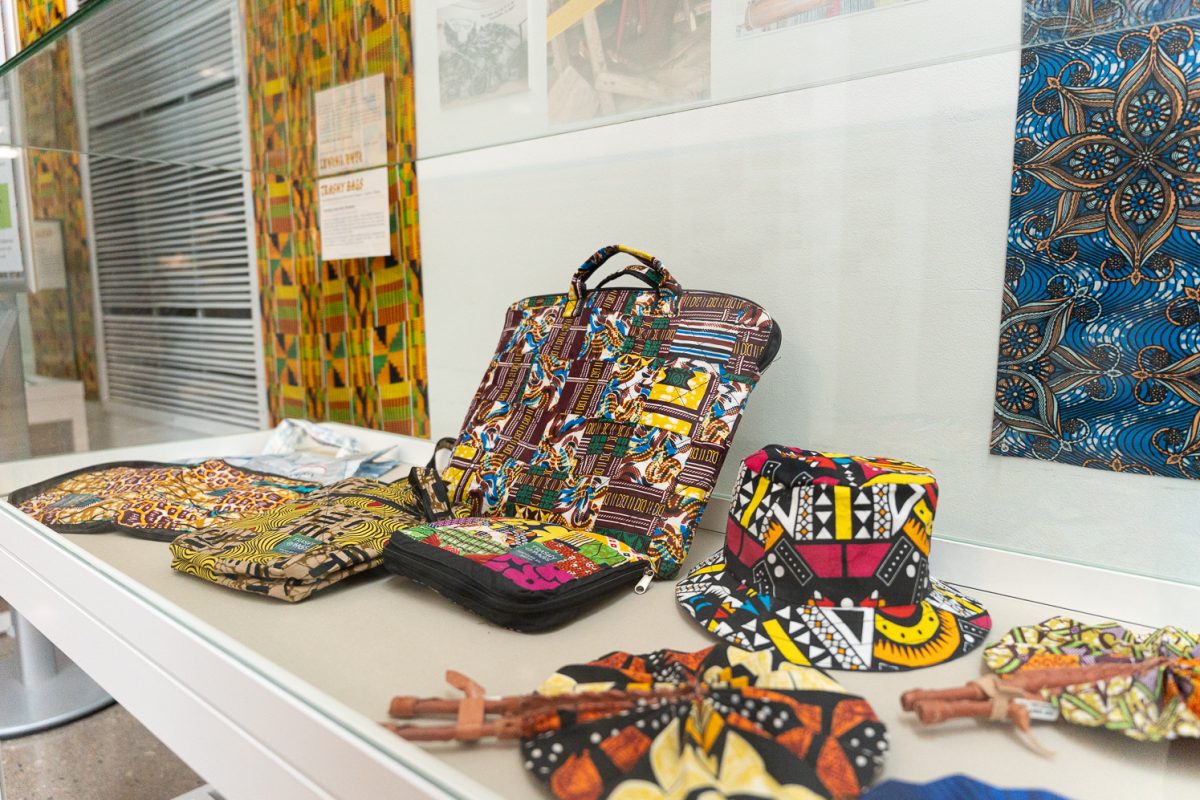
On Sept. 15, the “Gifts from Ghana: Community Engagement and Transnational Solidarity Project” was officially put on display at the CSU Morgan Library. Open until May 15, 2027, the exhibition highlights student experiences with an immersive walkthrough of Ghanaian culture.
“Once you commit to the program in October, there’s a series of workshops that you have to take,” Souza said. “(We) learn about how to be there from a decolonial perspective, and then we go for three weeks and we experience (Ghana).”
Core values of the project include transnational solidarity and teaching students how to step out of Western perspectives when traveling. As a result, the group does not follow a traditional itinerary. They instead highlight learning experiences, being present and aiding the community where necessary and when asked.
“We’re not here to help,” Souza said. “We’re not here to uplift. We’re not here to change. We’re not here to make a difference. We are simply here to walk, to accompany Ghanaians in their life journey, so we can learn from them what life is like.”
After past trips, a one-day pop-up exhibit was put on to showcase what students learned during their time in Ghana. This year, however, a decision was reached to make it more permanent.
“(Souza) asked me if I wanted to participate this year, as part of the faculty leaders of the program,” said Silvia Minguzzi, CSU Libraries’ Designer and Exhibition Coordinator. “And so, this year, since they invited me and I was part of the library, we decided, ‘Why don’t we make this project some kind of a storytelling project?'”
Along with the exhibit, the project also featured a series of live performances by students and faculty members in early April.
In the three weeks spend in Ghana, Minguzzi kept records through photography and audio recordings for the exhibit, compiling different aspects of Ghanaian culture, such as food, dance and clothing into her documentation.
“It is a very colorful punch in the library to try to immerse you as much as possible into a world that is very different from what we see here in Colorado,” Minguzzi said.
The exhibit immerses viewers through its colorful themes, and through multimedia as well. Each section features scannable QR codes linked to videos and audio recordings of moments, sounds, performances and stories heard and seen throughout the trip.
“You can go and just watch the beautiful beads and jewelry and kente cloth, but also you can just spend time listening to the stories or listening to music,” Minguzzi said.
For students returning from the trip, the exhibition helps to convey the experience in a way words often cannot.
“Coming back at first was really difficult and super weird because there’s no way to explain to people this experience that I’ve just had without them being there,” student participant Maddie Deweese said.
Deweese said she hopes the exhibit can help bring a greater understanding of the world to CSU.
“I hope that people look at the exhibit and walk away having a different understanding … (about) what it means to be in transnational solidarity with people from a genuine place rather than from a place of white saviorism,” Deweese said.
Reach Lilly Vollmar at life@collegian.com or on social media @RMCollegian.