

Drumming and singing filled the air, silencing the crowd’s chatter and signifying that the Gifts from Ghana performance had begun. For the next two hours, the audience would see, hear and feel how visiting Ghana affected a handful of Colorado State University students and faculty through art, music and performance.
The event stems from the Ghana Community Engagement Project, a program that educates students for eight weeks about the country before spending three weeks abroad in the Republic of Ghana to connect with the people, land and history.
Gifts from Ghana was held eight weeks after the trip, giving the group time to digest their experiences and turn them into artistic representations.
“We really embodied a lot of Ghanaian culture in just creating this because they do things collectively there rather than individually,” said Ashley Davies, a master instructor in the English department who attended the trip as a Ph.D. student in education, equity and transformation.
Davies said she had been wanting to participate in the program since seeing the last Gifts from Ghana performance two years ago.
“It was that deep feeling of, ‘I’ve got to go,’” Davies said. “It was extraordinary to go from seeing it as an outsider to being an insider in the experience.”
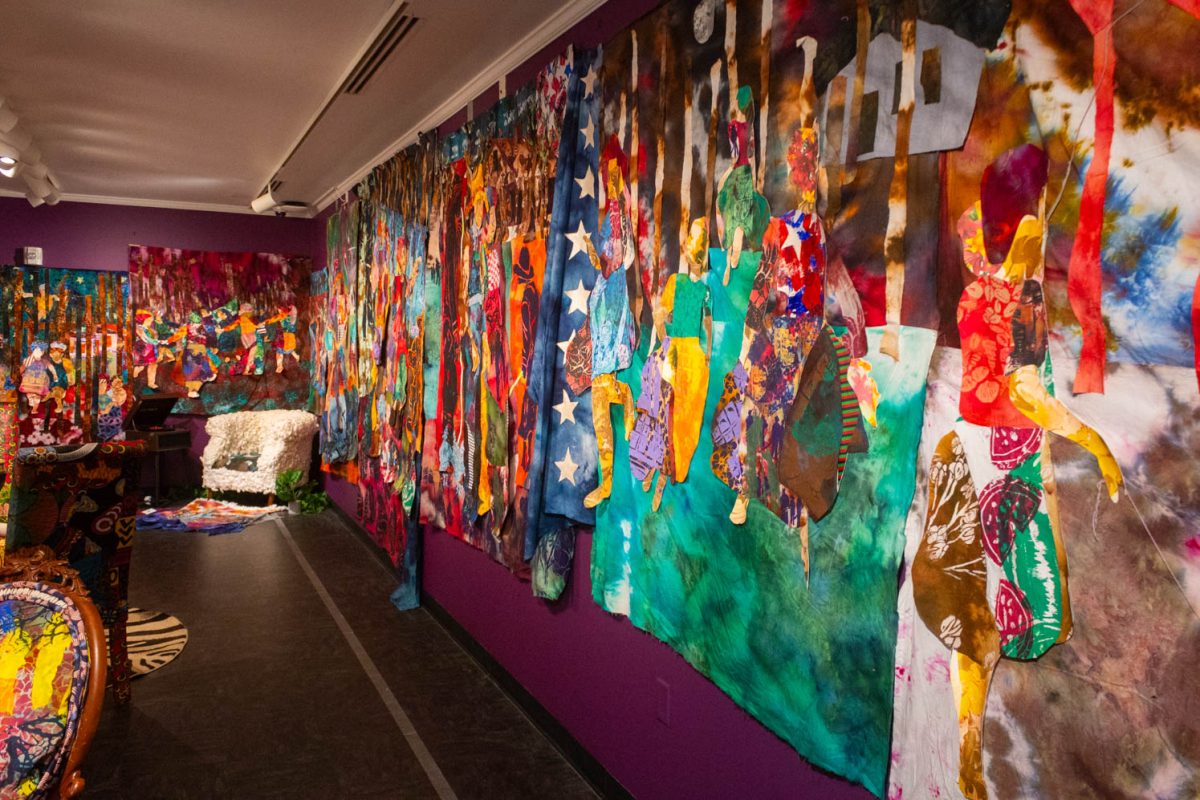
The event included an exhibit open for viewing before and after the show.
There was a combination of photographs hanging from the walls, objects representing certain places and religions and a television playing a reel of footage from the trip. The group also provided a buffet of Ghanaian food, such as jollof rice, plantains and stews.
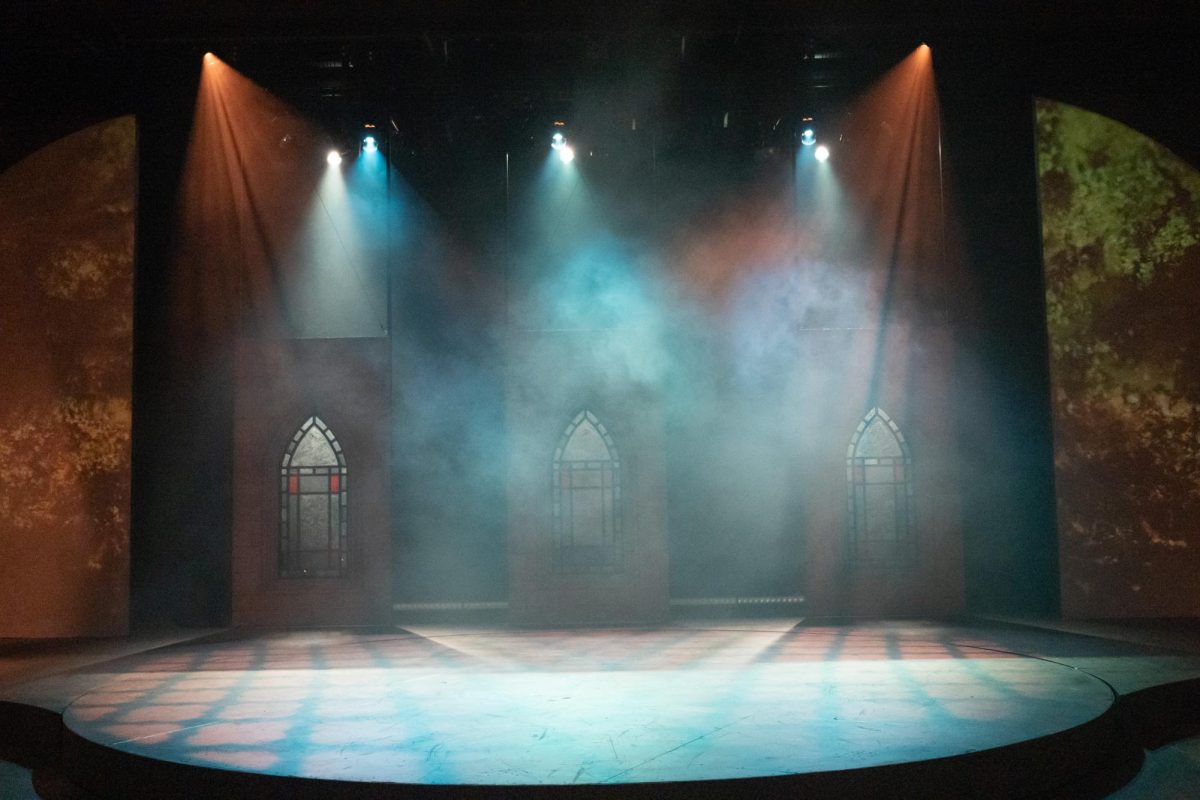
However, the focal point of the Gifts from Ghana experience was the performance.
The audience was shown a compilation of music, poetry, short stories and dances, which were created or demonstrated by various members of the group and faculty. The subjects ranged from high-spirited drum numbers to introspective poems about grief, guilt and slavery.
“It seems like everyone, through whatever pathway, had some kind of spiritual or emotional connection to the trip that they are bringing back with them,” said Louie Hagen, an audience member.
Alongside Louie Hagen, audience member Larz Hagen spoke to the emotional experience of attending Gifts from Ghana.
“It was really cool to almost live in this tiny sliver, a slice of Ghanaian culture,” Larz Hagen said. “The fact that so much effort and time and thought went into the way that everything was presented was really neat.”
Student Aliya Fiske, who attended the trip and performed at the event, spoke about how they tried to recreate the art culture they experienced on the trip.
“We took directly from the dances that we learned in Ghana,” Fiske said. “Dance is a huge part of Ghanaian culture, … and music is a huge part of their culture as well.”
Ghana Community Engagement Lead Caridad Souza shared how she encouraged students to connect deeper with their experiences by focusing their pieces on several personal “small stories,” many of which were used in the performance.
“The small story is a memory, a moment, a feeling,” Souza said. “And it captured really beautifully what the trip is about, all of the different ways. The ups and downs.”
Souza also discussed how she wants to use this program to push back against misunderstandings of Ghana and the continent of Africa.
“Some of the things that people say are things like, ‘Oh, it’s so safe!’ And I’m like, ‘Why did you think it wasn’t?'” Souza said. “You can see we’re not romanticizing if you were here for the stories, but we are talking about the ways in which people are very human.”
Souza said the Ghana Community Engagement Project will be reopening applications for 2026-27 soon and encouraged those who are prepared to learn more about transnational relationships to participate.
“If you do want to go (to Ghana), … learn how to go respectfully,” Souza said. “I’m hoping that people learn that, you know, there are other ways to be in the world: more relational, more loving, more caring.”
Reach Maiya Kreamer at entertainment@collegian.com or on social media @RMCollegian.