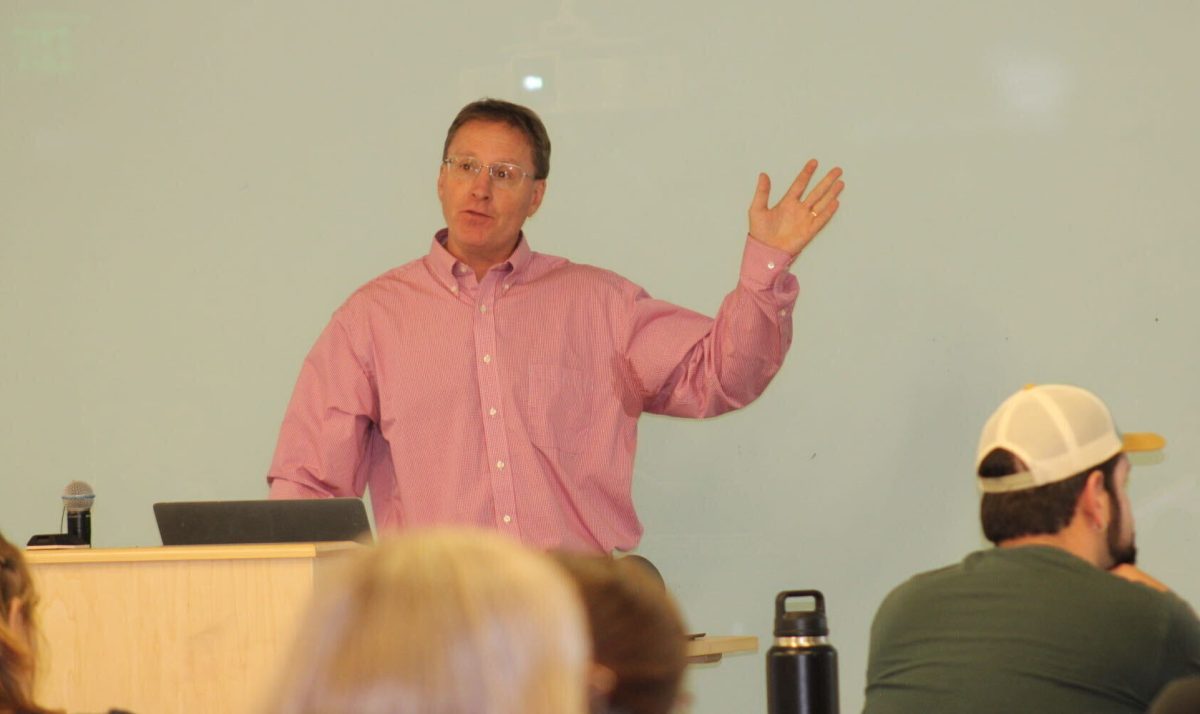

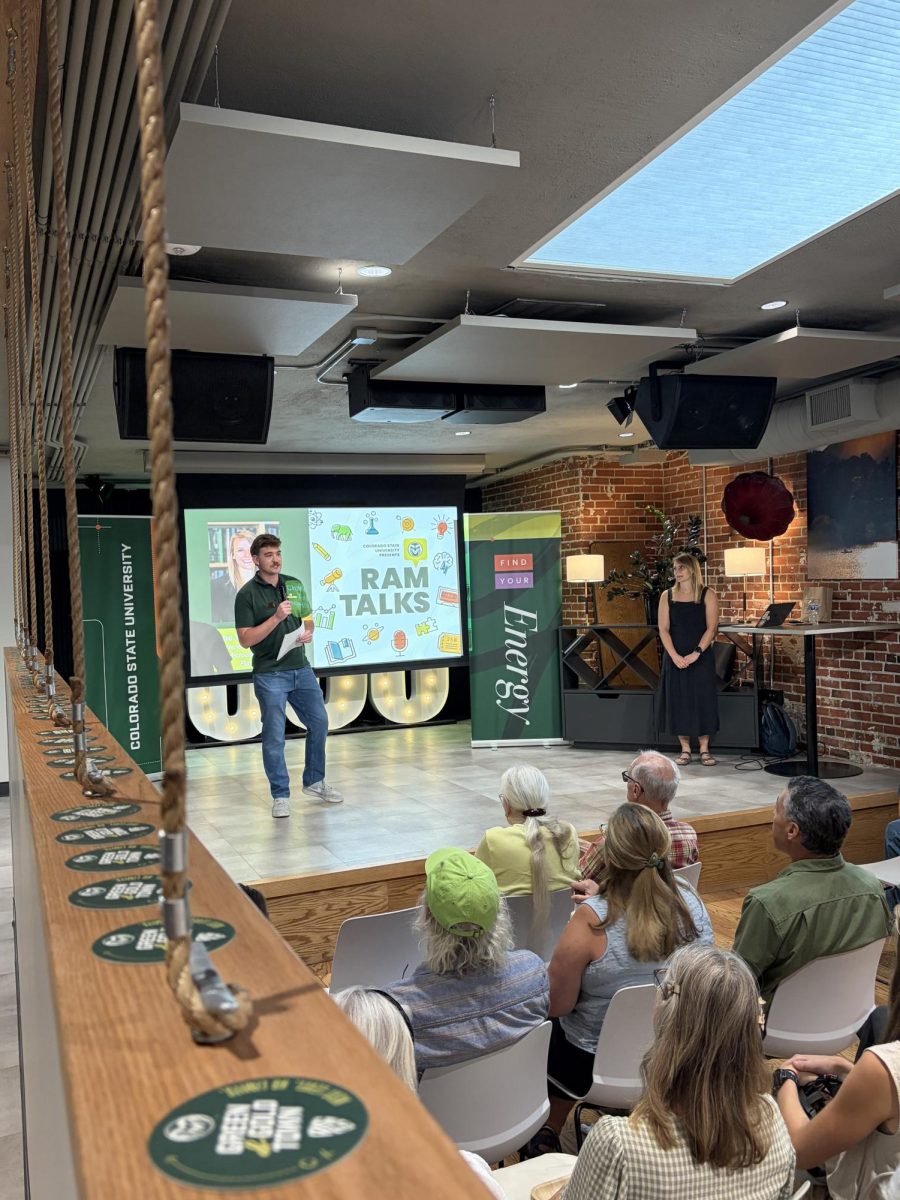
On Sept. 9, Charlene Van Buiten, director of the Food Structure and Function Lab and associate professor in the department of food science and human nutrition at Colorado State University, kicked off the 2026-27 Ram Talks series. The lecture focused on how wild bacteria affects the flavor profile and health benefits of sourdough.
Allison Pine, event manager for university and community engagement at CSU, said the series is in its third season, after beginning in fall 2024, and serves as a point of connection among members of the community and CSU.
“Being in the Visit Fort Collins Welcome Center, we have a lot of folks who are new to Fort Collins who heard about it when they just moved here,” Pine said. “We love having them have that connection point to campus right away.”
Van Buiten began by clearing up the misconception about what food processing is, explaining it is the process of converting raw material into goods.
“Bread is one of the oldest forms of processed food,” Van Buiten said. “With fermentation being one of the oldest processing technologies.”
Furthering the importance of bread, she mentioned how globally over 100 million tons of bread are produced every year, drawing attention to just how integrated the product is into our daily lives.
Van Buiten went on to describe how the bread-making process works and how simple it can be. With very few ingredients, how does bread rise and how is flavor created? The answer to this question, according to Van Buiten, comes from yeast and wild bacteria. Wild bacteria are responsible for the fermentation process that creates sourdough and gives it its unique flavor.
“Where does this bacteria come from?” Van Buiten asked. “It comes from the air, our hands and even our geographic surroundings.”
But why is sourdough so popular right now? Van Buiten attributed it to the COVID-19 lockdown, saying people filled their free time with baking, and sourdough’s appeal grew because of its “fewer ingredients and health benefits.” She reminded the audience of the flour shortages some stores faced during this time, which she attributed in part to the “sourdough resurgence.”
After a chuckle from the crowd, she continued, explaining how bacteria affect the stability, nutritional quality and flavor of the bread itself. Every loaf of bread has a unique ecology due to variation in the bacteria present; Van Buiten said the median number of bacterial strains present is seven, with some starters containing up to 35. The types of bacteria present affect a variety of sourdough’s health benefits, such as glycemic index and where the bread falls on the FODMAP index — a diet abbreviated from fermentable oligosaccharides, disaccharides, monosaccharides and polyols intended to improve symptoms of Irritable Bowel Syndrome, Small Intestinal Bacterial Overgrowth and Intestinal Methanogen Overgrowth — as well as the gluten proteins present.
Van Buiten said her and her team have been researching the effect different microbes have on the stability of bread or how long bread is shelf stable.
“Of the 100 million tons of bread we make each year, about a third of that is thrown out due to instability,” Van Buiten said.
In her team’s research, they found that sourdough bread outperformed commercial chemical preservatives in resisting the growth of mold. Van Buiten highlighted how this information could be used to create “clean label processing” in the food industry.
Furthermore, Van Buiten discussed how the bacteria impact the flavor of sourdough. Different bacteria themselves create a variety of flavors based on what acids they produce during fermentation. These acids alter the chemical structure of the bread, which in turn affects the Maillard reaction — the process that causes browning and the flavors associated with it — during baking.
At the beginning of the night, audience members were instructed to grab a bag filled with four different kinds of bread: three sourdoughs and a yeast control, but they could not to open them until instructed. After the discussion of flavor differences, the bread was opened for a taste test.
Each piece of bread was made from a different sourdough starter, excluding the yeast control. To end the night, Van Buiten prompted the audience to describe the varying flavors and texture differences in each piece.
The interactive test demonstrated how each strain of bacteria uniquely affects the process and how this information can be used, as Van Buiten said, “to develop healthy, clean-label breads with superior shelf life and quality.”
Reach Caroline Wickes at science@collegian.com or on social media @RMCollegian.