Editor’s Note: All opinion section content reflects the views of the individual author only and does not represent a stance taken by The Collegian or its editorial board.
Remember when people used to step outside, click their stopwatch, do 10 push-ups, start running and come back to record the workout in a logbook? That’s how people used to track their fitness before digital technology. Now all you have to do is wear a ring, bracelet or watch, pay upward of $500 and develop a deep obsession.
Fitness tracking primarily took off in the 2000s with companies like Fitbit. The ability to track your steps, heart rate and calories brought fitness to a new level. Other established companies like Garmin and Polar created sports watches and chest straps with outdoor-oriented devices.
In 2012, Nike came out with its FuelBand, which became one of the first fitness gadgets to popularize the gamification of exercise. The wristband device provided people with weekly challenges they could share on social media. In the past 10 years, fitness trackers and smartwatches have greatly evolved.
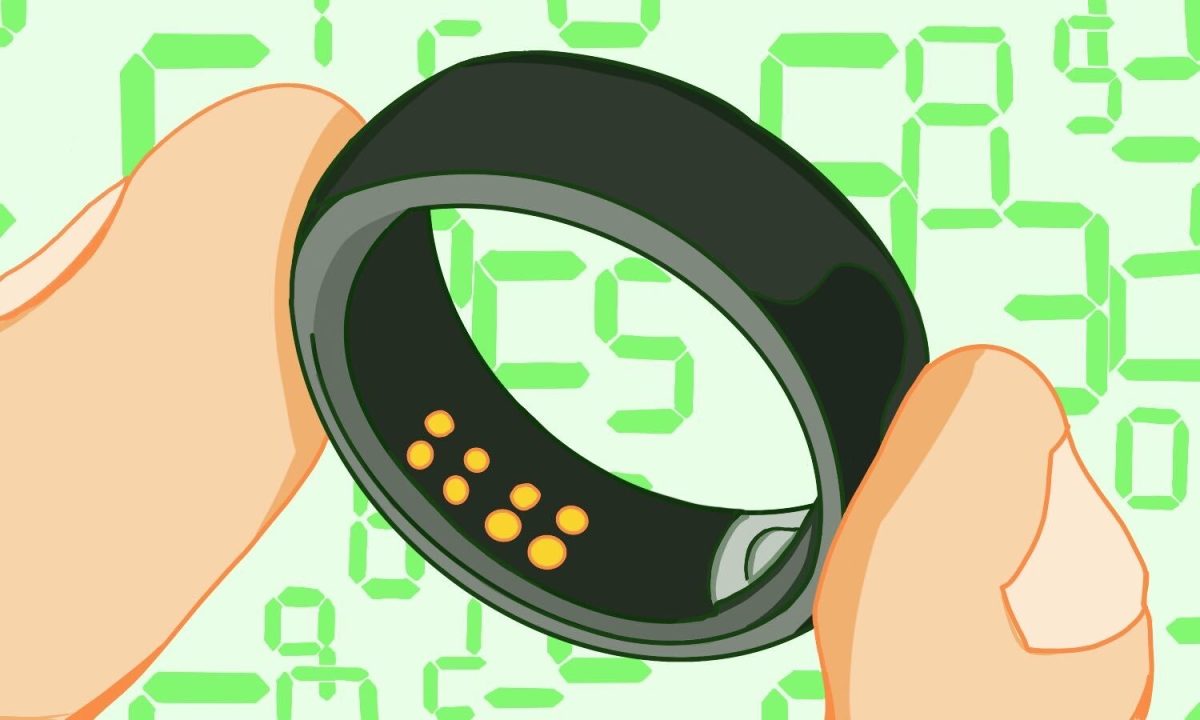
Nowadays, around one in five people use some sort of fitness tracker. Whether it’s a smartwatch, Oura Ring or just your smartphone, something is likely tracking your wellness, and technological advancement has allowed devices to track and analyze data in real time. These wearable fitness devices have high-definition screens, GPS capabilities and artificial intelligence integration, allowing them to provide personal insights.
The technology is admirable, no doubt, but it’s scary. These fitness trackers have become so intelligent, people have begun to trust them more than their own bodies.
Your fitness tracker does not know your body better than you do.
Wearable, high-tech devices can lead to health data anxiety. Researchers have found that while these devices can notify users of potential health concerns, this feature may intensify psychological issues rather than provide support. A 2020 study by the National Institutes of Health revealed these devices can significantly impact some users’ peace of mind, leading to amplified anxiety.
Some things within our bodies are not meant to be tracked. Ask yourself: If I know everything going on in my body, am I going to feel better?
The reality is, it will probably stress you out more.
These fitness companies often give you numbers like a sleep score, a readiness score or a strain score. The problem is, these scores can start to dictate how you feel. A user may wake up feeling completely fine, check their sleep score and suddenly decide they’re exhausted.
It’s a game. Even if you aren’t paying attention to how your body feels, you grow addicted to the metrics and will want to earn a higher score.
A major part of this issue stems from influencers. They have shifted the focus of fitness trackers from wellness to strict numerical validation. Tracking and posting every macro, calorie and ingredient consumed can lead viewers to develop disordered eating habits under the disguise of “clean eating.”
Influencers only post what they want people to see, which is easy to forget — and easy to compare yourself against. It is also expensive and time-consuming to live a supremely healthy lifestyle, but influencers make it seem easy. The average person likely cannot afford to eat strictly Whole Foods and track their every move.
And even if they can, competition arises.
If you don’t reach your own goal or you compare a score to someone else’s, it just makes you feel bad. Fitness and wellness become less about how you actually feel and more about whether you have reached the number your device gave you. The stress, obsession and competition are ridiculous because if you feel good about your lifestyle, that’s what matters.
Sure, it’s cool to track your sleep and steps, and fitness devices can offer some groundbreaking data. I’m not saying you should never track anything, but there is a difference between using technology as a tool and allowing it to control how you feel about your own body.
So watch your amount of tracking. Don’t let a device tell you that you feel tired when you feel energized. Don’t let a readiness score determine whether you should have a good day. Most importantly, don’t let a device get to know your body better than your body knows itself.
Reach Charlotte Seymour at letters@collegian.com or on social media @RMCollegian.