
Editor’s Note: All opinion section content reflects the views of the individual author only and does not represent a stance taken by The Collegian or its editorial board.
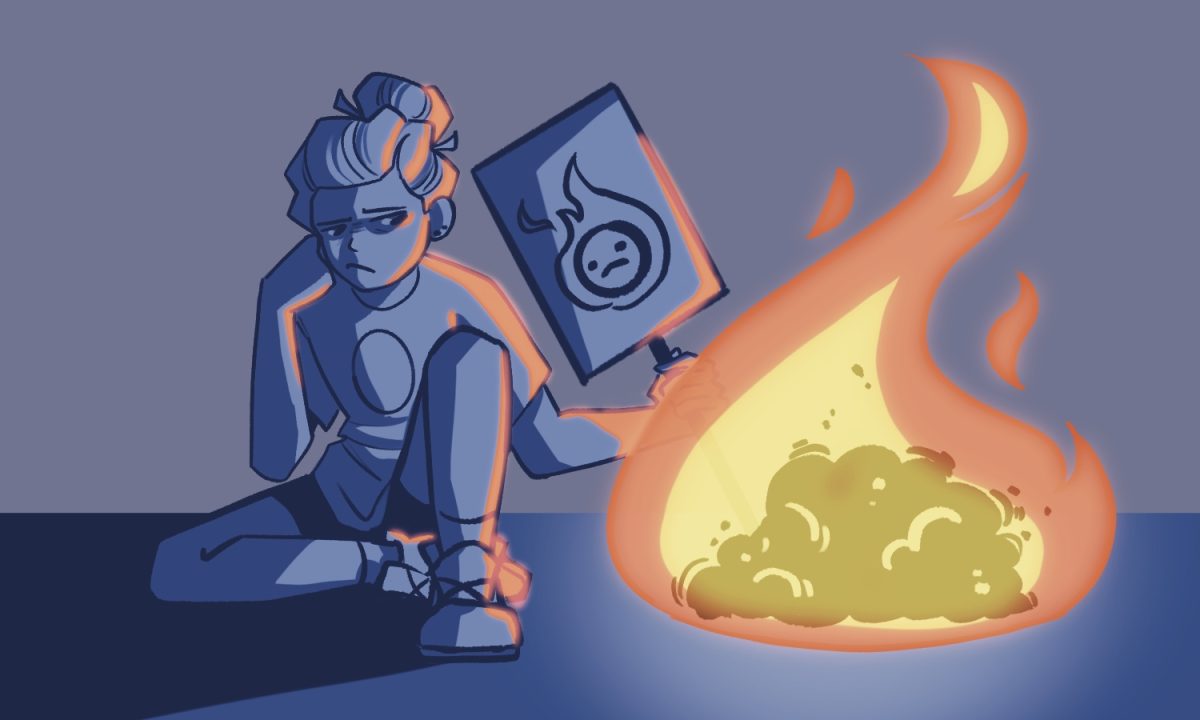
Many people in Colorado care about the Colorado River. They care about it the way they care about deforestation or ocean plastic: urgently, abstractly and in short enough bursts that nothing ever changes. They’ll share the alarming infographic, feel genuinely unsettled and then move on. The concern is real. It just isn’t doing anything.
But this isn’t a piece about hypocrisy. That argument is lazy and, frankly, lets the wrong people off the hook.
The more honest story is this: Concern and action have been deliberately pulled apart, and the Colorado River is the perfect place to see how. Because right now, in real time, something specific and consequential is happening, and most people have no idea.
The operating guidelines that determine how Lake Powell and Lake Mead — the country’s two largest reservoirs — release water are set to expire at the end of 2026. The rules replacing them, known as the post-2026 operating guidelines, are expected to govern operations for decades, not just a few years. They’ll determine who gets cut during droughts, how low reservoirs can fall and whether communities across seven states, two nations and approximately 30 federally recognized Native American tribal nations have reliable water access for a generation. Nearly 40 million people depend on this river.
That’s not an abstraction — that’s your tap.
Negotiations between federal officials and the seven states have largely remained behind closed doors for years. The general public was given a 45-day public comment period from Jan. 16 to March 2 after the release of the Draft Environmental Impact Statement. If you missed it — the overwhelming odds are that you did — you’re out of the loop on decisions that will shape your water supply for the foreseeable future. The Federal Register is not exactly required reading for most college students — or anyone for that matter.
They haven’t locked people out; they’ve just built a process that looks open while being functionally inaccessible.
That distinction matters. There are differences between systems that include people, systems that exclude people and a system that technically includes people while guaranteeing most won’t participate. The post-2026 process is just that: A Draft Environmental Impact Statement spanning over 1,000 pages. A 45-day comment window. Two virtual public meetings. A state-to-state negotiation that, for months, has had negotiators suggesting and discarding ideas without publicly announcing any firm decisions.
That’s the window ordinary people get: a bureaucratic document, a federal inbox and radio silence.
And even that window is closing. After conservation groups urged the Bureau of Reclamation to move on to the public National Environmental Policy Act process without state consensus, Great Basin Water Network Executive Director Kyle Roerink put it bluntly to the Nevada Current: “Rip off the Band-Aid, and let the public get to work. The states don’t deserve the kid-glove treatment any longer.”
He’s right. But “the public” can’t get to work if it doesn’t know the game is happening.
None of this is happening in a vacuum. The communities that need transparency the most are the ones that’ve historically been given it the least. Thirty federally recognized Tribal Nations rely on the Colorado River, with 22 of them holding rights to approximately 3.2 million acre-feet of water. And yet, in the original 1922 Colorado River Compact, no Tribal Nations were included in the negotiation, nor was it clear how much water they were guaranteed. That exclusion wasn’t corrected. It compounded.
“The federal government lavished funds on non-Indigenous water projects throughout the basin, heavily subsidizing those interests while delaying water rights negotiations,” said Tim Vanderpool, Natural Resources Defense Council contributor.
Today, about 30% of Navajo Nation homes do not have clean, potable running water.
The post-2026 process has made some gestures toward inclusion. Tribal Nations hold approximately a fifth of senior Colorado River water rights and have pushed hard for representation, forming the Colorado River Basin Tribal Coalition and the Ten Tribes Partnership. But as so often occurs, Indigenous groups are left hanging in the balance, awaiting state compromise with their access to an already-scarce resource hinging on interstate bargains.
The uncomfortable truth is that it’s easier for the system to say people had their chance than to actually make that chance meaningful. A 45-day comment period is technically public participation. It is also, for most, invisible.
The result is a water policy cycle that runs exactly like the water cycle: it keeps moving, but it keeps returning to the same place. Communities that lack access to decision-making end up with less water security, which gives them less political power, which means they have less access to the next round of decisions. It repeats indefinitely. The river keeps flowing, and the exclusion keeps flowing, too.
There’s no single villain here. The Bureau of Reclamation is doing what regulatory agencies do: following legal processes, issuing documents and opening comment windows that meet the minimum threshold of compliance. The states are doing what states do: negotiating in closed rooms, protecting their own users and deferring transparency until there’s something to announce. Nobody individually decided to shut the public out; they just designed a process that didn’t require the public to actually show up and called it “open.”
That’s the mechanism worth examining — not bad intentions but the design itself.
If Colorado and the federal government genuinely want the public informed and invested in the future of this river, the approach has to change. That means proactive, plain language communication from the state’s own water agencies, not just a Federal Register notice. It means comment periods measured in months, not weeks, with real translation and accessibility infrastructure behind them. It means state negotiators who report back, not just decline to comment. And it means acknowledging that communities already burdened by water inequality have a particular right to be at the table, not because it’s politically convenient but because they bear the most direct costs when decisions go wrong.
The post-2026 guidelines will be finalized this year, likely before most realize they exist. Federal officials have called this a “once-in-a-generation reset,” which tends to mean once-in-a-generation consequences for those who weren’t in the room.
Concern about the Colorado River isn’t for nothing. It’s a starting point. But concern that has nowhere to go — no accessible process, no plain-language entry point, no real seat at the table — doesn’t become policy. It becomes background noise. And background noise doesn’t save a river.
Reach Maci Lesh at letters@collegian.com or on social media @RMCollegian.