

Data surrounding the United States prison system can often be difficult to acquire. Data is not always published, and research on agricultural labor in the system along with prisons’ profits has not been seen before on a nationwide scale.
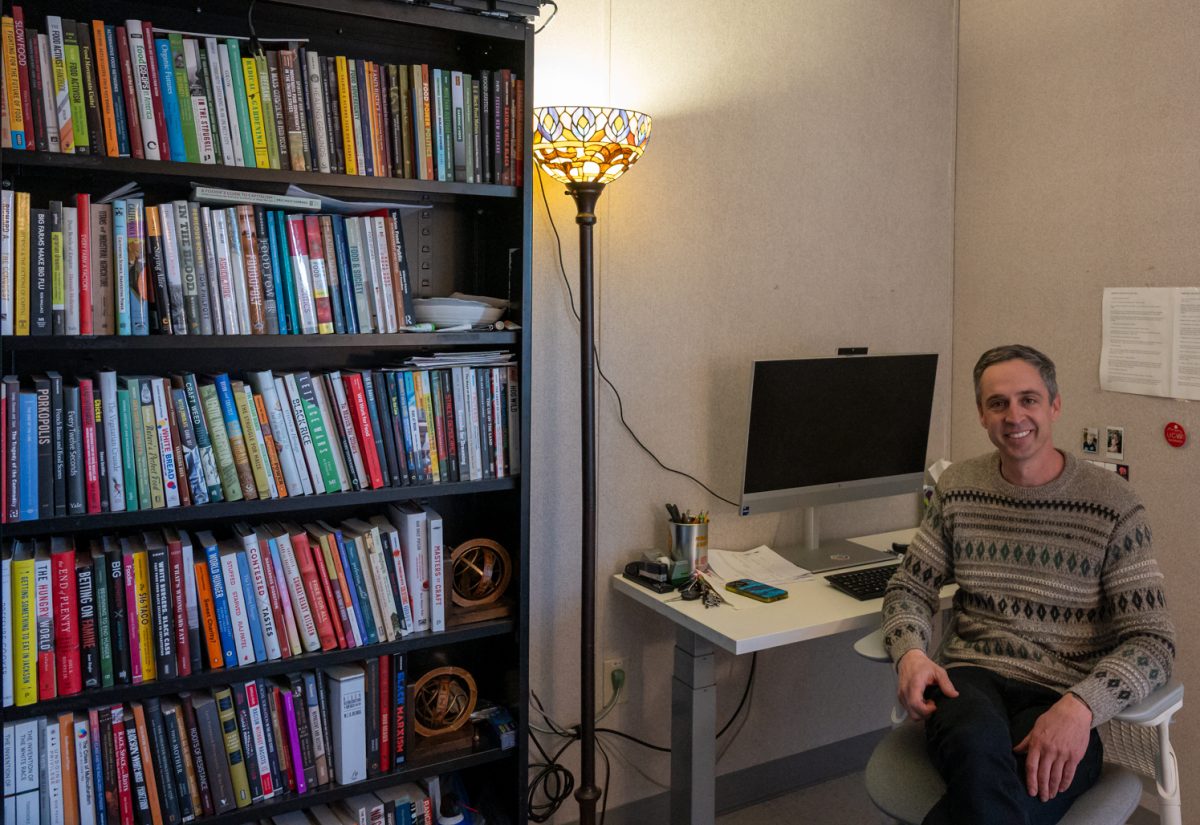
The Colorado State University Prison Agriculture Lab is working to fill the data gaps and connect students — through research experience — to the practice of forced agricultural labor and its potential economic benefits for state or private interests.
“Our first project was national in scope, and that was very intentional because there wasn’t good nationwide data on what we were interested in, so we had to find and create the data,” said Joshua Sbicca, the lab’s director and an associate professor of sociology.
Sbicca served on the board of directors for Planting Justice, a food justice organization, where he worked with formerly incarcerated people who had been part of a horticultural therapy program inside prisons, and who worked in food justice-related activities after their release. Sbicca said he had also been curious about how food production in prisons reflects how the prison system works in relation to labor, discipline and punishment. When he launched the lab, Sbicca said he questioned how the political economy of the prison system broadly connects to society.
When launching the lab, two of the main projects essential to addressing his guiding questions were the ArcGIS map, which presents the first nationwide dataset on prison agriculture in the United States in an interactive map format, and the Story Map, which dives into the operations and statistics of disciplinary racial capitalism and forced labor.
“Our aspirations, from my perspective, are to continue the work we’re doing but then to make sure that we are partnering with people who are impacted by the carceral system. Incorporating guidance and perspectives from those who are currently incarcerated, formerly incarcerated, as well as their loved ones, and really making sure that the work that we do represents.” -Carrie Chennault, Prison Agricultural Lab co-director
Both projects were led by Sbicca and Carrie Chennault, assistant professor of geography at CSU and co-director of the Prison Agriculture Lab, in collaboration with students who worked to produce published articles and other scientific works. However, the researchers said their work cannot be confined to data points alone.
“We really want to be centering those voices that are most impacted by these practices,” Sbicca said. “This project will really complement a lot of the macroscale work that we’ve been doing.”
The lab’s original goal was to create a national database on how agricultural labor and products show up in the prison system and beyond. Now, alongside the continued efforts of data collection, this lab strives to give the people in the system a voice.
“Our aspirations, from my perspective, are to continue the work we’re doing but then to make sure that we are partnering with people who are impacted by the carceral system,” Chennault said. “Incorporating guidance and perspectives from those who are currently incarcerated, formerly incarcerated, as well as their loved ones, and really making sure that the work that we do represents.”
Beau Wood, a second-year master’s student in the department of geography, said he came to the lab as a further exploration of his thesis work, which particularly focuses on women of color and women from minority and poor backgrounds. Much of the research being conducted in the lab relates to his focus on the relationship between work assignments in prison and what prisons claim the work assignments are actually doing.
“Being here, where I’m able to study things really around me and have the opportunity to talk to formerly incarcerated folks or their loved ones and supporters, has been, for me, really personally impactful just in being able to put a lot of the things that I have been learning in perspective and really making it very material,” Wood said.
The lab’s other primary interest is making research accessible for undergraduate, graduate and Ph.D. students from all areas of expertise and disciplines. Azmal Hossan, one of the students involved in the inauguration of the lab, spoke of the impacts this lab has had on his long-term professional development as a researcher.
“It was really a great experience for me, working in an interdisciplinary research team that enhanced my interdisciplinary perspective or understanding regarding the prison system,” Hossan said.
Through their continued research efforts, Chennault said the interdisciplinary team hopes to inform the public of the larger impacts of the agricarceral-industrial complex and the effects it could have on the modern incarceration system.
“Our key goals and objectives are to continue providing research and informing the public about prison agriculture and really trying to help,” Chennault said. “Through that, abolish the carceral system as we currently know it.”
Reach Abby Barson at science@collegian.com or on social media @RMCollegian.



Beyoncè • Feb 23, 2026 at 11:00 pm
I love this article! Good work, Abby!
Greta Griffin • Feb 23, 2026 at 11:00 pm
Wow this is such a good article!! Amazing job, Abby!
Elvis Alfalla • Feb 23, 2026 at 10:59 pm
Super interesting!!!