


Editor’s Note: All opinion section content reflects the views of the individual author only and does not represent a stance taken by The Collegian or its editorial board.
I didn’t transition because I thought I was safe. At a certain point, washing the filth of violence away just becomes so difficult one must learn to live with it on their skin.
The truth is there is almost no place on Earth where being transgender is not synonymous with being in danger. A study by the University of California, Los Angeles’ Williams Institute found transgender people are over four times more likely to be victims of a violent crime than cisgender people.
The second truth is it is getting worse. In the past month alone, the U.S. Supreme Court handed out two rulings that allow for forced outing and conversion therapy for vulnerable young trans people; Idaho passed a bill that would allow for a five-year prison sentence for a transgender person using the bathroom that aligns with their gender identity; and just yesterday, President Donald Trump’s administration unprecedentedly terminated multiple previously settled civil rights cases for transgender students in higher education.
More and more often nowadays I am asked if I am scared. What I always find fascinating about this question is it often carries an unsaid “now.” It follows conversations of the Trump administration’s brutal and hateful policies, and there is always the implication that these policies are what pushed me into fear when I wasn’t before. There are many ways I could respond to this question.
I can tell you the ways in which the threats of violence have baked themselves into my skin. I can tell you how I now know the way hands feel when they grasp for a car door handle after a driver pulls a gun because he doesn’t want to drive for a fag. I can tell you the peculiar way the legs move before the brain when someone begins to hurl spit at you. I can tell you the way the neck hardens like concrete when you try to ignore being called a tranny.
But what I want to tell you is that I learned a long time ago to let violence stop at the skin.
I grew up in a blue city located in a blue state during what many people regard as the best time in modern history to be transgender and queer. I had realized my identity and made a plan for my future before trans people were regarded as the political pawn we’ve unwillingly become in the 2020s. There were no Riley Gaines-type figures spreading misinformation about us “invading women’s spaces,” JK Rowling was still apologizing for liking a transphobic post instead of founding organizations to litigate against trans rights, and Elon Musk was Tweeting about how “people should be free to live their lives where their heart takes them” instead of misinformation about how hormone replacement therapy makes us violent and more likely to vandalize Teslas.
I still never once felt safe. No matter where we have been in the news cycle, we have never been safe.
The Human Rights Campaign Foundation began tracking fatal violence against transgender and gender-nonconforming people in the United States in 2013. Each year since then, the foundation has published a report on Transgender Day of Remembrance detailing how many trans people were reported as murdered since the prior year’s report.
In total, the HRCF has documented 399 cases of fatal violence since 2013, but the organization said the true numbers are likely much higher, as transgender and gender non-conforming people’s cases “often go unreported or misreported.”
I was born scared. I can tell you the way my shoulders locked themselves tight for the years after I was beaten up and ostracized for being too feminine in middle school is the exact same way they lock themselves tight now, nine years later, when I am followed by groups of men at night. Many of us have never stopped being scared. What I can also tell you, however, is that never stopped us, and it never will.
Fewer than 10% of trans people — who already only make up 0.8% of the American adult population — who medically transition later choose to detransition. Seventy-two percent of medically transitioned people express that they are “very to pretty happy.” To put those figures into perspective, adults with knee osteoarthritis make up 12% of the U.S. population, and up to a third of knee replacement surgery patients express regret and continued pain. Knee surgery patients are not barred from using the bathroom in 21 states.
We transition because it is the best thing that has ever happened to us, not because we stopped being scared. We transition because the existence of violence and evil is nothing compared to finally being able to breathe. I know I will most likely die in a way I wouldn’t have if I was cis. I know I will never have the same opportunities and that my shoulder blades will probably never have a moment to relax.
But what I need you to know is that I’ve always known about all of these evils, and I stepped into this life knowing my goal is to outlive all of them for as long as I can. Toni Morrison, perhaps the greatest writer in the history of the English language and an outspoken civil rights activist, wrote a line in her 1973 novel “Sula” that I don’t think I will forget as long as I live: “The purpose of evil was to survive it.” I came out in the face of evil, and I am happy that I will die trying to survive it.
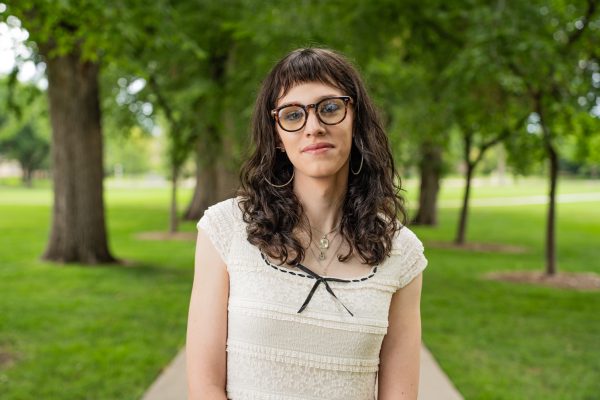
Reach Willow Engle at letters@collegian.com or on social media @RMCollegian.



Diane F Fromme • Apr 8, 2026 at 1:16 pm
Willow, thanks for your honesty and bravery in this piece. My very good friend’s son is trans and I know that she, as his mom, fears for his life in today’s society.