
Colorado State University has consistently been ranked a top Peace Corps-producing university for the past decade. Years after Maurice Albertson’s Congressional Feasibility Study helped define what the Peace Corps is today, CSU’s legacy for producing volunteers remains strong.
Albertson was the director of the Colorado State University Research Foundation and was contacted by Sargent Shriver, the first director of the Peace Corps, to perform the study. Alongside fellow researchers Pauline Birky-Kreutzer and Andrew E. Rice, the study was carried out in 10 countries across three continents.
“It was a research project that set the stage for how the agency would be structured, what the operating principles would be and even (the process of) going into a community and living at the level of the people you’re with,” said Carol Spahn, the former director of the Peace Corps under former President Joe Biden and current Presidential Executive in Residence at CSU.
Peace Corps volunteers travel around the world exchanging skills, knowledge and culture with communities to promote sustainable change and international friendship. Volunteers serve for two years and three months in a community of their interest, where they foster relationships with locals.
“Peace Corps volunteers who are skilled in certain areas go overseas, and then they are paired with a counterpart in a community where they live and work,” said Lindsay Singh, Peace Corps strategic recruiter at CSU. “As a Peace Corps volunteer, you’re the middleman. You help them to kind of realize their goals, or you give them funding for a project that they’ve already been asking for.”
One of the most crucial traits in volunteers is the ability to be flexible and adapt to the needs of the community they live within.
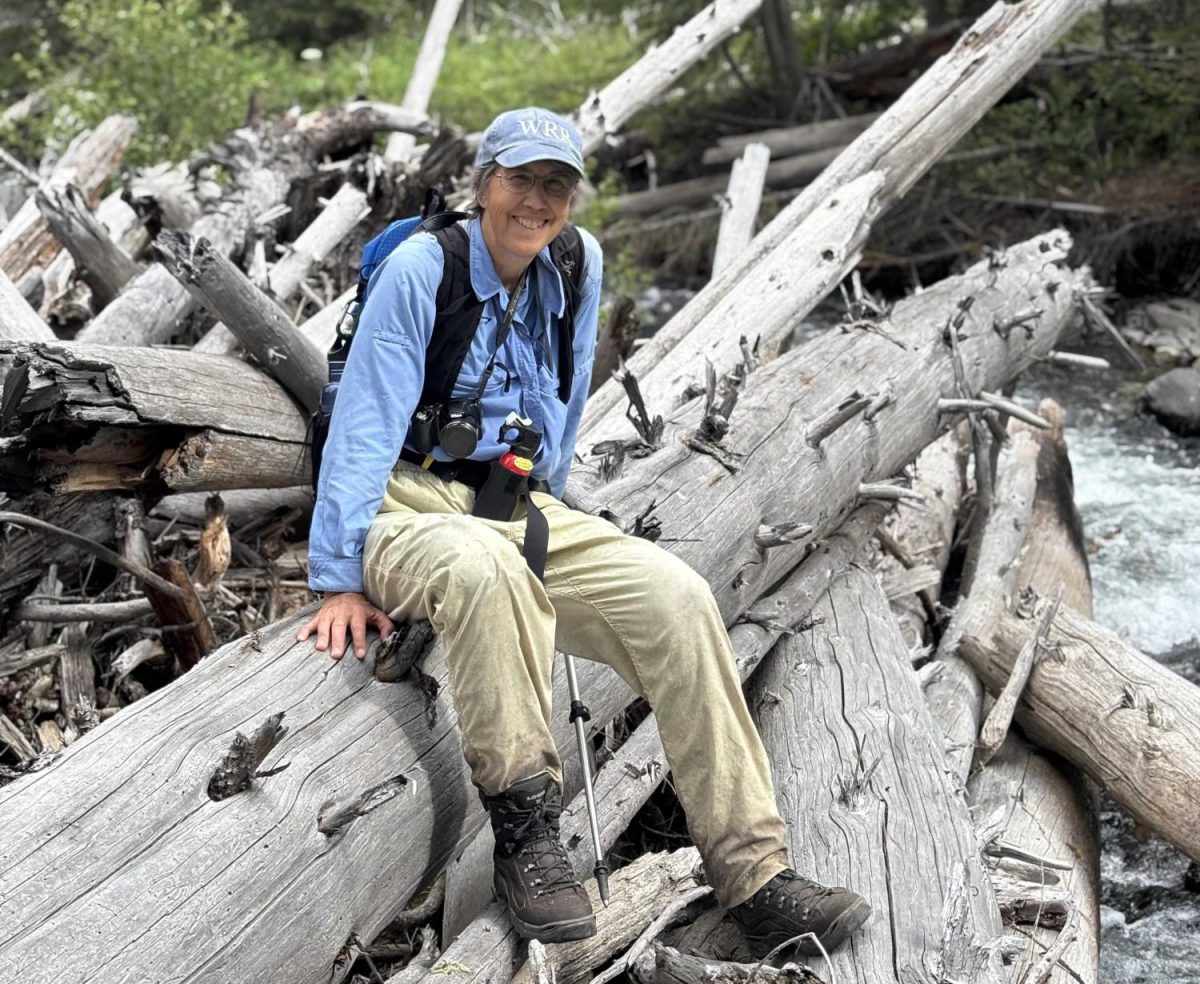
“You go over there with a job description,” said Mark Oberschmidt, a Peace Corps alumnus who served in Thailand as a water resources engineer from 1988 to 1990. “As soon as you get there, you wrinkle it up and you find out what they’re looking for. That’s the biggest thing you can do. Just observe and listen and figure out what they’re looking for and see how you can be a catalyst to make that happen.”
The Peace Corps and CSU remain deeply connected, even after 65 years.
“There are a very large percentage of staff and professors at this school who were returned Peace Corps volunteers,” Singh said.
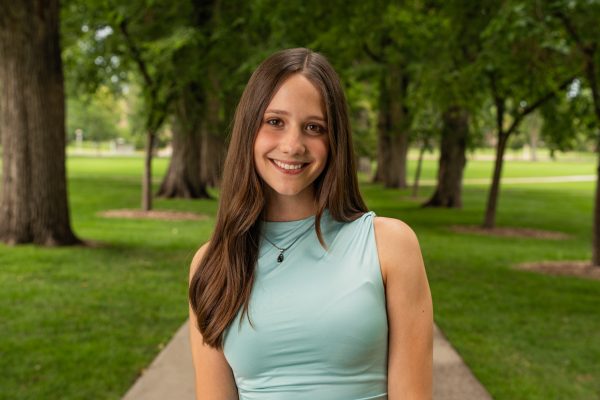
Kayla Kersey, a graduate student at Colorado State University, shared her experience as a Peace Corps volunteer in Namibia.
“I was studying abroad in Namibia and it was for conservation biology,” Kersey said. “I had a total plan to study elephants. I had a conversation with the Himba tribe and realized I don’t love elephants; I love people.”
Spahn recalled her time in Romania in 1994 as a small business development volunteer when she helped transition the country between economic systems.
“We ended up doing all kinds of different things: teaching business, English and ethics at the university,” Spahn said. “We brought all of our experiences of our Peace Corps business cohort together and wrote a manual for small- and medium-sized enterprises.”
Peace Corps alumni encourage students and members of the community considering joining the Peace Corps to not be scared of the experience.
“Just do it,” Spahn said. “You don’t want to live a life of ‘what ifs,’ and I’ve talked to so many people who said they almost did it or they wanted to do it, and my advice for all people is it’s never too late.”
Albertson and his team of researchers laid the groundwork for opportunities that volunteering with the Peace Corps now provides. Volunteers are able to experience new cultures and foster international connections while aiding communities.
“My favorite saying is you get out of something what you put into it,” Singh said. “If you put effort into the Peace Corps, what will happen is that you will get more than just a bouquet of flowers; you’ll get a whole garden.”
Reach Samantha Whitted at life@collegian.com or on social media @RMCollegian.