
Colorado State football did not quietly turn the page after the 2025 season.
And it ended loudly and not cleanly. A midseason firing, a reshuffled leadership structure and defensive coordinator Tyson Summers stepping in as interim head coach for the final five games left the program in a strange place once the year wrapped up.
By the time the offseason arrived, the direction felt obvious. CSU seemed to want a reset.
That reset arrived Dec. 1 when Jim Mora was hired as the 25th head coach in program history. From there, things moved fast. Mora didn’t linger on the past, and the staff came together quickly as CSU tried to stabilize itself heading into another transition.
Nearly every on-field role changed hands, with many of Mora’s guys joining the mix. But Summers was an exception.
Keeping Summers as defensive coordinator gave the Rams some continuity after a turbulent season, but it also made the scope of the overhaul clearer. Very little else carried over, and familiarity alone was not enough to stay.
From that point on, the staff took shape in layers.
The offensive reset starts with Pryce Tracy as the new offensive coordinator. Quarterback development is the obvious priority, and it showed up during his time at UConn. Tracy followed Mora from Storrs, Connecticut, after helping guide one of the more productive passing attacks in the country during the 2025 season.
That focus carries over with Matt Mitchell, hired as pass-game coordinator and quarterbacks coach. Mitchell brings years of experience working specifically with quarterbacks at BYU, Baylor, Western Kentucky and Snow College. The approach is clear, even if the finished product is still coming together.
That means quarterback play sits at the center of the rebuild, with two quarterbacks with great profiles also joining the team.
Balance on offense comes through Christian Pace, who joins as run-game coordinator and offensive line coach after four seasons at UConn. Pace’s units anchored a Husky offense that produced a 3,000-yard passer, 1,000-yard rusher and 1,000-yard receiver in 2025 while limiting sacks at a steady rate.
Up front, that background matters, especially as the program looks to be a contender in a new conference.
While the offense is being reshaped, the defense leans on both continuity and expansion.
Summers returns to a role he knows well after a career that includes multiple coordinator stops and a head coaching stint at Georgia Southern. His defenses have long emphasized pressure, negative plays and turnovers, and that identity remains in place following last season.
After navigating injuries and uncertainty throughout the year, Summers now oversees a unit supported by a mostly new staff and a more stable offseason.
That group includes Siriki Diabate and Dalton Hilliard, both of whom bring familiarity with Mora’s expectations. Diabate joins as linebackers coach and run-game coordinator after four seasons at UConn, while Hilliard steps in as pass-game coordinator and defensive backs coach following stops at UConn and UCLA.
Together, they add consistency on a side of the ball that needed it. And special teams were not overlooked in the process.
Kyle Krantz joins as special-teams coordinator after a successful three-year run at Liberty, where his units ranked among the most efficient in the country. His background spans several Power Five programs and multiple roles, adding flexibility in a phase of the game that often swings close results.
That kind of attention tends to show up later.
Perhaps the most influential hire, though slightly less visible on Saturdays, is Tyson Brown.
Brown arrives as senior associate head coach and director of football strength and conditioning after holding the same role under Mora at UConn. His experience includes leadership roles at Mississippi State and Washington State, as well as time spent working with NFL athletes.
The rebuild, in many ways, runs through him with the kinds of things that happen daily.
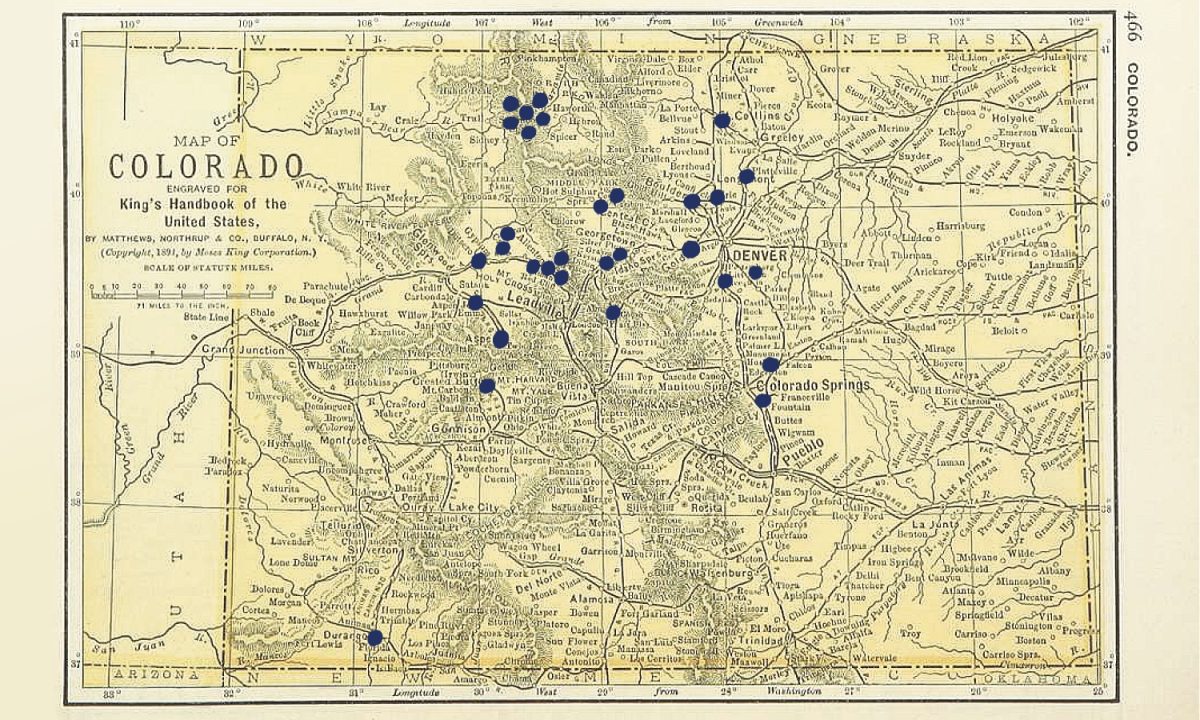
That alignment showed up early. When the recruiting contact period opened Jan. 15, the staff launched a coordinated in-state push known as Ram Rush, spreading across Colorado high schools in the opening days. Coaches documented visits from dozens of programs as Mora’s staff made its presence known.
The volume of in-state recruiting will be judged later, but the intent was clear. The size of the staff also reflects how modern college programs are built now.
Beyond coordinators, Mora filled out his group with assistants who bring experience across multiple levels and roles. That depth is no longer optional, especially in an era shaped by roster movement and constant recruiting demands.
For CSU, it is part of the reset.
With the coaching structure now in place, CSU enters the next phase of its transition with more direction than it had a year ago. After a season defined by upheaval, the Rams have replaced uncertainty with structure and a staff tasked with shaping what comes next as the program moves toward Pac-12 play.
Reach Michael Hovey at sports@collegian.com or on social media @michaelfhovey.
Interested in more sports content? Sign up for Ram Report here for weekly CSU sports updates!