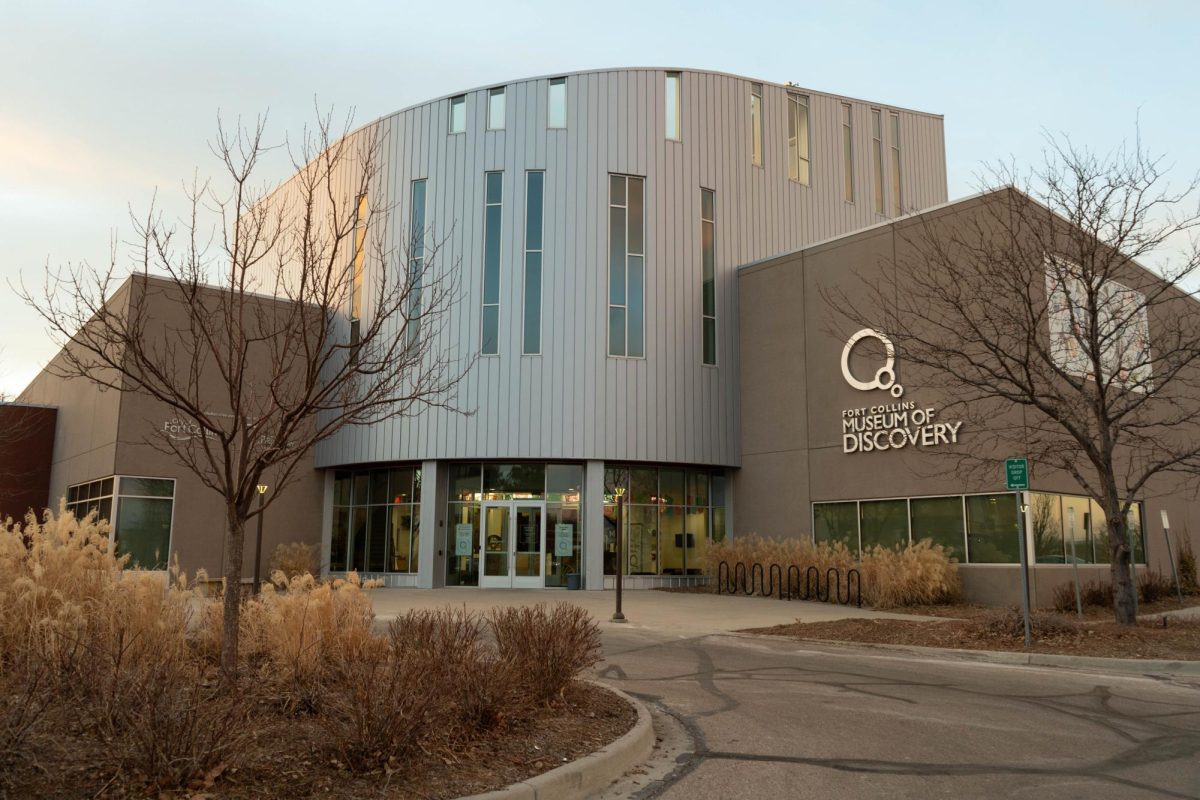

Upon entering the “Exposure: Identity and the Evolving Image” exhibition in Fort Collins’ Global Village Museum of Arts and Culture, a preamble on the wall asks visitors to consider: “How do you see yourself? And what does it mean to be seen?”
The Global Village Museum was established in 2006 with donations from local collectors. It now offers a variety of community-oriented experiences, including lectures and workshops. The museum covers a wide range of topics within Fort Collins and allows people to directly engage with art and culture beyond just viewing the exhibition pieces.
Kasey Medlin, who works as the museum’s outreach and programs manager, offered some information about the museum’s founding.
“I love being around this collection,” Medlin said. “It’s so varied and vast. … I love that it was a group of collectors who just had overflowing collections in their homes, and said, ‘Let’s put our stuff together and make a museum out of it.’”
As the exhibit’s curator, Medlin worked with local historian and author Malcolm “Mac” McNeill, whose research within Fort Collins newspapers and archives was supplemental to the exhibition.
“I started researching local photo history through the Fort Collins Archive, which is an amazing resource,” Medlin said. “And I found Mac’s blog.”
McNeill said his photoblog, a WordPress site called Fort Collins Images, is a collection of history and is a testament to his passion of collecting artifacts.
“I’ve always been a collector … (of) books and other things,” McNeill said. “When I got here … I decided to collect images of Fort Collins, and I’ve got, like, 3,000 of them now.”
McNeill’s latest book, “The Automobile Comes to Fort Collins,” came about as a result of his various discoveries within the Fort Collins history databases, which went unused in his previous works. Before publishing “The Automobile Comes to Fort Collins,” McNeill also co-authored three local history books with Barbara Fleming: “Then and Now: Fort Collins,” “Fort Collins: The Miller Photographs” and “Images of America: Poudre Canyon.”
“I kept coming across stories about the automobiles, and in the photos I’m collecting, you get any number of old street photos, and (the photos) show cars of different years,” McNeill said.
“The Automobile Comes to Fort Collins” is an exploration of images and stories captured over a century ago. On Oct. 15, McNeill gave a lecture based on his latest book at the Global Village Museum that detailed the first automobiles in Fort Collins as well as the ways the city evolved alongside the emerging automobile industry.
“It is amazing how quickly cars took over in Fort Collins, and I think you’d be amazed at some of the statistics of that quickness compared to the rest of the country,” McNeill said.
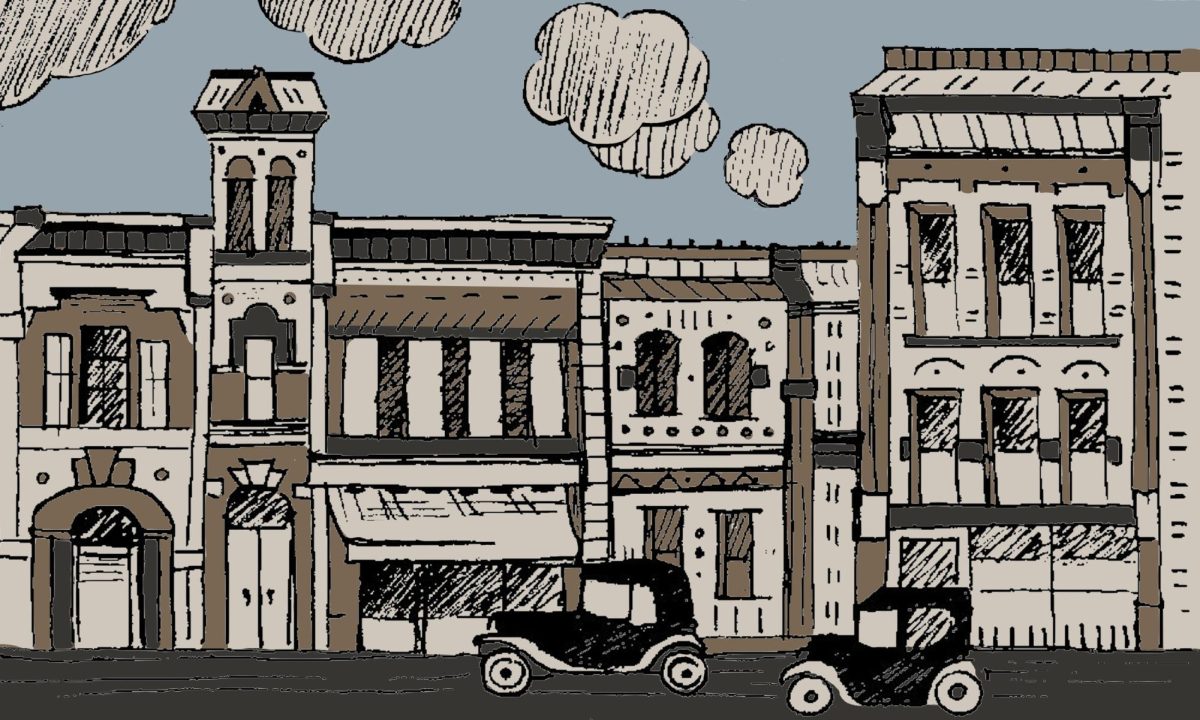
McNeill explained the very first automobile arrived in Fort Collins on June 27, 1902, and by 1916, Fort Collins banned horses in the downtown area and began paving streets, marking its transition to a city reliant on cars. Toward the end of his lecture, he provided a table with figures estimating that in 1910, citizens in Fort Collins owned cars at a rate greater than five times the national average.
McNeill concluded with two images, both looking northeast across the intersection of College and Mountain, one from 1904 and one from 1922. The image from 1904 showed a water trough in the center of the intersection, a sign the city’s main form of transportation had been horses and horse-drawn wagons. 18 years later, another image shows the trough had been removed, and the street had been taken over by trolley tracks and automobiles.
“In 18 years, this town changed that much,” McNeill said. “And I just find that staggering. … Maybe it’s true of all towns during this period, but I never realized it could change that quickly, to go from 100% horse and buggy to 100% automobile.”
Reach Emma Pelto at life@collegian.com or on social media @RMCollegian.