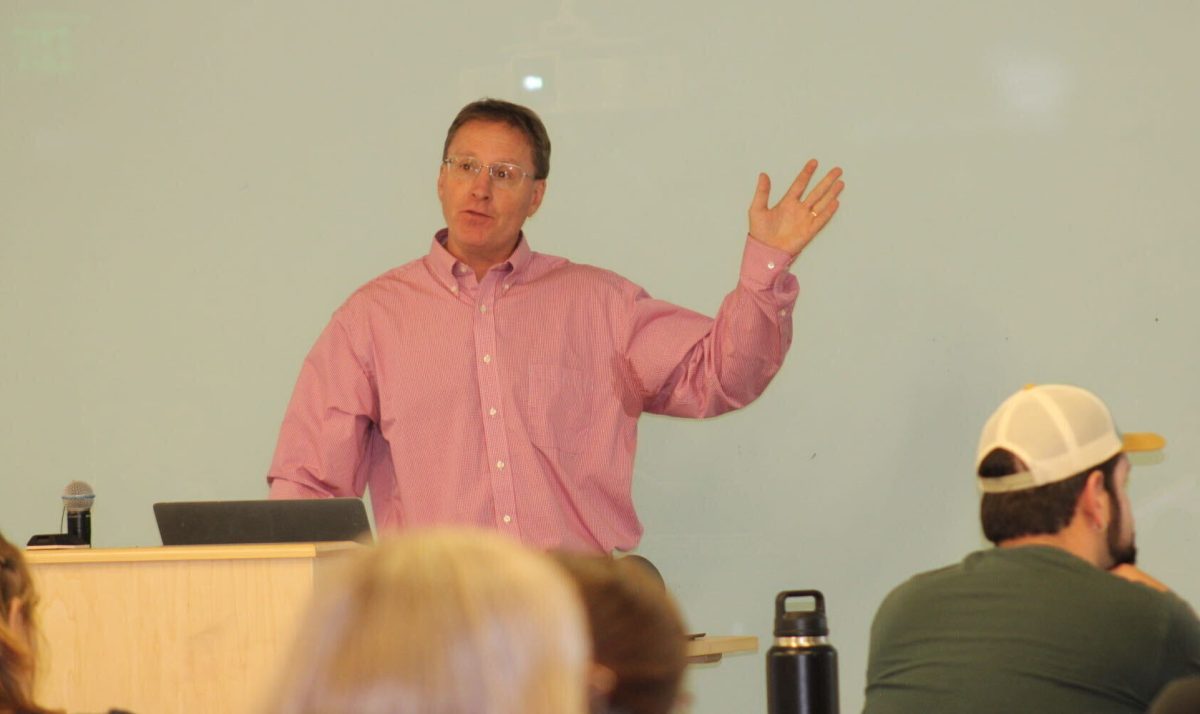

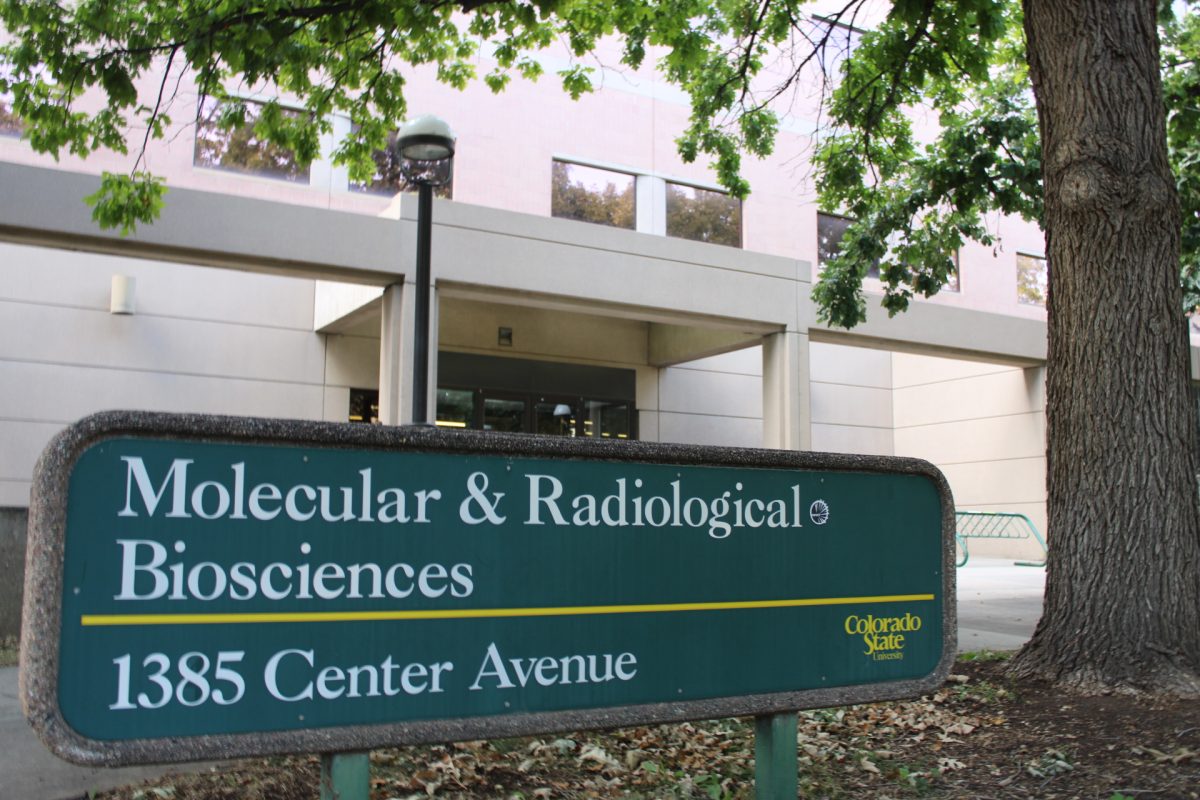
On Monday, Sept. 14, the Colorado State University department of biochemistry and molecular biology hosted its Academic Year Kickoff. The hourlong presentation mainly comprised information about the budgetary system CSU will adopt next fiscal year and the future of the department in response to the change. The event was hosted by department chair Laurie Stargell.
“I do an academic year kickoff every year,” Stargell said. “This is my 10th year doing it and likely to be my last since there’s going to be a new chair that starts on Jan. 1.”
The first item on the agenda was an announcement of newly filled positions in the college. Most notable was the new dean for the College of Natural Sciences, Randall McEntaffer. McEntaffer completed his Ph.D. in astrophysics at the University of Colorado Boulder and previously served as a department head and professor of astronomy. Stargell said she is hopeful the new dean will prove useful to accommodate sciences in the newly adopted hybrid responsibility center management budget model.
“I felt like I was lucky enough to serve on the search committee, and (out of) all the candidates, he seemed to have the most experience with this transition from an incremental budget to the RCM model,” Stargell said.
Coming with this new budget, the department of biochemistry and molecular biology will receive a $90,000 funding cut in the coming year, which has already resulted in smaller class sizes, according to Stargell.
“We satisfied that cut this year by only having four first-years,” Stargell said. “But it’s certainly not sustainable. We do not want to have small incoming classes for our graduate program forever.”
Despite this, hope for the department still exists in the research budget, as — according to Stargell — it is currently the third highest-earning department in the university with almost half a million dollars in research grants. This coupled with their continued teaching of LIFE core classes will likely provide a cushion of support despite the changing circumstances.
Additionally, the presentation included information on the future of the department academically, including the success of the hybrid major, the possibility of a new biomolecular design major and potential of simplifying requirements for the biochemistry minor to increase the number of students. The presentation also introduced multiple new course offerings, specifically for students outside of the department.
“Right now, they’re listed as for biochemistry majors, but once it’s running we’d like to open them because again we’re talking about faculty time,” Stargell said. “If you have a class with only 10 students, that’s not a lot. These courses aim to grow the student credit hour size to be more competitive with the others in the College of Natural Sciences.
During the presentation, they also congratulated the incoming graduate class, which currently consists of four new Ph.D. candidates and six master’s students.
“I’m really happy that we could recruit some students,” Stargell said. “Some of the other programs decided to not have new students come and just use their current GTAs, and so I feel like at least we are moving in the right direction.”
Most of these graduate students were in attendance at the event.
A third-year graduate student, Abigail Proksch, said, “It’s always nice to hear about the what the budget model is and how that’s going to affect all of us because we rely a lot on grant money and department resources.”
The presentation wrapped up with internal logistical affairs and information on upcoming events in the department, followed by faculty and graduate students voting on the posters for the Research Advisory Committee, as this was not done at the department retreat this year.
Overall, for most department members, the event served as a helpful insight as they move forward into the academic year.
“I really enjoyed the update on the financial side of things,” said Nina Lambert, the department’s office manager and assistant to the chair. “That really helped clarify things and it gives a good sense of direction for what’s ahead.”
Reach Jessi Smith at science@collegian.com or on social media @RMCollegian.