
Fort Collins Science Center is making waves in the world of public land managers with the recent publication of the open-source software KWICer, a program that can aid in annotated bibliography creation.
KWIC stands for Keyword in Context, an established form of text analysis that works to reduce excess noise in scientific writing and make scientific decisions more efficient, with increasingly tight deadlines for managers to meet.
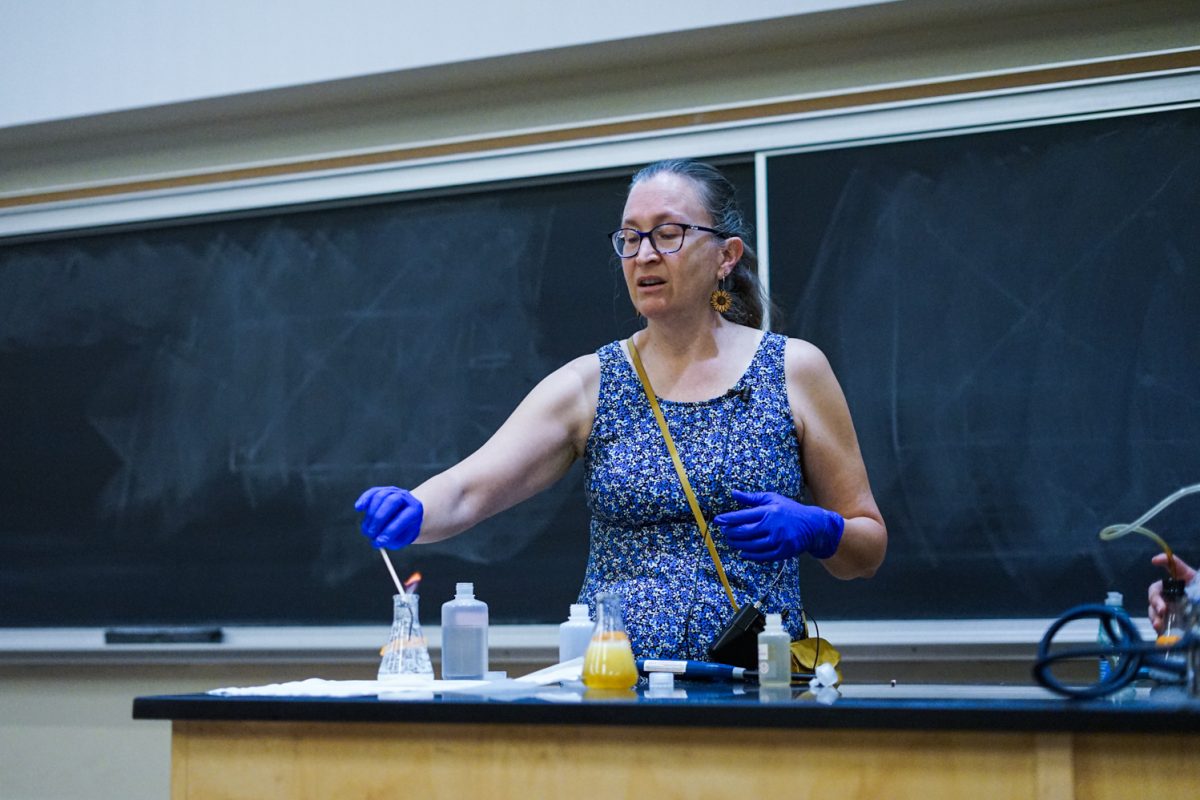
Lydia Bailey, the lead author of KWICer and a biologist for the U.S. Geological Survey, has worked alongside public land managers to develop this software, creating the product with them and for them to utilize in their work.
“Keyword in Context allows you to identify search terms or phrases and then extract the words around it so that you can have some context for how the word is being used,” Bailey said.
KWICer published March 3 and uses the KWIC analysis method. KWICer is used to quickly translate lengthy and hard-to-understand scientific literature into an annotated bibliography using specific and customizable keywords. Included in the bibliography are: publications the code deems relevant, figures demonstrating how often the keywords occur in the publications, the states or ecosystems referenced and more.
Public land managers, who work to care for and balance the needs of natural spaces, must make their decisions based on the best available science. They must also act in accordance with various pieces of legislation, including the Endangered Species Act, the National Environmental Policy Act, the Clean Water Act and the Clean Air Act. Oftentimes, following the best available science ends up costing time land managers do not have.
“Lots of foundational laws require managers to use the best available science in their decisions, and decisions made using that science are more effective,” said Sarah Carter, a supervisory research ecologist for the USGS. “Managers have limited time to be able to do that. And so, we really think about how can we produce science products for them that will be tailored to their needs and quick and easy for them to find and use?”
Since the release of KWICer, Bailey has attended conferences and worked with other groups in the USGS to increase the implementation of this software.
“(Bailey) has worked with several groups in USGS to really provide them with a tutorial, sort of a walkthrough of exactly how to use the code,” Carter said. “We know that there are other scientists and groups in USGS who are using the code as a result who really appreciate that it’s something they can pick up and use on the topic of their interest.”
Three published annotated bibliographies appear on the USGS Fort Collins Science Center page, where the KWICer software has been used on management issues.
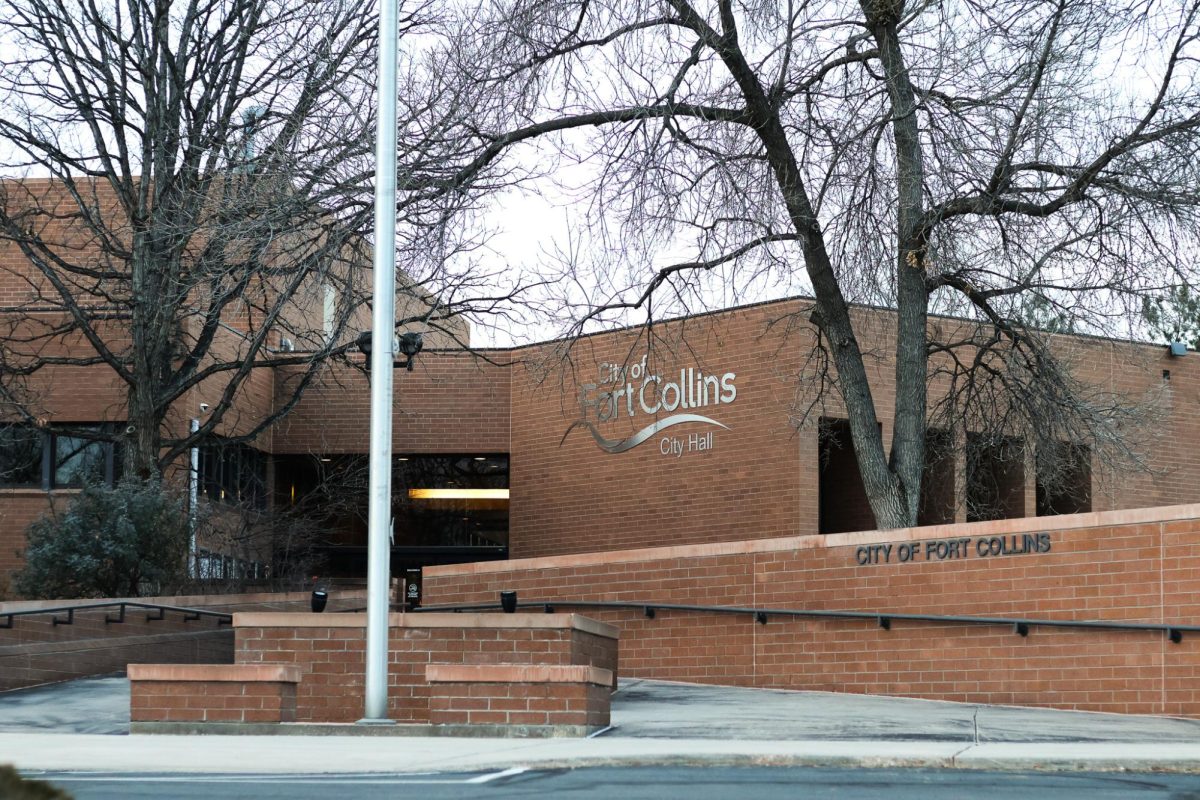
The Fort Collins and general Colorado area benefit from this improved management process, not only due to the science center’s locality, but also due to the high number of public lands in Colorado.
“We work mostly with federal land managers, and the federal government manages about 640 million acres in the U.S., so about 28% of the country’s total land area,” Carter said. “The vast majority of those lands are in 12 western states, including Colorado. We focus our science on decisions that are made frequently by land managers on those lands. Those are often related to energy, recreation or livestock grazing. And those are decisions that the people in Colorado and in Fort Collins care about.”
This code is available for public use, a fact Carter highlighted as important to USGS as a vector of transparency to the public. She spoke of nongovernmental organizations and university groups demonstrating interest in the product, as well.
“I would love to hear from anyone who does use it about things that work for them or things that they think that could be modified to make it work for them better,” Bailey said.
Bailey has been compiling a list of updates for the software with a primary focus on making KWICer more user-friendly. She spoke of making it more accessible without introducing more noise in scientific literature. The scientists work to bridge gaps in research, and by utilizing the code, managers can see what the gaps are, where research needs to be conducted and where there are vast amounts of research for their decisions.
“We’re really trying to inform (public land) decisions, and those decisions matter to everybody,” Carter said. “Public lands are a big deal. We are fortunate in Colorado — and in this area of Colorado — to have lots of public lands. And those are the decisions that we’re trying to inform with these products.”
Reach Abby Barson at science@collegian.com or on social media @RMCollegian.