
Editor’s Note: All opinion section content reflects the views of the individual author only and does not represent a stance taken by The Collegian or its editorial board.
We’re all deeply acquainted with one of the most mainstream relationships: Generation Z and social media. Recently, however, there’s been tension, and Gen Z seems to be at the end of their rope.
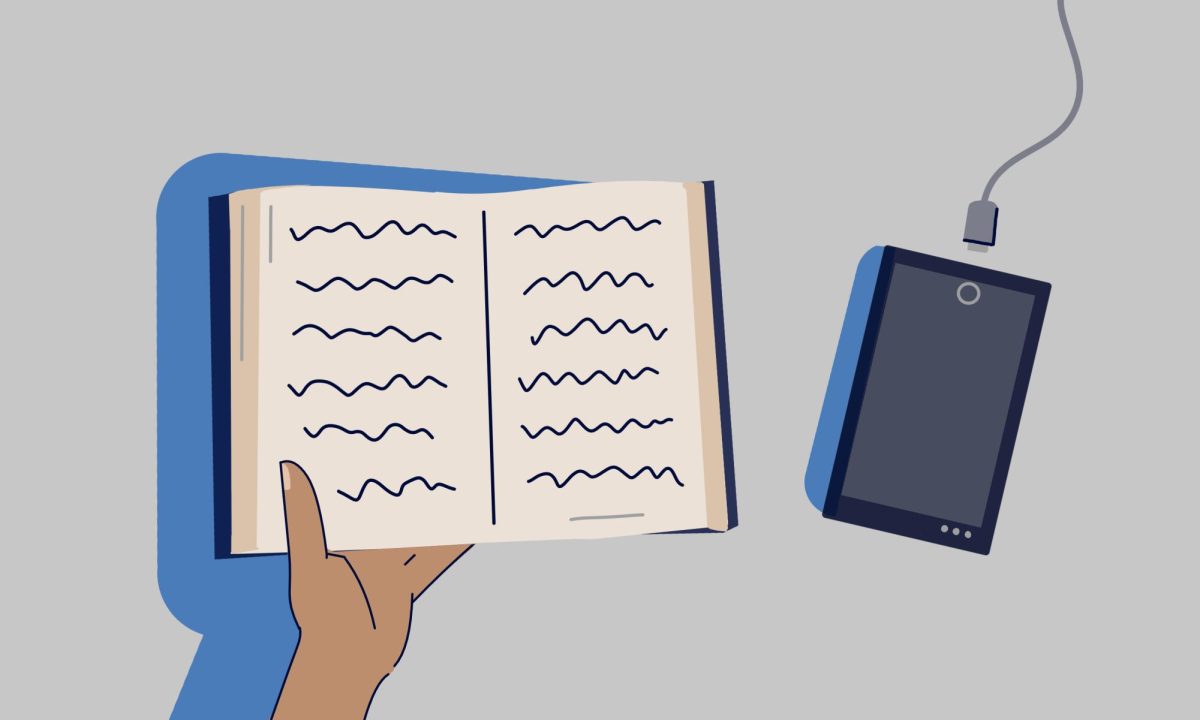
Some media outlets have dubbed 2026 “the year of analog” due to the trend of decreasing social media usage by our generation. Reading, spending time with friends in parks, vinyl shopping and general offscreen approaches have stolen the hearts of the tech generation. It’s not just about posting on TikTok or Instagram — Gen Z is over the dependency that comes with the teen-tech relationship, and it’s clear a breakup is on the horizon.
It’s safe to say Gen Z has been the guinea pig for the effects of social media and AI, not only with our minds but with life trajectories. The rise of cognitive overload is linked to our generation’s digital-induced amnesia, and the term “brainrot” is starting to have severe scientific weight, all before older Gen Z members approach their 30s. Even worse, a poll done in 2024 found 82% of respondents associated the word “addicting” with social media use and 57% of respondents associated the word “boredom” with it. These are two polarizing words that reflect dependency, permanent incorporation and struggle.
Assuming the average lifespan of a person in the U.S. is 79 years, using your phone for four hours a day from the age of 12 yields to over 11 years of your life being attributed to phone usage. But in a often-addicted population in which 50% of teenagers in the U.S. have a screen time of over four hours a day in 2024, 11 years of life being taken from you is modest.
This is beyond a simple conflict. The relationship can’t be depicted as toxic anymore. It’s flat-out abusive.
As with any breakup, Gen Z is gathering itself together, even as the toxic ex tries to get us back through increased algorithmic accuracy and data retention. This has opened a new sector in tech: antishort-form content, apps and resources. You’re not entirely quitting, but you’re aware of the restrictions that create familiar patterns and remove certain content. Whether it’s buying a Brick, downloading SocialLite or using other app blockers to beat short-form content addiction, young adults are hellbent on getting their lives back.
The first step has been successful. The New York Times, Vogue and dozens of respected newspapers have covered Brick’s success this past year and a half. Of course, many see the need for antitech apps as a red flag already, but that awareness allows Gen Z and other generations to slowly start making the pivot.
Older generations may roll their eyes, stating they’ve been right all along, but a one-night stand with Facebook is not a long-term, psychologically altering relationship. It’s important to understand that analog summer isn’t a fad. It is, rather, a resistance and a rebellion against social media and AI corporations stealing our lives in a way no other generation has ever experienced. It’s a change that brings us to realize something bigger: our relationship with ourselves and learning what that looks like against the grain of the patterns we’ve been brought up on.
Reach Vivian Szostak at letters@collegian.com or on social media @RMCollegian.