Editor’s Note: All opinion section content reflects the views of the individual author only and does not represent a stance taken by The Collegian or its editorial board.
Religion can be a challenging topic, but discussing it is one of the most vital conversations we can have.
Forms of religion have existed long before we had the technology to record them. Archaeologists have found evidence suggestive of religious practices dating back over 300,000 years, meaning that humans have been engaging with notions of religion, spirituality and belief for hundreds of thousands of years.
So here’s the question: If billions of people follow thousands of religions, how do you choose which to believe?
A lot of the time, you don’t; your family makes the choice for you. And that’s not exactly a bad thing. Religion can provide comfort, structure and a sense of belonging. Growing up surrounded by a shared belief system can shape your identity in beautiful ways. But at some point, belief becomes a personal choice, not just an inherited one.
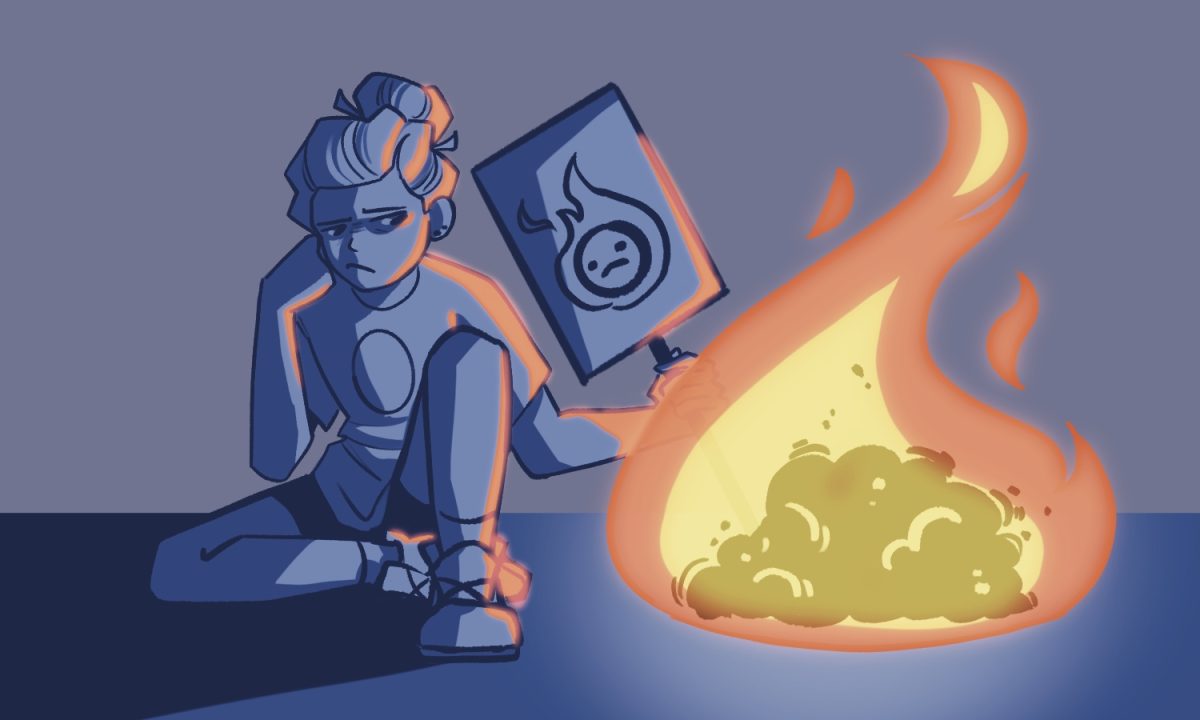
Just because you were raised surrounded by a religion doesn’t mean you shouldn’t question it, and questioning it doesn’t mean rejecting it, either; it means engaging with it. And maybe you believe you truly align with your religion — that’s great. But at least ask yourself these questions: How does practicing this religion make me feel? Do I truly believe in it, or have I just never considered an alternative? Are there other belief systems that align more closely with my values?
Religion is deeply tied to culture, shaping opinions and worldviews, but exploring other religions doesn’t mean abandoning your own — if anything, it strengthens your understanding of it. Learning about different values, traditions and histories expands your knowledge of life in a way that staying glued to one perspective simply cannot. Without allowing yourself to search for different paths, you won’t challenge your values.
A 2019 Pew Research study found that while many Americans were familiar with the basics of Christianity and the Bible, far fewer could answer questions about other religions, such as Judaism, Buddhism or Hinduism.
That lack of knowledge matters. If we never understand other religions, we will never understand the people who practice them.
This is why religion can quickly become a barrier. If you assume only the values you believe in are correct, you will never be challenged. Thinking this way divides relationships, communities and even entire societies.
But there doesn’t need to be a barrier because many religions are more connected than we think. Christianity, for example, developed from earlier monotheistic Jewish traditions in Palestine. Many belief systems share similar origin stories, moral principles or ideas about humanity and purpose. While each may have their own distinct beliefs, they all focus on interpretations of love and meaning.
So how can anyone confidently say their religion is the “correct” one without understanding the others? It’s hard to fully commit to a belief system you’ve never questioned.
Exploring religion isn’t about proving others wrong; it’s about understanding the world and your place in it. It challenges you to think deeply, to be open-minded and to approach differences with curiosity instead of judgment.
Religion has existed long before us, so let’s take the time to understand all of the different ones and consider a new point of view. Connection is rooted in humans, and it is up to us to do our part to learn about the world and enhance this connection.
Reach Charlotte Seymour at letters@collegian.com or on social media @RMCollegian.