

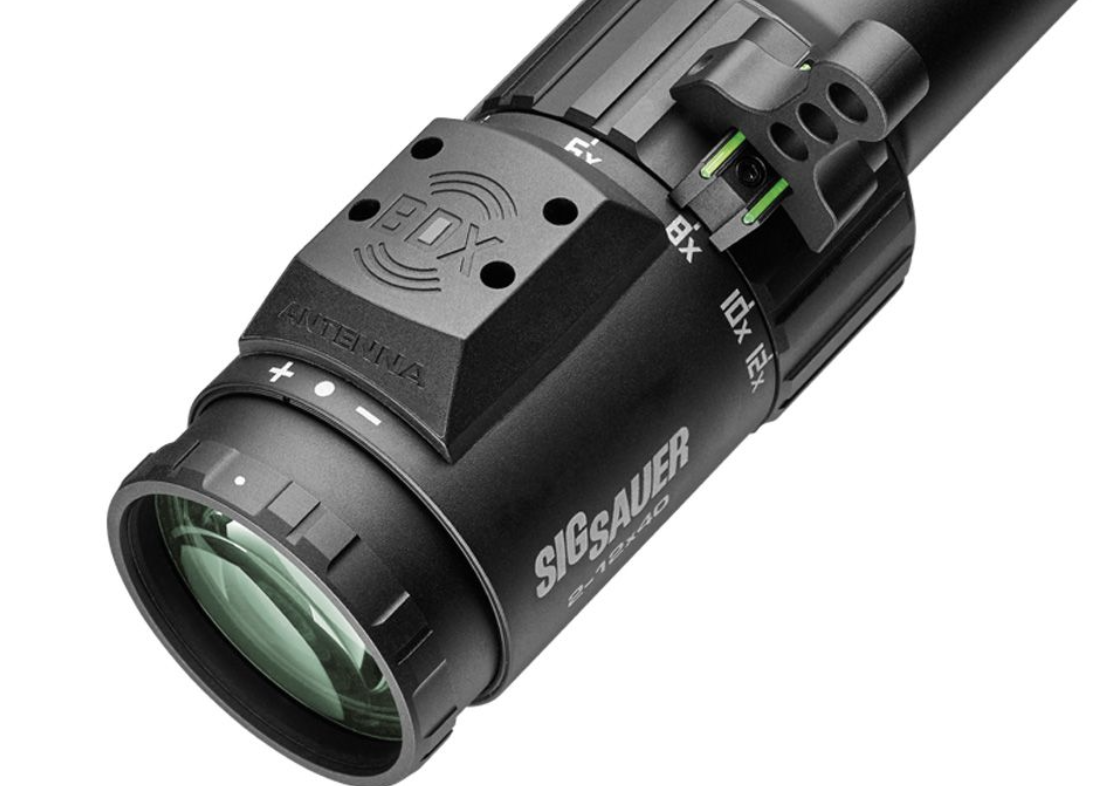
Sig BDX Rangefinder & Rifle Scope Combo for Hunting – Review
Traditional shooters prefer relying on DOPE charts and manual turret adjustments. However, spending time behind the Sig BDX scope setup completely changes that perspective. Here, we are discussing how the system combines a rifle scope with rangefinder and smartphone app to calculate elevation and windage automatically.
How BDX works
BDX connects three pieces:
- A SIG Kilo rangefinder or rangefinding binocular
- A SIG BDX riflescope
- A smartphone app for setup and profile management
The workflow is incredibly fast. You laser your target with a connected Sig Sauer rangefinder or binoculars. Inside the optic, an illuminated aiming point shifts to the correct hold based on a custom ballistic profile you set up previously. You place the orange dot on the animal and pull the trigger.
You don’t always need the full package running at once. BDX 2.0 can work in a few different ways:
- Scope only: use preloaded ballistic groups and a SmartBDC-style setup
- Rangefinder only: get ballistic data in the ranging unit itself
- Full system: pair rangefinder, scope, and app for the most tailored solution
Sig Sauer Sierra BDX scopes
The Sig Sierra lineup evolved noticeably over a few short years. The original Sierra 3 broke new ground but came with a few growing pains – hunters noticed the glass quality felt a bit basic and the digital reticle dots appeared rather thick, covering up smaller targets at distance.
Sig listened to that feedback and released the Sierra6. This upgraded optic brings much sharper glass and a finer digital reticle with wind hold-over dots. While the optical clarity of the Sierra 6 won’t necessarily rival Euro glass, you essentially pay for the onboard computer. Plus, the rifle scope features the anti-cant digital level and motion-activated illumination which add value.
Sig Sauer Sierra 6 scopes are available in 2-12x40mm, 3-18x44mm, and 5-30x56mm magnification configurations, all are second focal plane. In 2025, Sig expanded the series by adding the Sierra 4 scopes, particularly the 4-16x44mm and 6-24x50mm SFP configs.
It’s interesting how internal electronics handle magnification. While Sierra are second focal plane scopes, the software acts like a first focal plane optic – as you turn the magnification ring, the scope recalculates where the holdover dot should be.
Sig Kilo BDX rangefinders
Even people who remain unsure about the BDX rifle scopes usually like the Kilo rangefinders and rangefinding binos. These units built a strong reputation around quick ranging, solid ballistic output, and good value. I know several hunters who say they’d happily run a Kilo device with a traditional scope even if they skipped the Sierra entirely. The Kilo binoculars particularly double perfectly as your primary observation glass.
The great thing about Kilo BDX rangefinders is that they can store multiple profiles for different loads, so hunters who run different loads, different rifles, or both supers and subs can keep separate profiles ready.
Real-world hunting with a BDX rifle scope with rangefinder
The BDX platform is appealing for hunters for several reasons. You don’t need to pull out a dope card, dial turrets, second-guess your hold, then wonder whether you forgot to reset after the last shot. You range once and get a hold immediately. The speed is the biggest reason why the system is great for hunting.
Inside 300-500 yards, where a lot of western and open-country hunting happens, speed matters even more. A coyote that pauses at distance may give you only a few seconds. A mule deer across a draw might never stand in one place long enough.
That said, BDX doesn’t give anyone a free pass to shoot too far. It just means the system can make sane shots easier.
Knowing the limits
So, BDX can increase hit probability but the system has physical and ethical boundaries. Here are a few other things worth noting:
- Reticle size becomes more of an issue the farther you stretch it
- Wind still needs human judgment
- Ballistic output only helps if your rifle, ammo, and profile match reality (chronograph your load if you can)
- Battery dependence never fully disappears
- A smart scope won’t teach fundamentals
I actually like that SIG included KinETHIC. You set a minimum kinetic energy threshold for your cartridge, and if you range an animal beyond that effective killing distance, the reticle flashes to warn you.
In conclusion, Sig got the concept right. Separating the rangefinder from the riflescope made sense. Building a system that can work with or without the app made sense. Keeping it usable for regular hunters, not just ballistic nerds, made sense.
Wayne hansen • May 14, 2026 at 6:15 pm
I want this setup, how much is it.